


1.0 Introduction
Greater Eastern Africa is experiencing faster financial connectivity that is expanding opportunity while widening channels through which financial threats travel. Mobile money, digital payments, fintech and payment systems are connecting markets across borders, while regulatory arrangements remain uneven across the region (AfDB, 2026). Kenya’s Financial Reporting Centre(FRC) received 8,057 suspicious transaction, suspicious activity and terrorism-financing reports in 2024, a 22 percent increase from 2023 (FRC, 2024). Yet Kenya remained under enhanced follow-up, with national cooperation and coordination rated partially compliant and new technologies rated non-compliant in the 2024 assessment (FATF, 2024). Rwanda’s 2025 follow-up records progress in addressing technical compliance deficiencies identified in its 2024 mutual evaluation (ESAAMLG, 2025). INTERPOL’s 2026 assessment identifies financial fraud as increasingly intersecting with organised crime, human trafficking and cybercrime, including across East Africa (INTERPOL, 2026). These developments expose tension between evolving financial technologies and institutional capacity to identify, analyse and contain security risks across regional markets. The purpose of this commentary is to examine how technological change is reshaping financial security risks across Greater Eastern Africa and testing the resilience of financial systems.
2.0 Key Issues
2.1 Illicit Finance Crosses National Intelligence Boundaries

Photo Credit: Streamline Feed
Financial activity increasingly crosses the boundaries separating national intelligence systems. Mobile money, remittances, trade and informal value-transfer channels connect markets across Eastern Africa, creating pathways across jurisdictions (UNODC, 2021). East Africa’s financial integration is advancing through interconnected payment systems, increasing cross-border transactions within which illicit activity can be concealed (AfDB, 2026). The 2025 EAC Illicit Financial Flows Bill reflects recognition that illicit flows require transparency, asset tracing and cross-border oversight (The EastAfrican, 2025). INTERPOL’s Operation Catalyst identified financial flows linked to terrorism financing, financial fraud, money laundering, cyber-enabled scams and virtual assets across Africa (INTERPOL, 2025). ENACT’s 2025 index records substantial criminal-market exposure across East Africa, including financial crime (ENACT, 2025). The resulting blind spot is transnational: financial signals generated in one jurisdiction can remain disconnected from related activity elsewhere, weakening regional visibility of risk.
2.2 Fragmented Institutions Separate the Financial Picture
Once financial activity crosses jurisdictions, fragmented institutions can separate the information required to interpret it. Banks and mobile-money providers generate data; financial intelligence units analyse reports; police investigate; customs and revenue authorities trace trade, taxation and ownership; prosecutors convert evidence into cases. Kenya’s 2024 FATF follow-up rated national cooperation and coordination partially compliant, while new technologies remained non-compliant (FATF, 2024). Kenya’s reporting volume increased, placing greater analytical demands on institutions receiving information (FRC, 2024). Rwanda’s 2025 follow-up records technical-compliance gaps within its anti-money-laundering and counter-terrorist-financing framework (ESAAMLG, 2025). The 2025 EAC Illicit Financial Flows Bill places transparency, asset recovery and regional oversight within a legislative framework (The EastAfrican, 2025). ENACT’s 2025 assessment identifies weaknesses in governance, law enforcement and anti-money-laundering resilience in East Africa (ENACT, 2025). The gap lies between information generation and institutional integration.
2.3 Digital Finance Outpaces Financial Intelligence Capacity
The institutional gap becomes sharper as digital finance increases transaction speed, volume, and complexity. Kenya’s FRC received 8,057 suspicious transaction, suspicious activity, and terrorism-financing-related reports in 2024, illustrating the volume entering the intelligence system (FRC, 2024). FATF rated Kenya non-compliant on new technologies, identifying a regulatory weakness (FATF, 2024). Rwanda’s 2025 follow-up records technical-compliance deficiencies within its AML/CFT framework (ESAAMLG, 2025). INTERPOL’s 2025 Operation Catalyst found cases connecting financial fraud, cyber-enabled scams, virtual assets, and terrorism financing, including cases involving East Africa (INTERPOL, 2025). AfDB’s 2026 outlook identifies fragmented financial systems and uneven regulatory frameworks as continuing constraints on East Africa’s financial integration (AfDB, 2026). The resulting risk is analytical: digital signals can exceed institutional capacity to interpret relationships across accounts, platforms, and jurisdictions, particularly where national systems remain fragmented and unevenly equipped.
2.4 Uneven National Capacity Creates Regional Exposure
These pressures become more consequential where national financial-security capacities develop at different speeds. Kenya remains under FATF enhanced follow-up, with partial compliance on cooperation and coordination and non-compliance on new technologies (FATF, 2024). Rwanda’s 2025 follow-up records technical re-ratings, illustrating continuing institutional adaptation (ESAAMLG, 2025). ENACT’s 2025 index records substantial variation in criminality and resilience across East African states, including exposure to financial crime and criminal networks (ENACT, 2025). AfDB’s 2026 outlook identifies uneven regulatory frameworks and fragmented financial systems as continuing regional constraints (AfDB, 2026). INTERPOL’s 2026 assessment identifies East Africa, including Kenya and Tanzania, within an emerging nexus linking financial fraud with wider criminal activity (INTERPOL, 2026). The asymmetry means regional financial connectivity can transmit risk across jurisdictions with unequal capacity to detect, interpret, and disrupt threats before they spread across national borders.
3.0 Conclusion
The security significance of financial technology in Greater Eastern Africa lies in the changing relationship between connectivity and control. As financial systems become faster and more interconnected, the boundary between economic infrastructure and security infrastructure becomes less distinct. This shifts the policy question from whether financial activity is legitimate at the point of transaction to whether institutions can recognise wider patterns of risk as they emerge. The concern is institutional adaptability: whether existing arrangements remain effective as technologies, criminal methods and markets evolve together. Without adaptability, technological integration can outpace mechanisms responsible for preserving financial security. The region’s security environment will depend on how institutions respond to that changing relationship.
4.0 Policy Recommendations
4.1 Regional Financial Intelligence Exchange Needs Integration
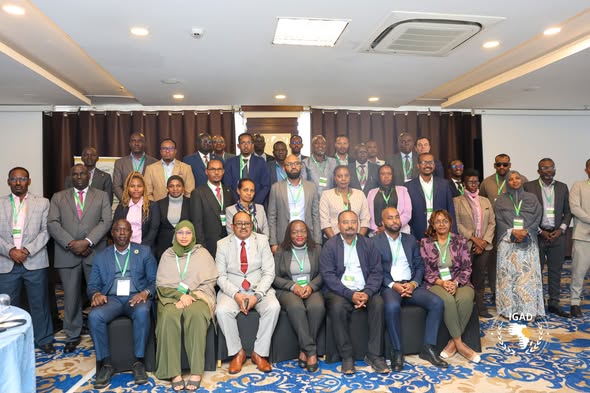
The EAC Secretariat and IGAD Secretariat should establish a regional protocol for financial-intelligence exchange linking Financial Intelligence Units, customs, revenue, central-bank and law-enforcement authorities. The protocol should define a common minimum dataset for cross-border requests, covering account identifiers, beneficial ownership, transaction references, asset locations and case status. Designated national focal points should route requests through a secure platform that records requests, response times and outcomes. The EAC Secretariat should coordinate EAC participation, while IGAD should coordinate relevant IGAD states outside the EAC. Annual reviews should assess response times, completed exchanges, unresolved requests, and investigations arising from shared intelligence across jurisdictions. This would create a traceable regional workflow for financial-intelligence exchange without establishing a new regional institution or duplicating existing mandates.
4.2 Institutional Information Requires Interoperable Exchange
The EAC Council of Ministers and national competent authorities should establish an interoperable protocol for sharing financial information across institutional mandates. Each authority should designate a data liaison and apply common rules for requesting, validating, sharing and updating information. The protocol should define access rights, response timelines, data standards and escalation procedures while preserving national data-protection and evidentiary requirements. The EAC Secretariat should maintain the interoperability standard and coordinate periodic testing. Authorities should record requests, responses, referrals and case outcomes in auditable systems. Annual reviews should measure response times, unresolved requests and cases that agencies progress through inter-agency cooperation. Authorities should report unresolved requests quarterly to committees. This would connect financial, investigative, customs, revenue and prosecutorial information across institutional mandates.
4.3 Digital Finance Requires Specialized Investigation Cells

National Financial Intelligence Units in Kenya, Uganda, Tanzania, Rwanda, Ethiopia and Burundi should establish multidisciplinary digital-financial investigation cells. Each cell should combine financial analysts, cyber investigators, forensic accountants, data specialists and prosecutors to examine virtual assets, digital wallets, payment platforms and transaction networks. Central banks and telecommunications regulators should provide authorised access to relevant records under judicial and data-protection safeguards. Cells should apply protocols for link analysis, anomaly detection, wallet tracing and network mapping, with analysts recording findings in case-management systems. ESAAMLG should incorporate analytical capability and investigative conversion into peer reviews, while national authorities should report performance measures. This would convert growing digital transaction volumes across participating financial systems into usable financial intelligence for investigations, disruption and prevention efforts.
4.4 Regional Threat Assessment Requires Recurring Joint Analysis
The EAC Secretariat, IGAD Secretariat and national Financial Intelligence Units should produce an annual Greater Eastern Africa Financial Security Threat Assessment covering organised crime, terrorism financing, cyber-enabled fraud, trade-based laundering, illicit commodities, virtual assets and informal value transfers. The assessment should combine authorised intelligence from public agencies, regulated financial institutions and telecommunications operators through common reporting protocols. A regional analytical group should rank threats by reach, exposure, vulnerability and security impact, then issue alerts. EAC and IGAD secretariats should assign follow-up actions through their relevant committees and review implementation annually. National Financial Intelligence Units should document actions taken and emerging risks. This would turn dispersed financial signals into a recurring, comparable regional threat picture for coordinated security planning and response.
5.0 References
African Development Fund. (2026, June 24). African Development Fund approves $9 million grant to strengthen financial integration across East Africa. African Development Bank. African Development Bank
Eastern and Southern Africa Anti-Money Laundering Group. (2025, September 24). Rwanda: 2nd enhanced follow-up report and 1st technical compliance re-rating. ESAAMLG. ESAAMLG Rwanda follow-up report
ENACT. (2025). Africa Organised Crime Index 2025: East Africa. Institute for Security Studies, INTERPOL, and Global Initiative Against Transnational Organized Crime. Organised Crime Index: East Africa
Financial Action Task Force. (2024, August). Kenya’s progress in strengthening measures to tackle money laundering and terrorist financing: Follow-up report. FATF. FATF Kenya follow-up report
Financial Reporting Centre. (2025). Annual report 2024. Government of Kenya. Financial Reporting Centre Annual Report 2024
INTERPOL. (2025, October 22). 83 arrests in landmark African operation against terrorism financing. INTERPOL Operation Catalyst
INTERPOL. (2026, March 16). INTERPOL Global Financial Fraud Threat Assessment. INTERPOL Global Financial Fraud Threat Assessment 2026
The EastAfrican. (2025, October 9). EALA MPs pass bill to stem illicit financial flows. Nation Media Group. The EastAfrican: EALA MPs pass bill to stem illicit financial flows United Nations Office on Drugs and Crime. (2021). Countering the financing of terrorism in Eastern Africa. EAPCCO Counter-Terrorism Centre of Excellence and UNODC Regional Office for Eastern Africa. UNODC: Countering the financing of terrorism in Eastern Africa