
1.0 INTRODUCTION
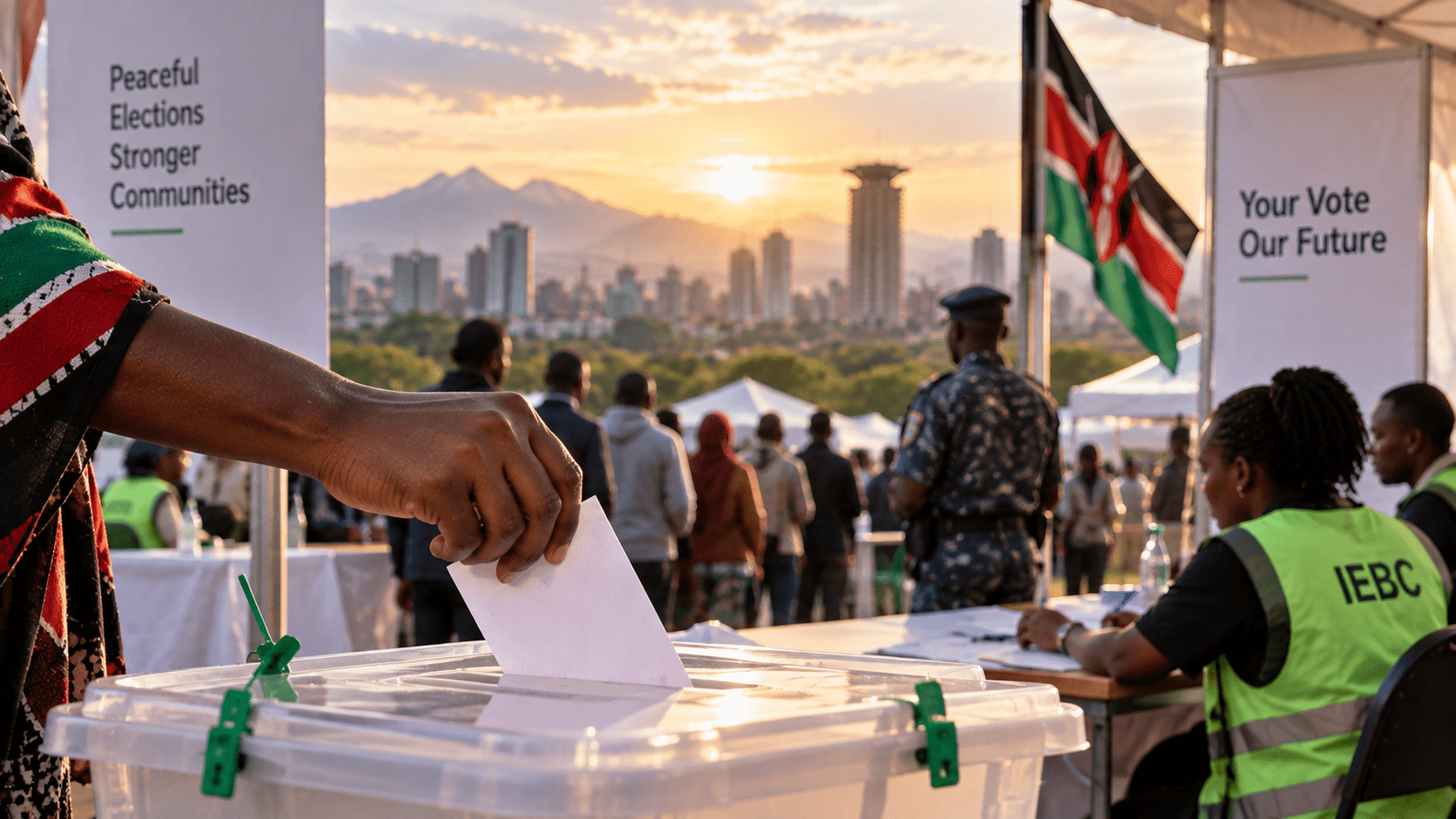
Electoral commissions are becoming peace institutions in Greater Eastern Africa because the credibility of electoral administration shapes whether political competition remains within accepted rules or becomes a security problem. Their work reaches beyond polling: voter registration, boundary management, dispute handling, information disclosure, and coordination with security actors shape public confidence before results are declared (African Union, 2026). Regional election observation connects national commissions through the East African Community(EAC) and Intergovernmental Authority on Development(IGAD), creating channels for shared practice and scrutiny (EAC, 2026; IGAD, 2026). Recent elections show why that connection matters. Uganda’s 2026 election was preceded by an internet shutdown, while Ethiopia’s election proceeded without voting in Tigray and with polling disrupted in parts of Amhara and Oromiya (Reuters, 2026a; Reuters, 2026b). Tanzania’s 2025 election was followed by serious violence, illustrating how electoral disputes can become wider security crises (Reuters, 2026c). Kenya’s 2027 election therefore presents a regional institutional test. The purpose of this commentary is to examine how electoral commissions can anchor electoral peace and national cohesion across Greater Eastern Africa, using Kenya’s IEBC as a practical reference point.
2.0 KEY ISSUES
2.1 Electoral commissions become peace anchors through institutional learning
Electoral commissions become peace anchors when their administrative decisions reduce uncertainty before political competition reaches the ballot. The African Union’s continental forum for election management bodies provides a platform for structured peer learning and exchange (African Union, 2026). EAC observation missions similarly examine electoral processes through regional peace and governance concerns (EAC, 2026). IGAD’s 2026 Ethiopia mission documented how security conditions affected where voting could occur, demonstrating the interaction between electoral administration and territorial insecurity (IGAD, 2026). Kenya’s IEBC has incorporated election-security coordination into preparations for the 2027 election (IEBC, 2026). Yet commissions remain nationally mandated while electoral pressures increasingly travel through regional political networks and pressures. Electoral authority therefore remains national while electoral effects cross borders. Regional learning matters because isolated institutional experience cannot fully capture risks that cross borders.
2.2 Electoral insecurity accumulates before polling
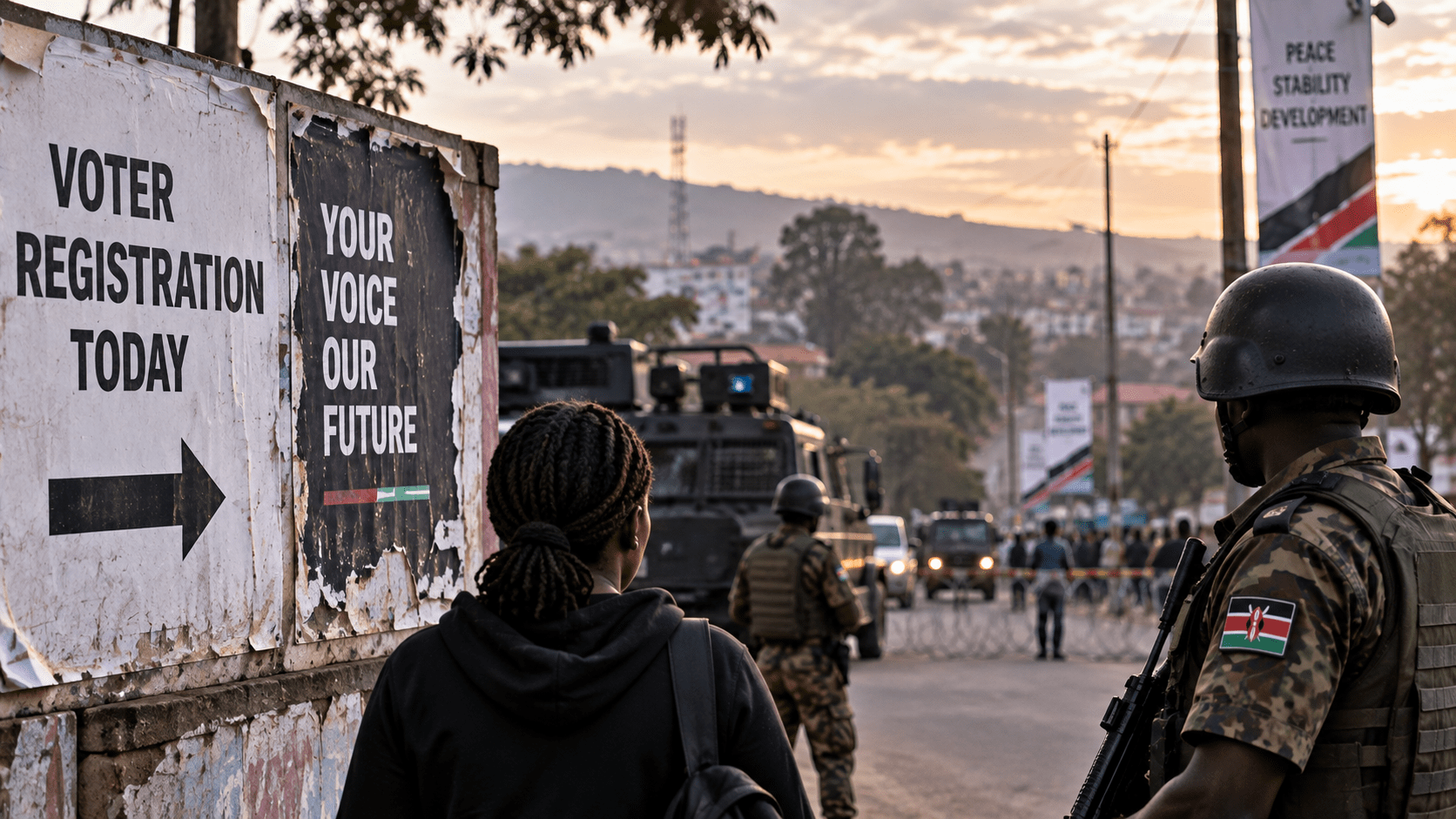
Electoral insecurity accumulates before polling begins in practice, when unresolved disputes, exclusion, and restrictions on political participation alter expectations about the contest. Ethiopia’s 2026 election illustrates the problem: voting did not occur in Tigray, while local security conditions disrupted polling in parts of Amhara and Oromiya (IGAD, 2026; Reuters, 2026b). Uganda’s election exposed another pathway, with authorities ordering an internet shutdown two days before voting while citing misinformation, disinformation, electoral fraud, and related risks (Reuters, 2026a). The EAC observation mission provides a further regional perspective on participation and legitimacy by assessing electoral conditions beyond polling stations (EAC, 2026). Kenya’s preparations treat election security as a matter requiring early coordination before election day (IEBC, 2026). Electoral risk is cumulative, and administrative events before polling can alter the security environment surrounding subsequent electoral results across the region.
2.3 Credible dispute pathways keep electoral contests institutional
The peace value of electoral commissions depends on whether electoral disagreement has credible and accessible institutional exits. The African Union’s governance standards for democratic transitions recognise lawful mechanisms for resolving electoral disputes (African Union, 2026). Kenya’s Judiciary and IEBC have developed election-dispute learning through formal reports and case documentation, creating institutional memory and continuity around recurring electoral disputes (Judiciary of Kenya, 2026). EAC observation provides an additional regional lens on electoral credibility and disputes (EAC, 2026). IGAD’s Ethiopia mission records a defined pathway from electoral complaints to specialised judicial review, illustrating how defined procedures can contain disagreement (IGAD, 2026). Tanzania’s 2025 election demonstrates the cost when electoral contestation becomes entangled with violence, with a later inquiry reporting hundreds of deaths (Reuters, 2026c). The issue is whether formal pathways retain enough credibility and accessibility to keep contention within institutions.
2.4 Electoral information increasingly shapes national cohesion

Electoral information has become a direct condition of national cohesion because citizens judge electoral events through information they can verify. Uganda’s 2026 internet shutdown restricted public connectivity immediately before voting and was justified by authorities through concerns about misinformation and electoral fraud (Reuters, 2026a). The African Union identifies misinformation and disinformation as electoral governance concerns across the region (African Union, 2026). Ethiopia’s election demonstrated how gaps in territorial participation can create information challenges around where voting occurred and why (Reuters, 2026b). IEBC’s preparations for Kenya’s 2027 election include election-security coordination, placing communication within a wider electoral-risk environment before polling begins (IEBC, 2026). Regional observation adds another independent verification layer for regional observers through EAC and IGAD missions, which collect and assess information from electoral stakeholders (EAC, 2026; IGAD, 2026). Cohesion suffers when authoritative information is delayed, inaccessible, or contradicted.
3.0 CONCLUSION
Electoral peace in Greater Eastern Africa rests on institutions capable of keeping competition within credible rules. National electoral commissions face risks that increasingly cross borders through information, population movement and regional political networks. Security conditions can shape participation before voting begins, while weak dispute pathways can move disagreement outside formal institutions. Information failures can then magnify uncertainty precisely when public confidence is most fragile. Regional observation and peer learning provide an institutional foundation, but their value depends on whether lessons become continuous practice. Electoral commissions therefore sit between elections and peace maintenance. Kenya’s 2027 preparations offer a practical test of continuous electoral security across the cycle.
4.0 POLICY RECOMMENDATIONS
4.1 IEBC should anchor continuous regional electoral learning
The African Union Commission(AUC), EAC Secretariat and IGAD Secretariat should establish an Eastern Africa Electoral Practice Forum linking national electoral management bodies. IEBC should provide the technical coordinating secretariat through its existing training and knowledge functions. The forum should maintain a secure repository covering election calendars, dispute-resolution lessons, voter-information procedures, electoral-security protocols, and post-election reviews. Each commission should nominate a permanent focal point and submit an annual institutional review report. EAC and IGAD should convene quarterly sessions, while the AUC should align the forum with its continental election-management-body platform. Peer reviews should record adopted practices, unresolved gaps, and responsible institutions. This mechanism would turn regional observation into continuous institutional learning while preserving each commission’s constitutional mandate and domestic legal authority across all participating states.
4.2 Regional bodies should connect electoral risks to early warning.
EAC and IGAD should establish an electoral-risk notification protocol connecting electoral commissions like IEBC to regional early-warning structures. The protocol should track campaign violence, attacks on election personnel, administrative disputes, inflammatory mobilisation, disruption of electoral information, and displacement affecting voter access. Each commission should transmit alerts through designated focal points using common fields for location, incident type, severity, source and status. IGAD and AU analysts should assess cross-border patterns and issue regional risk briefs, while EAC should integrate relevant alerts into observation planning and political dialogue. Quarterly reviews should test whether alerts produced would trigger institutional action. The mechanism would give electoral commissions a formal route into regional prevention systems, allowing election-related risks to be assessed before isolated disputes become wider security concerns affecting participating states.
4.3 Electoral institutions should institutionalise regional dispute Resolution
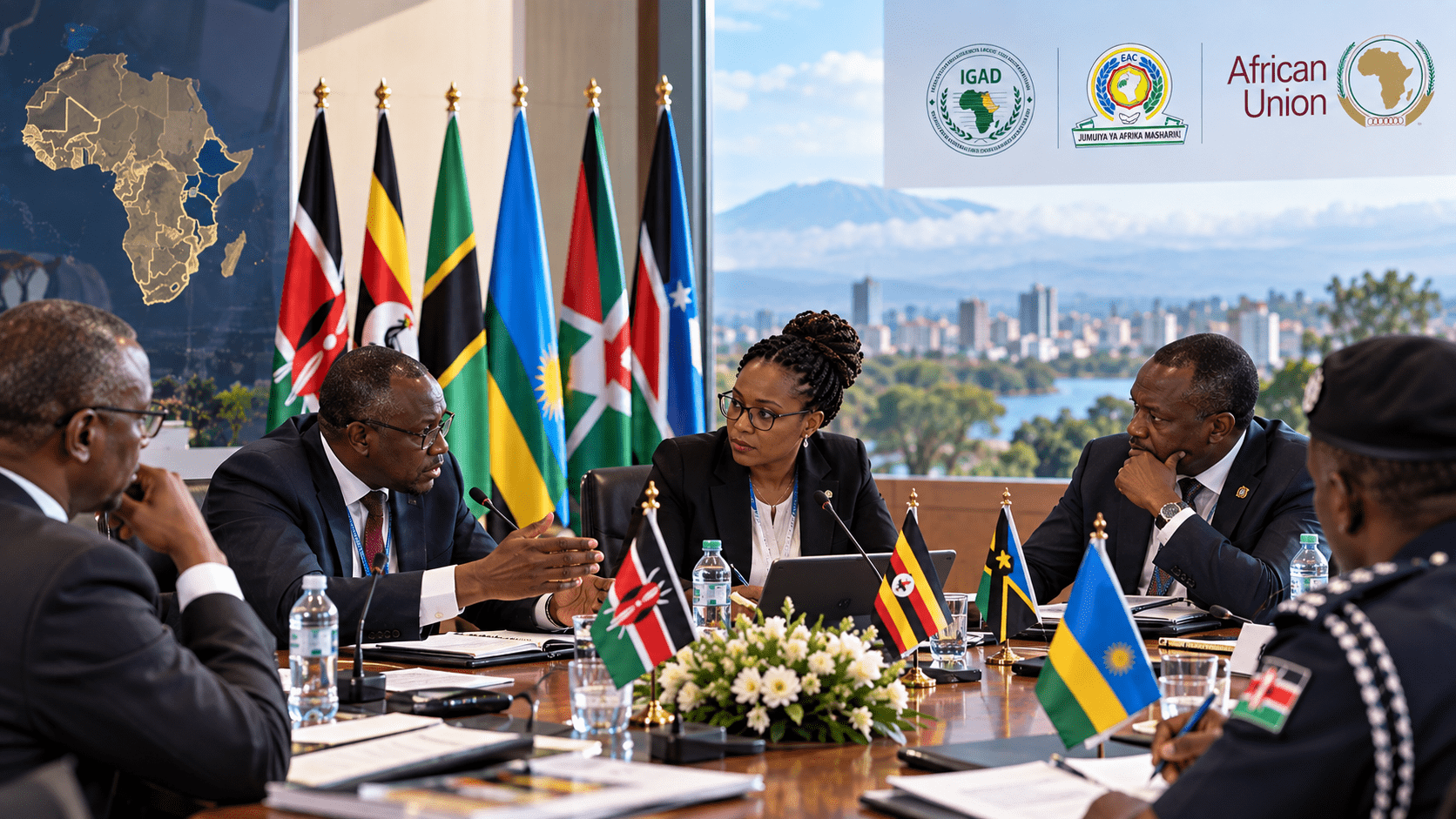
IEBC, the EAC Secretariat and IGAD Secretariat should create a regional electoral-dispute learning protocol without transferring judicial authority between states. Commissions and judicial institutions should provide anonymised administrative information on dispute categories, filing timelines, triggers and resolution stages. IEBC should contribute lessons from Kenya’s election-dispute processes, while participating states retain responsibility for interpreting and applying domestic laws. EAC and IGAD should convene annual reviews comparing patterns and documenting institutional responses. Each participating institution should appoint a focal point responsible for submitting data, recording agreed actions, and reporting implementation before the next electoral cycle. The protocol would turn recurring electoral disputes into shared institutional knowledge while preserving constitutional and judicial jurisdiction, judicial independence and the domestic legal architecture governing elections in each participating state.
4.4 IEBC should institutionalise rapid electoral information verification
IEBC should establish an Electoral Information Integrity and Rapid Verification Cell for the 2027 General Election, linked to EAC and IGAD information structures. The cell should publish verified electoral notices, document corrections to false claims, maintain a public incident log, and issue standard explanations for delays and result-transmission questions. IEBC should assign officers to verification, legal review, and public communication, with clear escalation rules during the election period. EAC and IGAD should receive verified notices through designated liaison officers and incorporate them into observer communications. A post-election audit exercise should identify recurring information failures and record corrective actions. This arrangement would give Kenya a defined institutional mechanism for reducing uncertainty without allowing security considerations to displace lawful electoral communication.
5.0 REFERENCES
African Union (2026). African Union Commission to convene 10th annual continental forum of election management bodies on African diaspora abroad voting. African Union Commission.
East African Community (2026, January 18). The East African Community Election Observation Mission to the January 2026 general elections in the Republic of Uganda. East African Community.
Independent Electoral and Boundaries Commission (2026). 2027 General Election preparations. Independent Electoral and Boundaries Commission.
Intergovernmental Authority on Development (2026, June 3). IGAD Election Observation Mission to the 7th General Election of the Federal Democratic Republic of Ethiopia held on Monday, June 1, 2026
Judiciary of Kenya (2026). Election dispute resolution report. Judiciary of Kenya.
Reuters (2026a, January 14). Uganda shuts down internet ahead of election, orders rights groups to halt work. Reuters.
Reuters (2026b, June 1). Ethiopian election expected to give leader Abiy’s party a landslide win. Reuters.
Reuters (2026c, April 23). Tanzania inquiry says over 500 killed in last year’s election violence. Reuters.