


1.0 Introduction
Conflict economies in Greater Eastern Africa are increasingly financed through informal financial circuits embedded in cross-border trade, mobile money systems, and fragmented remittance channels that operate beyond full regulatory capture (FSD Kenya, 2023). These circuits span Greater Eastren Africa borderlands where enforcement asymmetries allow parallel liquidity systems to persist alongside formal fiscal authority structures, particularly in frontier zones linking Kenya, Somalia, South Sudan, and Uganda (Reuters, 2025). Mobile payment ecosystems have accelerated transaction speed across low-income markets, but their expansion has also widened gaps in traceability where compliance infrastructure remains uneven across jurisdictions (BBC News, 2024). Diaspora-linked remittance flows continue to function as critical liquidity stabilizers, yet portions of these transfers move through informal or semi-formal channels that evade standardized monitoring frameworks (International Organization for Migration, 2024).
Commodity-based micro-trade networks further entangle survival economies with conflict-linked financial circulation in structurally weak border regions (Al Jazeera, 2025). Regulatory capacity has not adjusted at the same pace as financial decentralization, producing persistent gaps in cross-border oversight, customs coordination, and digital transaction monitoring across regional blocs (African Development Bank, 2024). Weak interoperability between national financial systems and regional regulatory frameworks under EAC and IGAD structures deepens fragmentation in financial governance architecture (Reuters, 2025). These dynamics embed informal liquidity systems within everyday economic survival structures, reshaping how value circulates under conditions of insecurity and institutional stress (BBC News, 2024). This commentary examines how these financial and trade systems structurally interact with governance fragility to reshape economic control and regional stability in Greater Eastern Africa.
2.0 Key Issues
2.1 Fragmented border authority weakens fiscal control
Border zones across Greater Eastern Africa are increasingly governed through dispersed authority arrangements where informal trade actors exercise de facto control over taxation, pricing, and enforcement in frontier corridors linking Kenya, Somalia, Uganda, and South Sudan (Reuters, 2025). Presence of state customs remains uneven, producing territorial discontinuities where regulatory enforcement is substituted by localised brokerage systems that regulate movement and exchange (African Development Bank, 2024). Mobile payment systems have accelerated cross-border transaction speed, but supervisory alignment across jurisdictions has not kept pace with the volume and granularity of flows in border economies (BBC News, 2024). Diaspora remittance channels reinforce liquidity continuity in these zones while remaining partially outside formal compliance reporting structures in high-mobility populations (International Organization for Migration, 2024). These conditions shift economic authority away from centralized fiscal institutions toward hybrid governance structures embedded in trade corridors, weakening the coherence of state control over cross-border value circulation and reinforcing spatially uneven sovereignty across IGAD and EAC frontier systems (Al Jazeera, 2025).
2.2 Digital liquidity systems outpace regulatory visibility

Mobile money ecosystems in Greater Eastern Africa now function as high-frequency liquidity infrastructures linking household consumption, informal commerce, and cross-border settlements at scale across Kenya, Uganda, and Tanzania (BBC News, 2024). Transaction growth has expanded faster than the development of real-time supervisory systems, producing persistent gaps in monitoring capacity across national financial regulators (FSD Kenya, 2023). Fragmented interoperability between domestic payment systems limits the ability to reconstruct cross-border financial trails where remittance flows intersect with informal exchange networks (African Development Bank, 2024). Informal agent ecosystems extend financial access into peri-urban and border economies, yet simultaneously diffuse compliance enforcement across loosely regulated service points (Reuters, 2025). These dynamics generate structurally dense micro-transaction environments where legitimate and informal transfers converge, reducing attribution clarity in financial intelligence systems and weakening the precision of cross-jurisdictional risk mapping across regional financial architectures (International Organization for Migration, 2024).
2.3 Commodity financing embeds conflict within routine exchange systems
Conflict financing in Greater Eastern Africa is increasingly reproduced through dispersed commodity circulation embedded within livestock trade, fuel distribution, and small-scale cross-border exchange systems operating in fragile border economies (Al Jazeera, 2025). These flows function without central coordination, relying instead on distributed collection points where informal levies and protection fees extract value from everyday economic movement across corridors linking multiple IGAD states (Reuters, 2025). Weak customs enforcement across EAC frontier systems allows dual-use logistics networks where licit and illicit commodities move through identical transport and pricing structures without formal separation mechanisms (African Development Bank, 2024). Mobile payment platforms accelerate settlement cycles within these exchanges, embedding liquidity into high-frequency informal trade that is difficult to audit or trace at scale (BBC News, 2024). Remittance inflows from diaspora networks further stabilize purchasing power in these markets, reinforcing blended financial ecosystems where survival trade and conflict-linked value extraction operate within the same transactional environment (FSD Kenya, 2023).
2.4 Climate stress consolidates informal liquidity dependence
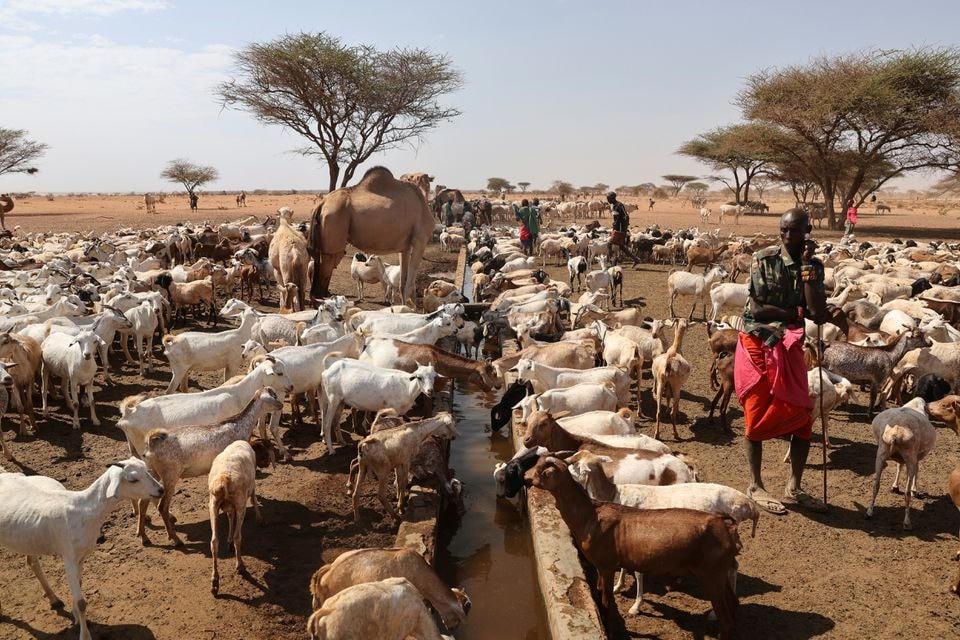
Climate variability across Greater Eastern Africa is restructuring financial behaviour in borderland economies as recurrent droughts, flooding events, and resource degradation disrupt agricultural and pastoral income systems in Kenya, Somalia, Ethiopia, and South Sudan (International Organization for Migration, 2024). These shocks compress household liquidity and increase reliance on mobile money transfers and informal remittance systems as adaptive mechanisms for consumption stability (BBC News, 2024). Institutional capacity to integrate climate shocks into financial oversight remains limited across many frontier governance systems, producing gaps in coordinated response between environmental monitoring and financial regulation (African Development Bank, 2024). Intensifying competition over water access, grazing corridors, and trade routes amplifies localized economic stress, reinforcing dependence on unregulated liquidity channels for mobility and survival financing (Reuters, 2025). Over time, climate pressure transforms informal financial systems from episodic coping mechanisms into structurally embedded liquidity infrastructures that link environmental instability directly to decentralized financial circulation across fragile regional economies (Al Jazeera, 2025).
3.0 Conclusion
Informal financial systems and conflict economies in Greater Eastern Africa converge through fragmented border authority, high-velocity digital liquidity, commodity-based exchange networks, and climate-induced livelihood compression across IGAD and EAC frontier zones. These dynamics do not operate in isolation but reinforce one another, producing a single circulation system where fiscal authority, regulatory visibility, and transactional control are structurally misaligned. Border fragmentation displaces centralized enforcement into localized exchange regimes, while mobile money systems compress transaction time beyond supervisory reach. Commodity flows embed conflict financing within routine trade pathways, and climate volatility expands dependence on informal liquidity channels across vulnerable populations. The result is a regional economic order where value circulation is faster than governance adaptation, sustaining persistent gaps between financial movement and institutional control.
4.0 Policy Recommendations
4.1 Institutionalise a Regional Cross-Border Intelligence Coordination Platform
The East African Community Secretariat, the IGAD Secretariat, and national customs, immigration, and revenue authorities should establish a permanent regional border intelligence coordination platform covering high-risk corridors across Greater Eastern Africa. The platform should integrate customs declarations, migration records, cargo manifests, and informal trade intelligence into a shared operational environment using interoperable digital standards. Delivery should occur through legally binding information-sharing protocols adopted by participating states and implemented by designated national coordination centres. Joint operational reviews, standard risk indicators, and quarterly compliance assessments should measure implementation. The EAC Sectoral Council on Interstate Security should oversee institutional accountability, while annual reporting to the EAC Council of Ministers and IGAD Council of Ministers should evaluate operational performance, data quality, and cross-border enforcement outcomes.
4.2 Adopt a Regional Digital Financial Oversight Framework
Central banks, financial intelligence units, telecommunications regulators, and mobile money supervisors across Greater Eastern Africa member states should implement a harmonised regional framework for monitoring cross-border digital financial transactions. The framework should establish common standards for customer identification, transaction classification, agent registration, and interoperable reporting across licensed payment service providers. Implementation should rely on integrated supervisory dashboards capable of identifying irregular transaction patterns without disrupting legitimate commercial activity or financial inclusion. Oversight should be coordinated through the regional Monetary Affairs Committees with technical support from regional financial intelligence mechanisms. Periodic regulatory peer reviews, common compliance benchmarks, and reciprocal supervisory recognition should provide transparent accountability while preserving national regulatory mandates and operational independence.
4.3 Formalise High-Risk Informal Trade Corridors Through Regional Trade Governance
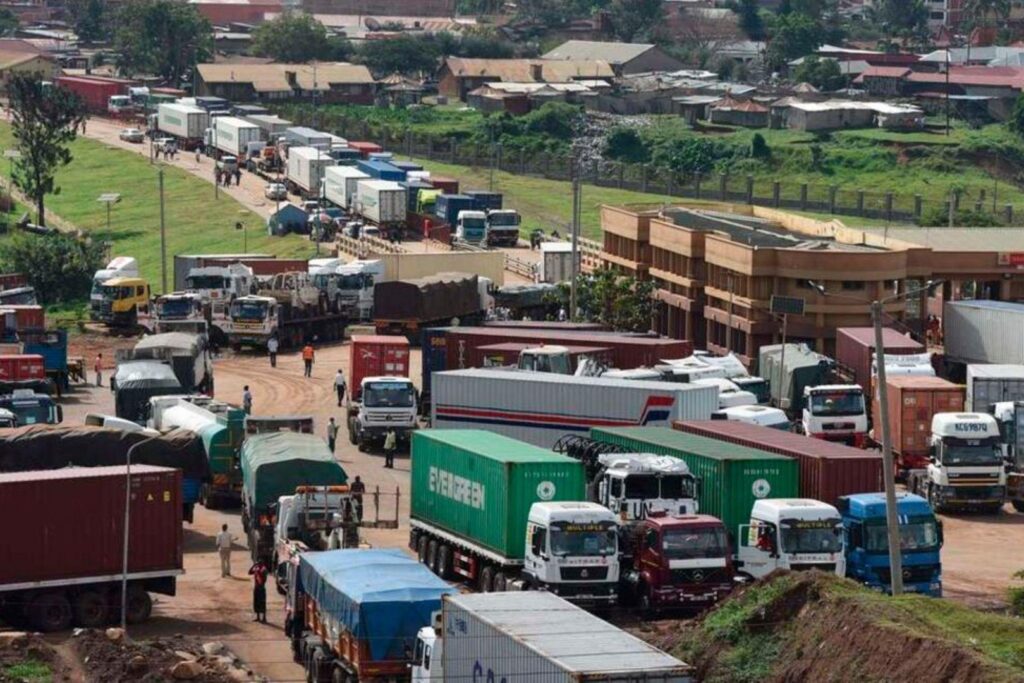
National ministries responsible for trade, revenue authorities, customs administrations in Greater Eastern Africa Region , and the AfCFTA Secretariat should establish a joint framework for registering and monitoring high-volume informal trade corridors associated with recurrent illicit financial activity. The framework should introduce simplified cross-border trader registration, digital trade identification, commodity tracking, and harmonised reporting requirements for frequently traded goods moving through designated frontier markets. Implementation should prioritise major regional trade corridors where informal commerce sustains livelihoods while creating persistent governance blind spots. Joint customs inspection teams, interoperable trade databases, and corridor-level compliance monitoring should support operational delivery. Performance should be reviewed annually using measurable indicators covering trader registration, reporting compliance, and formal market participation.
4.4 Integrate Climate Risk into Regional Financial and Border Governance
The Greater Eastern Africa region should establish a Climate Prediction and Applications Centre, and a regional climate-financial risk coordination mechanism linking environmental monitoring with financial and border governance systems. The mechanisms should combine climate forecasting, displacement monitoring, market disruption indicators, and cross-border financial data to identify areas experiencing simultaneous environmental and economic stress. Delivery should occur through an integrated regional analytical platform supporting coordinated planning across humanitarian, financial, and security institutions. Findings should inform national planning frameworks, regional resilience programming, and cross-border economic risk management across Greater Eastern Africa.
5.0 References
Afrika, J. G., & Ajumbo, G. (2012). Informal cross-border trade in Africa: Implications and policy recommendations. African Development Bank.
African Development Bank. (2024). African economic outlook 2024: Driving Africa’s transformation through reform. African Development Bank Group. https://www.afdb.org/en/documents/african-economic-outlook-2024
Al Jazeera. (2025, February 18). Informal trade sustains border economies across the Horn of Africa. https://www.aljazeera.com/
Ayoki, M. (2025). Informal cross-border trade by MSMEs in East Africa: Opportunities, challenges, and gendered experiences at Cyanika, Mpondwe, and Vvura border areas. Institute of Policy Research and Analysis.
BBC News. (2024, June 12). How mobile money is reshaping East Africa’s economy. https://www.bbc.com/news
Dzawanda, B. (2025). A systematic review of informal cross-border trade in African economies. Discover Sustainability, 6(1), 1-15.
Financial Sector Deepening Kenya. (2023). Kenya cross-border informal remittances demand-side research report. Financial Sector Deepening Kenya. https://www.fsdkenya.org/publication/kenya-cross-border-informal-remittances-demand-side-research-report/
Foster, C. (2021). Global transfers: M-Pesa, intellectual property rights and digital innovation. arXiv. https://arxiv.org/abs/2108.09781
International Organization for Migration. (2024). Regional strategic overview 2024: East and Horn of Africa. International Organization for Migration. https://eastandhornofafrica.iom.int/
Kahiya, E. T. (2025). Informal cross-border trade and its paradoxical tensions. Journal of Innovation and Entrepreneurship, 14(1), 1-18.
Reuters. (2025, October 9). African trade bloc COMESA launches digital payments system. Reuters.
Sowon, K., Luhanga, E., Cranor, L. F., Fanti, G., Tucker, C., & Gueye, A. (2023). The role of user-agent interactions on mobile money practices in Kenya and Tanzania. arXiv. https://arxiv.org/abs/2309.00226
United Nations Conference on Trade and Development. (2020). Leveraging digital solutions to seize the potential of informal cross-border trade. United Nations.
United Nations Conference on Trade and Development. (2024). Economic development in Africa report 2024: Unlocking Africa’s trade potential. United Nations Conference on Trade and Development. https://unctad.org/publications