


1.0 Introduction
Kenya’s refugee policy is shifting from camp-based assistance towards socioeconomic inclusion, making financial inclusion relevant to refugee security. The Shirika Plan situates refugees and host communities within a development framework and identifies sustainable economic development as one of its pillars (Department of Refugee Services, 2025). Kenya’s legal framework provides refugees with official documentation, while financial rules determine whether that identity translates into access to regulated finance (Kenya Law, 2024). UNHCR reporting shows that refugee identification supports mobile-money access and that refugees are included in Kenya’s National Financial Inclusion Strategy, while discussions on bank access continue (UNHCR, 2026). Evidence from Kenya’s cooperative financial sector identifies documentation challenges, regulatory uncertainty, and product misalignment as barriers to financial access (World Council of Credit Unions, 2026). Regional relevance emerges through the Intergovernmental Authority on Development’s (IGAD) 2026 policy agenda linking refugee financial inclusion with digital payments, legal identity and Know Your Customer (KYC) requirements across Kenya, Uganda and Ethiopia (Intergovernmental Authority on Development, 2026). The purpose of this commentary is to examine how financial inclusion shapes refugee security in Greater Eastern Africa, using Kenya as the case.
2.0 Key Issues
2.1 Legal Recognition Remains Disconnected from Financial Practice
Kenya’s refugee identity framework is more developed in law than in financial-service practice. The Refugees (General) Regulations, 2024 provide for refugee identity cards (Kenya Law, 2024). Kenya’s anti-money-laundering and countering the financing of terrorism framework establishes customer-identification and verification requirements for reporting institutions (Kenya Law, 2025). UNHCR reports that refugee identity cards support mobile-money access, while questions surrounding access to private financial services remain under clarification (UNHCR Kenya, n.d.). A 2026 assessment of Kenya’s refugee financial-inclusion landscape identifies regulatory, market and demand-side barriers across banks, fintechs and other providers (FSD Kenya, 2026). The institutional gap therefore lies between recognised refugee identity and consistent acceptance by financial providers. Legal documentation establishes status, but its practical financial value depends on how regulated institutions interpret and operationalise that status. Documentary recognition therefore becomes a condition of inclusion.
2.2 Refugee Self-Reliance Is Advancing Faster Than Financial Access
Financial exclusion limits the economic functions that Kenya’s refugee-inclusion framework seeks to expand. The Shirika Plan places refugees and host communities within a development framework for socioeconomic inclusion (Department of Refugee Services, 2025). The World Bank’s 2026 assessment places employment and income generation at the centre of refugee self-reliance (World Bank, 2026). Financial services connect livelihoods to saving, payments, enterprise finance and managing shocks (UNHCR, 2026). A 2026 assessment of Kenya’s refugee financial-inclusion landscape finds that structured pathways into savings, credit and insurance remain limited (FSD Kenya, 2026). Regional policy work also treats financial inclusion as part of refugee economic empowerment regionally (IGAD, 2026). The resulting asymmetry is between expanding economic participation and uneven financial-service access. Security implications arise where constrained access limits the capacity to retain, transfer and mobilise income safely.
2.3 KYC Requirements Leave Proportionality Insufficiently Defined
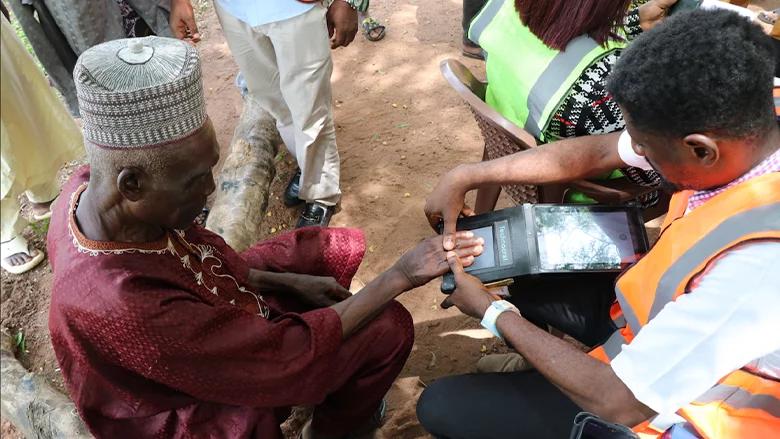
The regulatory tension lies between customer due diligence and proportionate access to formal finance. Kenya’s 2023 anti-money-laundering regulations establish requirements for identifying and verifying customers (Kenya Law, 2023). The wider anti-money-laundering and countering the financing of terrorism framework requires reporting institutions to establish and verify customer identity (Kenya Law, 2025). Financial Action Task Force guidance links financial inclusion with proportionate, risk-based controls that address financial-exclusion risks (Financial Action Task Force, 2025). UNHCR has supported risk-based Know Your Customer approaches that reduce unnecessary documentation barriers while retaining due-diligence safeguards (UNHCR, 2023). Kenyan financial-inclusion evidence identifies rigid KYC requirements among barriers affecting refugees (FSD Kenya, 2026). The unresolved issue is whether compliance rules produce proportionate decisions without treating refugee documentation as evidence of heightened risk. The boundary between risk management and avoidable exclusion remains consequential.
2.4 Digital and Cross-Border Finance Outpaces Institutional Interoperability
Digital finance is widening the channels through which refugees participate economically, while identity and compliance systems remain organised through national institutions. Kenya’s digital-finance ecosystem has expanded access to payments (World Bank, 2024). Refugee identity cards now support access to mobile-money services, linking legal documentation to digital financial participation (UNHCR Kenya, n.d.). IGAD’s 2026 policy agenda links refugee financial inclusion with fintech, mobile money, digital payments, legal identity and KYC across Kenya, Uganda and Ethiopia (IGAD, 2026). The East African Community Common Market provides a framework for the movement of capital and services (East African Community, n.d.). UNHCR’s regional roadmap connects financial services and enabling business environments with refugee economic empowerment across East Africa (UNHCR, 2025). The regional tension is between increasingly digital participation and nationally bounded identity and compliance systems, leaving regional economic mobility dependent on institutional compatibility.
3.0 Conclusion
Kenya’s refugee policy has established a stronger foundation for socioeconomic inclusion, but financial inclusion has not yet become consistently embedded in the systems through which refugees access, use and benefit from formal finance. The resulting gap is not solely a question of documentation or banking access. It concerns whether legal identity, financial-service provision, proportionate customer due diligence and increasingly digital economic participation operate as a coherent system that supports refugee security. Kenya therefore provides a country-level illustration of a wider Greater Eastern African challenge, where refugee mobility and economic participation increasingly intersect with nationally organised financial and identity systems. Financial inclusion consequently sits at the intersection of refugee security, economic participation and institutional integration, making its effectiveness a wider regional policy concern.
4.0 Policy Recommendations
4.1 Define Refugee Documents for Financial Know Your Customer
Regulated institutions should apply the same document rules across account-opening channels and record reasons for rejection. The Central Bank should test implementation through supervisory reviews of refugee applications, rejection patterns and escalation procedures, while the Financial Reporting Centre aligns relevant anti-money-laundering guidance. The Department of Refugee Services should communicate documentation requirements and changes to providers. This would convert legal recognition into consistent financial-service practice without altering customer-due-diligence standards.
4.2 Integrate Financial Access into Refugee Self-Reliance
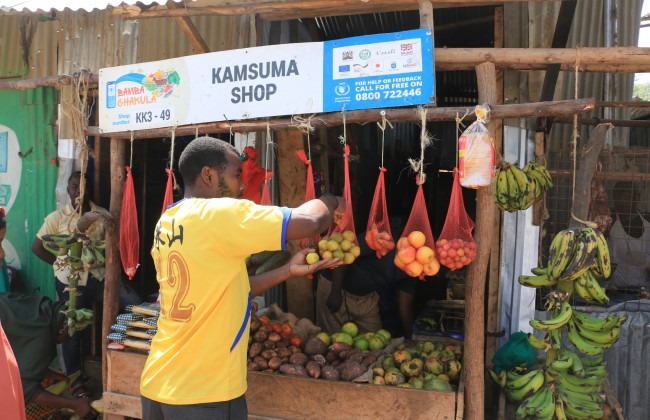
The Department of Refugee Services, National Treasury and Central Bank of Kenya should incorporate measurable financial-access targets into Shirika Plan implementation instruments for refugee and host-community economic programmes. Indicators should cover regulated accounts, digital payments, savings, credit and insurance, disaggregated by location and service type. Financial institutions and implementing partners should submit standardised data, while the National Treasury should publish a dashboard linking financial access with livelihood and enterprise outcomes. The Central Bank should validate regulated-service indicators through supervisory data, and Shirika review mechanisms should assign institutional actions where persistent gaps appear. This would connect financial inclusion to sustainable economic development and make access to usable financial services a measurable component of refugee self-reliance rather than a parallel intervention.
4.3 Establish Proportionate Refugee Customer Due Diligence
The Central Bank of Kenya and the Financial Reporting Centre should issue a risk-based customer-due-diligence protocol for refugees, distinguishing ordinary, simplified and enhanced measures according to product and risk category. The protocol should specify verification methods, minimum information, escalation triggers and permissible documentation alternatives. Regulated institutions should record the basis for enhanced checks and rejected applications through a standard supervisory template. The Central Bank should review anonymised data quarterly and require corrective action where unexplained variation in refugee customer treatment persists. The Financial Reporting Centre should incorporate the protocol into anti-money-laundering guidance and supervisory communications. This would preserve customer-due-diligence safeguards while reducing inconsistent compliance practices that can turn refugee documentation into an unnecessary barrier to financial access.
4.4 Establish Regional Interoperability for Refugee Finance
The IGAD, working with the East African Community Secretariat and relevant financial regulators, should establish a regional framework for refugee financial-identity interoperability. The framework should define minimum identity fields, procedures for validating refugee documentation across participating systems, and safeguards for lawful information exchange. Kenya, Uganda and Ethiopia should first map existing refugee identity, payment and customer-verification systems before agreeing on common standards. The framework should establish reporting milestones and periodic review without transferring regulatory authority from national institutions. The UNHCR and financial-service providers should participate as technical advisers. This arrangement would address fragmentation between regional mobility and nationally bounded identity systems while preserving national legal mandates, financial integrity controls, and applicable data protection requirements.
5.0 References
Department of Refugee Services. (2025). The Kenya Shirika Plan. Government of Kenya. Department of Refugee Services: The Kenya Shirika Plan
East African Community. (n.d.). Common market. Retrieved August 18, 2026, from East African Community Common Market
Financial Action Task Force. (2025). Guidance on financial inclusion and anti-money laundering and terrorist financing measures. OECD. FATF financial inclusion guidance
Financial Sector Deepening Kenya. (2026, March 31). From access to integration: A landscape assessment of refugee financial inclusion in Kenya. FSD Kenya financial inclusion assessment
Intergovernmental Authority on Development. (2026, May 11). Call for papers: 2026 Evidence to Policy Symposium advancing refugee economic inclusion in East Africa. IGAD 2026 Evidence to Policy Symposium
Kenya Law. (2023). The Proceeds of Crime and Anti-Money Laundering Regulations, 2023 (Legal Notice No. 153 of 2023). National Council for Law Reporting. Kenya Law: AML Regulations 2023
Kenya Law. (2024). The Refugees (General) Regulations, 2024 (Legal Notice No. 39 of 2024). National Council for Law Reporting. Kenya Law: Refugees (General) Regulations 2024
Kenya Law. (2025). Proceeds of Crime and Anti-Money Laundering Act (Cap. 59A). National Council for Law Reporting. Kenya Law: Proceeds of Crime and Anti-Money Laundering Act
United Nations High Commissioner for Refugees. (2023). Gaining ground on refugee financial inclusion through advocacy, innovation and partnerships. UNHCR financial inclusion resource
United Nations High Commissioner for Refugees. (2025). Roadmap for enhancing the investment climate for refugee economic empowerment in East Africa and the Great Lakes region. UNHCR regional refugee economic empowerment roadmap
United Nations High Commissioner for Refugees. (2026). Shirika Plan update. UNHCR Kenya. UNHCR Kenya: Shirika Plan update
World Bank. (2026). Building evidence to enhance the welfare of refugees and host communities in Kenya: Insights from two rounds of the Kenya Longitudinal Socioeconomic Study. World Bank. World Bank 2026 Kenya refugee socioeconomic study