

1.0 Introduction
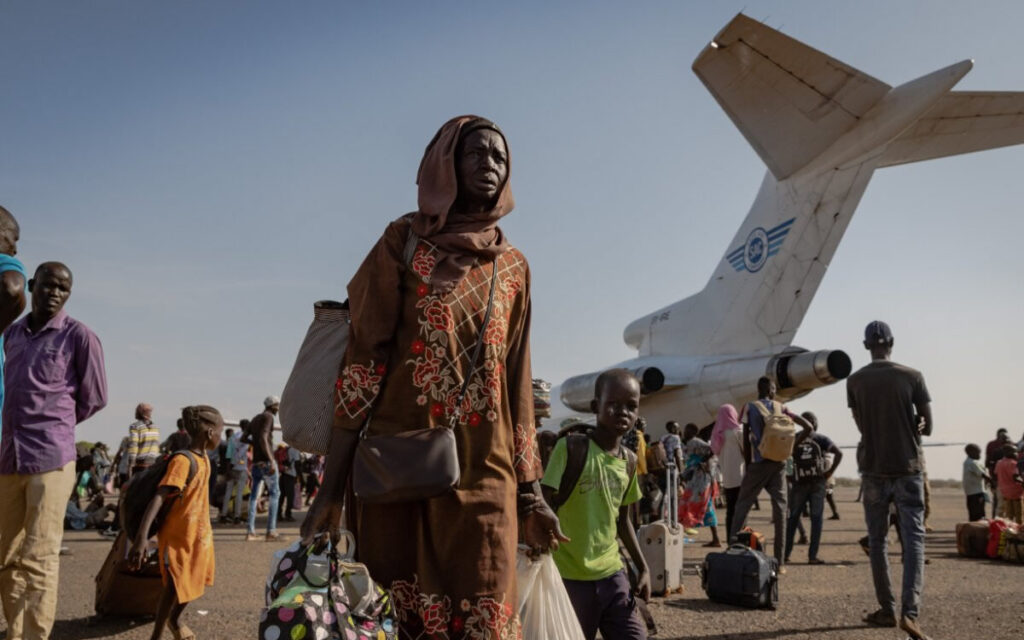
The Sudan crisis in 2026 continues to generate sustained armed fragmentation following the collapse of coherent national command structures in April 2023, with persistent frontline consolidation and spillover instability into adjacent border systems (Reuters, 2026). Displacement trajectories remain extensive, with cross-border movements into Chad, South Sudan, Ethiopia, and Egypt placing cumulative strain on reception infrastructures and administrative systems already operating under fiscal compression (United Nations High Commissioner for Refugees, 2026). Humanitarian monitoring confirms that mobility pressure has produced acute protection deficits in transit and settlement corridors where registration, verification, and service delivery systems have exceeded operational capacity thresholds (International Organisation for Migration, 2026). Concurrently, governance coordination under the African Union and subregional security frameworks continues to face structural misalignment across overlapping mandates, limiting synchronised response across Greater Eastern Africa (African Union Peace and Security Council, 2026). Economic absorption capacity in border-adjacent economies remains weakened under sustained displacement shocks, reinforcing systemic fragility in public service delivery and fiscal resilience (World Bank, 2026). Conflict monitoring data further indicates spatial diffusion of insecurity across interconnected frontier zones, confirming a regionalised pattern of instability rather than isolated national disruption (BBC News, 2026). The commentary examines how these interacting dynamics restructure cross-border insecurity and institutional resilience across Greater Eastern Africa.
2.0 Key Issues
2.1 Fragmentated Armed Economy Expanding Border Permeability
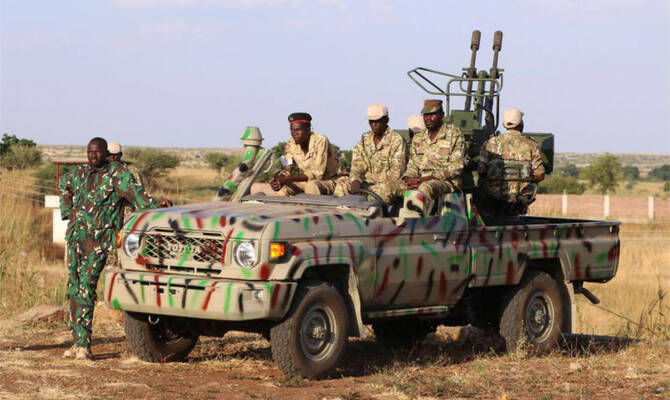
The Sudan crisis has entrenched fragmented armed economies operating across porous frontier zones in Greater Eastern Africa, particularly along corridors linking Sudan with Chad and South Sudan (Reuters, 2026). These economies are sustained through adaptive networks involving informal taxation, arms circulation, and cross-border commodity extraction that weaken state monopoly authority over coercion (United Nations Office on Drugs and Crime, 2026). Conflict datasets indicate persistent mobility of armed actors across shifting territorial lines, reinforcing fluid rather than fixed border control systems (Armed Conflict Location & Event Data Project, 2026). Regional security analysis highlights integration of Sudan’s conflict economy into transnational trafficking structures spanning the Sahel and Horn of Africa (International Crisis Group, 2026). Media reporting confirms continued arms and fuel flows through unofficial corridors operating beyond state surveillance reach (Al Jazeera, 2026). These dynamics consolidate structural permeability across IGAD-linked frontier governance systems.
2.2 Displacement Saturation Overwhelming Reception Systems
The Sudan crisis has generated sustained displacement flows into neighbouring states across Greater Eastern Africa, with major corridors into Chad, South Sudan, Ethiopia, and Egypt experiencing persistent pressure on reception systems (United Nations High Commissioner for Refugees, 2026). Mobility expansion has exceeded administrative capacity thresholds in registration, screening, and protection systems at border entry points and transit hubs (International Organisation for Migration, 2026). Humanitarian assessments indicate widening protection deficits in overcrowded settlements where service delivery remains fragmented across jurisdictions (International Rescue Committee, 2026). Regional coordination mechanisms under the African Union Peace and Security Council continue to experience structural misalignment across overlapping mandates, limiting operational synchronisation (African Union Peace and Security Council, 2026). Media reporting confirms sustained humanitarian strain linked to prolonged displacement trajectories and constrained fiscal absorption capacity in host states (BBC News, 2026). These conditions generate systemic overload across interconnected humanitarian mobility corridors.
2.3 Criminal Convergence Intensification Within Mobility Corridors
The Sudan crisis has intensified convergence between displacement flows and transnational criminal economies operating across Greater Eastern Africa’s mobility corridors (United Nations Office on Drugs and Crime, 2026). Trafficking networks increasingly exploit humanitarian routes linking Sudan to Libya, Chad, and the Horn of Africa, embedding coercive exploitation within movement systems (International Organisation for Migration, 2026). Conflict economy analysis indicates deepening financial interdependence between armed groups and smuggling networks across frontier zones (Global Initiative Against Transnational Organised Crime, 2026). Monitoring data records sustained movement of illicit goods and facilitators through weakly governed border environments (Armed Conflict Location & Event Data Project, 2026). Media reporting confirms continued exploitation of displacement pathways by organised networks operating across multiple jurisdictions (Al Jazeera, 2026). These dynamics embed criminal infrastructures within humanitarian mobility systems across IGAD-linked corridors.
2.4 Governance Fragmentation Weakening Regional Coordination
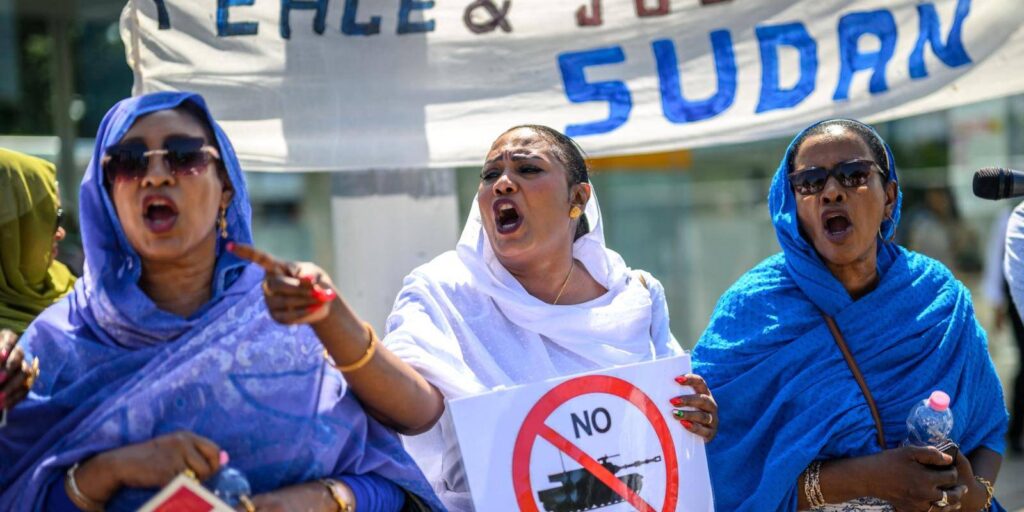
The Sudan crisis has exposed structural fragmentation within regional security governance systems across Greater Eastern Africa, particularly under overlapping IGAD, African Union, and subregional coordination frameworks (African Union Peace and Security Council, 2026). Institutional misalignment has reduced synchronisation between early warning systems and operational response mechanisms across border-adjacent jurisdictions (International Crisis Group, 2026). Conflict diffusion data indicate the spatial spread of insecurity beyond national boundaries, reflecting systemic rather than isolated instability patterns (Armed Conflict Location & Event Data Project, 2026). Humanitarian coordination assessments report persistent gaps in information sharing and response alignment across affected corridors (United Nations Office for the Coordination of Humanitarian Affairs, 2026). Media reporting confirms divergence in national response capacities despite shared exposure to displacement pressures (Reuters, 2026). These conditions reinforce asymmetric governance performance across regional security systems.
3.0 Conclusion
The Sudan conflict has generated structural disruptions that extend beyond national boundaries into regional security systems across Greater Eastern Africa. Arms proliferation, displacement saturation, criminal convergence, and geopolitical diffusion collectively reflect a governance environment under sustained mobility pressure. Institutional frameworks across neighbouring states remain unevenly equipped to absorb and regulate these flows, producing persistent asymmetries between security demand and administrative capacity. The interaction between conflict economies and humanitarian mobility continues to reshape border governance functions, reinforcing exposure across multiple territorial interfaces. These dynamics converge into a regional condition where insecurity is transmitted through interconnected systems rather than isolated events, reshaping the operational logic of stability across the Horn of Africa and adjacent border regions.
4.0 Policy Recommendations
4.1 Institutionalisation of A Regional Arms Intelligence Integration Architecture
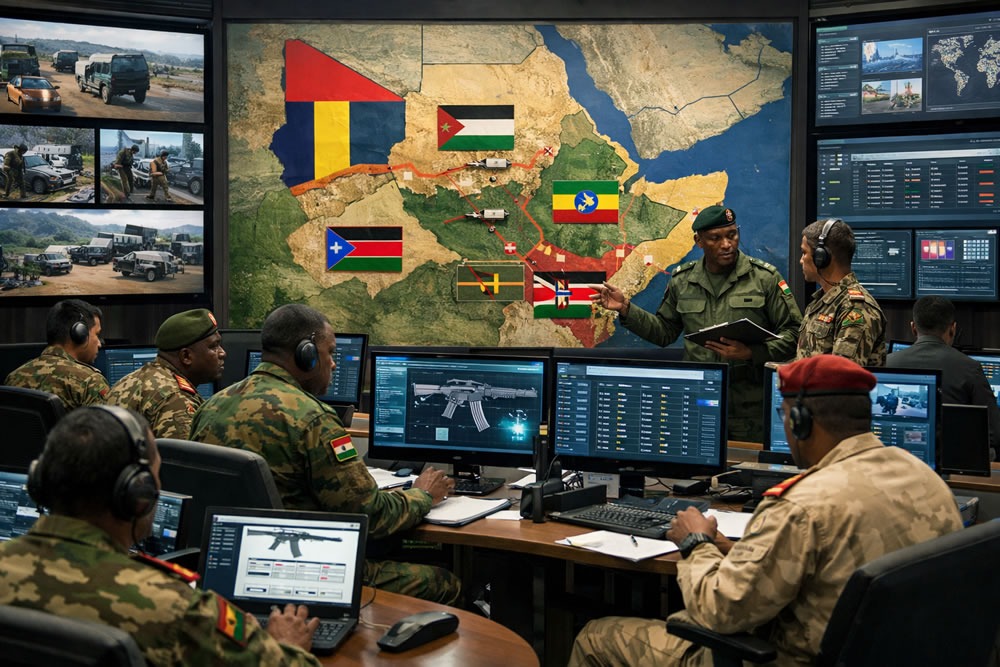
The IGAD should operationalise a regional arms intelligence fusion system linking defence ministries across Sudan, South Sudan, Ethiopia, Kenya, and Chad through standardised surveillance and reporting protocols. The AUPSC should further embed uniform weapons tracing standards within continental security reporting frameworks, while the EAC structures align border enforcement procedures across frontier corridors. A centralised IGAD fusion centre should operate interoperable tracking databases consolidating intelligence from national security agencies into a single verification stream. Border liaison officers transmit real-time field data into central systems under standardised reporting intervals. Quarterly audit authority under AU oversight should validate compliance through structured inspection cycles and corrective feedback loops.
4.2 Establishment of Displacement Governance Interoperability Framework
The International Organisation for Migration(IOM) and the United Nations High Commissioner for Refugees(UNHCR) should coordinate a unified displacement governance system integrating national refugee agencies in Ethiopia, South Sudan, Chad, and Egypt into a shared administrative architecture. National immigration authorities need to deploy interoperable biometric registration platforms enabling synchronised identity verification at border entry points. A joint IOM–UNHCR data hub consolidates real-time mobility flows and distributes standardised protection screening protocols to national processing units. IGAD migration governance structures enforce cross-border audit procedures that verify registration consistency and correct procedural divergence. Synchronised reporting cycles link field operations to regional oversight dashboards under fixed compliance intervals. Enforcement is triggered when registration discrepancies exceed defined thresholds, activating corrective administrative review.
4.3 Operationalisation of Integrated Anti-Trafficking Corridor Disruption System
United Nations Office on Drugs and Crime, INTERPOL regional bureaus, and national interior ministries should coordinate a corridor disruption system targeting trafficking networks across Sudan, Libya, Chad, Ethiopia, and Horn of Africa routes. National law enforcement agencies should execute synchronised patrol scheduling across mapped mobility corridors while shared profiling databases enable cross-border tracking of high-risk actors. IGAD-linked multi-agency command structures consolidate intelligence from border security, customs, and financial monitoring units into unified operational directives. Cross-border prosecution protocols standardise evidentiary processing and activate joint case transfer mechanisms between jurisdictions. Case tracking platforms should generate alerts when network activity persists beyond disruption thresholds, triggering coordinated interdiction responses.
4.4 Activation of the Regional Security Coordination Harmonisation Mechanism
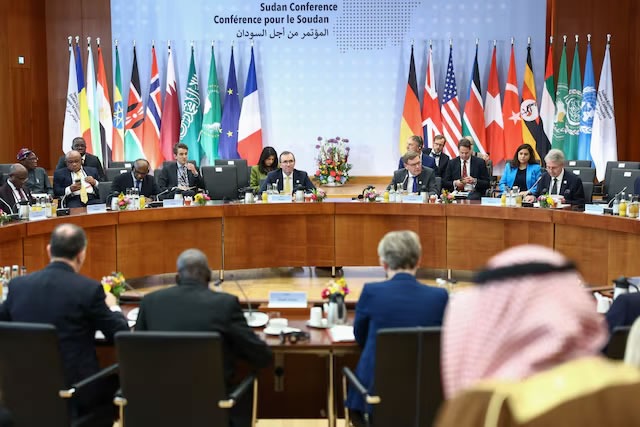
IGAD,AUPSC, and EAC security structures should align national security councils across Sudan’s neighbouring states into a coordinated early warning and response architecture. Intelligence, border management, and humanitarian units integrate interoperable dashboards consolidating cross-border risk indicators into unified situational awareness systems. IGAD-led coordination secretariat issues standardised reporting protocols linking interior and defence ministries through fixed operational intervals. Frontier rapid response cells execute synchronised deployment decisions when shared analytical triggers are activated across corridors. Quarterly convergence assessments under AU oversight validate coordination performance and enforce corrective adjustments where delays or misalignments are detected.
5.0 References
Armed Conflict Location & Event Data Project. (2026). ACLED conflict data dashboard: Sudan and regional spillover patterns. https://acleddata.com
African Union Peace and Security Council. (2026). Communiqué on regional peace and security in Eastern Africa. African Union. https://au.int
Al Jazeera. (2026). Sudan conflict: Cross-border arms and displacement dynamics. https://www.aljazeera.com
BBC News. (2026). Sudan war and regional humanitarian spillover in East Africa. https://www.bbc.com
Global Initiative Against Transnational Organised Crime. (2026). Illicit flows and trafficking convergence in conflict zones. https://globalinitiative.net
International Crisis Group. (2026). Conflict economy and regional instability in Sudan and its neighbours. https://www.crisisgroup.org
International Organisation for Migration. (2026). Displacement tracking matrix: Sudan regional crisis report. https://www.iom.int
International Rescue Committee. (2026). Humanitarian response pressure in Sudan displacement corridors. https://www.rescue.org
Reuters. (2026). Sudan conflict spillover strains neighbouring states and border security. https://www.reuters.com
United Nations High Commissioner for Refugees. (2026). Sudan situation regional refugee response update. https://www.unhcr.org
United Nations Office for the Coordination of Humanitarian Affairs. (2026). Sudan crisis: humanitarian needs and response overview. https://www.unocha.org
United Nations Office on Drugs and Crime. (2026). Transnational organised crime and trafficking in conflict-affected regions. https://www.unodc.org
World Bank. (2026). Economic impacts of forced displacement in Eastern Africa. https://www.worldbank.org