

1.0 Introduction
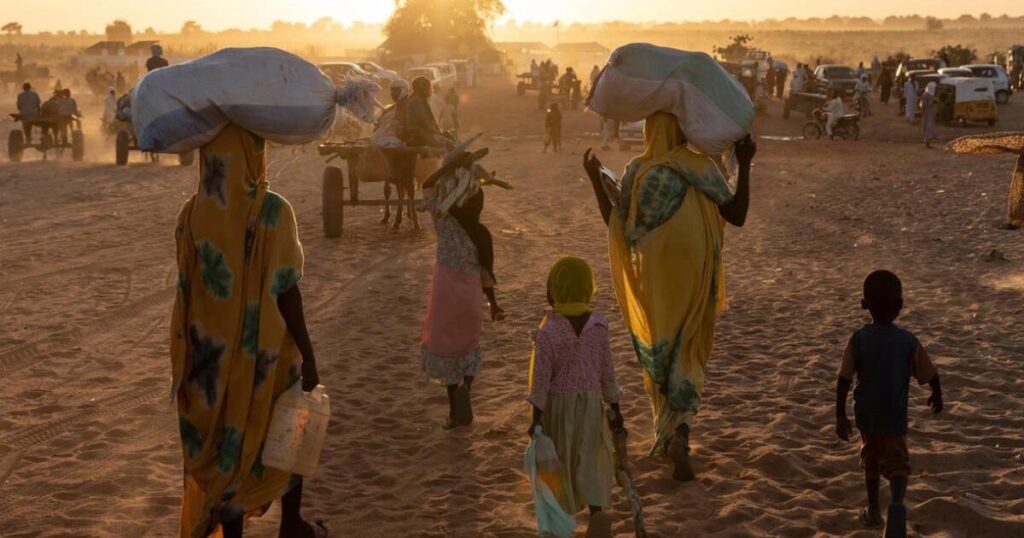
The war in Sudan has become a regional shock that is reorganising border security, mobility systems, and administrative capacity across Greater Eastern Africa (IGAD, 2026). Fighting between the Sudanese Armed Forces and Rapid Support Forces has driven sustained displacement into South Sudan, Ethiopia, Chad, and Uganda, placing continuous pressure on reception systems and local governance structures (UNHCR, 2026). Borderlands absorbing these flows operate under uneven state presence, where security functions are split between formal institutions and armed or informal authorities with shifting control (OCHA, 2026). Arms circulation linked to the conflict is extending this pressure through long-established transnational corridors connecting the Horn of Africa to Sahel-linked networks, deepening insecurity in already fragile frontier zones (ISS Africa, 2025). Displacement has shifted into sustained population reconfiguration, altering demographic balances and increasing demand on overstretched public services in host communities (IOM, 2026). Reporting from international outlets indicates that smuggling networks are embedding more deeply into western and northern Sudanese corridors, adapting to fragmented control and limited oversight (Reuters, 2026). The purpose of this commentary is to examine how the Sudan conflict is reshaping cross-border insecurity dynamics and institutional resilience across Greater Eastern Africa.
2.0 Key Issues
2.1 Fragmented Border Authority Weakens State Containment Capacity
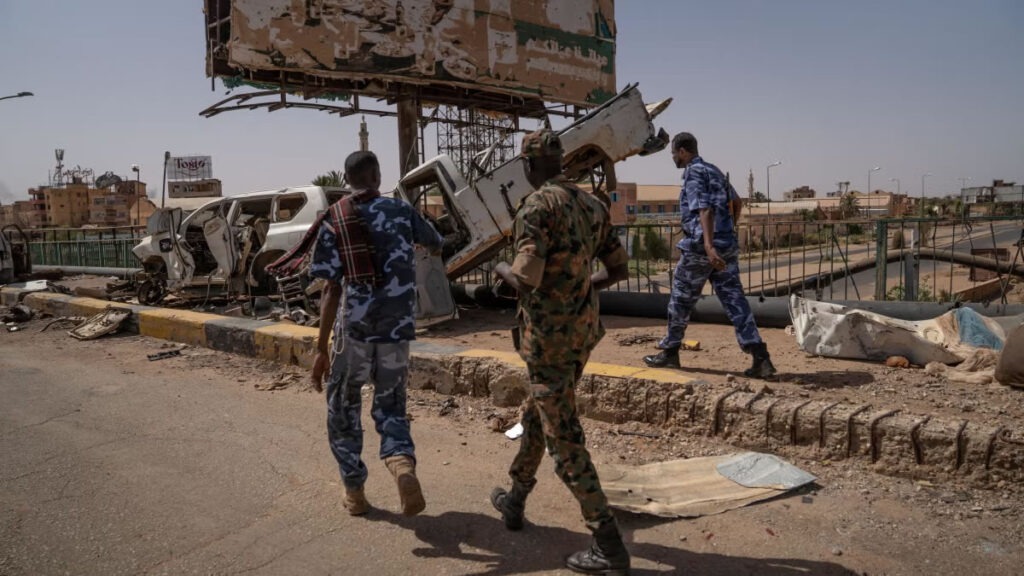
Sudan’s border governance has deteriorated under sustained contestation between the Sudanese Armed Forces and Rapid Support Forces, producing discontinuous authority across frontier territories and weakening coordinated surveillance across Greater Eastern Africa (IGAD, 2026). Displacement into South Sudan, Ethiopia, Chad, and Uganda is absorbed by reception systems operating under constrained administrative bandwidth, reducing verification capacity and movement traceability (UNHCR, 2026). In peripheral zones, security functions are redistributed to informal actors and localized armed groups, generating fragmented enforcement logics that vary across contiguous border segments (OCHA, 2026). Arms leakage from Sudanese stockpiles into adjacent regions reinforces this fragmentation, particularly along pastoral and trade corridors linking the Horn of Africa to northern Uganda (ISS Africa, 2025). Reporting from western Sudan indicates mobility routes are increasingly repurposed for illicit circulation under weak oversight and intermittent territorial control (Reuters, 2026). The result is a border regime defined by discontinuous authority where containment capacity is structurally degraded across Greater Eastern Africa.
2.2 Forced Displacement Restructures Regional Mobility Systems
Sudan’s displacement crisis has consolidated into a sustained mobility shock reshaping population flows and reception capacity across Greater Eastern Africa, moving beyond episodic humanitarian pressure cycles (UNHCR, 2026). Cross-border movement into South Sudan, Ethiopia, Chad, and Uganda is concentrated in border districts where administrative systems operate under chronic resource and staffing constraints (IOM, 2026). These flows intersect with pre-existing migration corridors historically used for seasonal labor and trade, now structurally repurposed under forced displacement dynamics (IGAD, 2026). Humanitarian coordination assessments indicate persistent misalignment between registration systems and actual movement patterns, producing systemic gaps in population visibility and tracking (OCHA, 2026). International reporting shows that Sudan-linked mobility routes are increasingly embedded within broader transregional movement systems extending toward North Africa (Reuters, 2026). Mobility across Greater Eastern Africa is therefore reorganised into hybrid corridors where forced displacement and economic migration operate through shared and increasingly unregulated pathways.
2.3 Arms Diffusion Embeds Insecurity Within Cross-Border Systems
The Sudan conflict has intensified small arms and light weapons diffusion into adjacent border regions, reinforcing insecurity across fragile frontier zones in Greater Eastern Africa (ISS Africa, 2025). Weapons movement follows long-established transnational corridors linking Sudan with South Sudan, Chad, Ethiopia, and northern Uganda, where enforcement capacity remains uneven and intermittently absent (IGAD, 2026). Displacement flows intersect with these corridors, enabling concealment of weapons within broader civilian mobility patterns across porous border zones (UNHCR, 2026). In several frontier districts, informal trade and pastoral routes function as dual-use systems for licit and illicit circulation under limited state visibility (OCHA, 2026). Conflict monitoring sources indicate that arms leakage has become structurally sustained rather than episodic, reflecting adaptive supply chain persistence under wartime fragmentation (Reuters, 2026). These dynamics embed armed capability within mobility systems, extending insecurity from conflict epicentres into wider regional border environments.
2.4 Illicit Economies Consolidate Conflict-Linked Mobility Corridors
Conflict dynamics in Sudan have strengthened convergence between armed activity and illicit economic systems, embedding insecurity within cross-border trade corridors across Greater Eastern Africa (ISS Africa, 2025). Smuggling networks operating through western and northern Sudan have expanded operational scope, integrating weapons, commodities, and human movement within shared logistical infrastructures under fragmented oversight (Reuters, 2026). These corridors intersect with displacement routes into South Sudan, Chad, Ethiopia, and Uganda, producing overlapping mobility systems where humanitarian and illicit flows coexist within the same geographic spaces (UNHCR, 2026). Border governance constraints reduce state capacity to distinguish between forced migration and criminal facilitation in remote frontier regions (OCHA, 2026). Regional coordination mechanisms under IGAD experience uneven enforcement alignment across member states, weakening collective operational coherence (IGAD, 2026). The outcome is a structured economy of movement in which conflict, displacement, and illicit trade mutually reinforce corridor-based insecurity across Greater Eastern Africa.
3.0 Conclusion
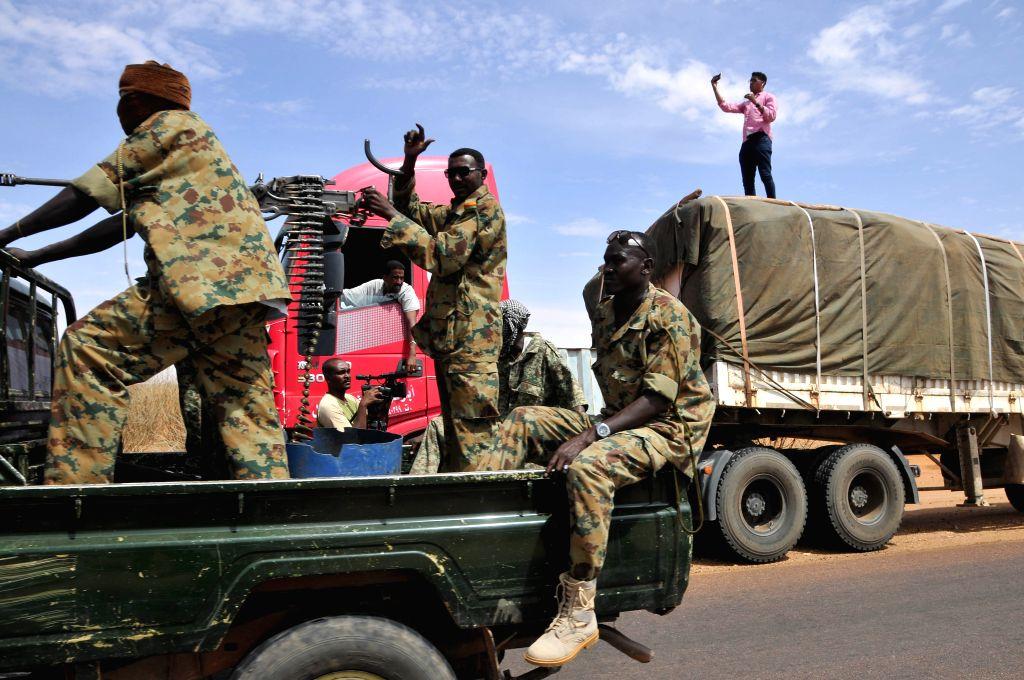
The Sudan conflict has consolidated into a regional disruption system linking territorial fragmentation, sustained displacement, and expanding illicit circulation across Greater Eastern Africa. Border governance weakens where authority is uneven, producing control gaps that allow mobility flows and security risks to converge within shared frontier spaces. These pressures accumulate in receiving states already operating under constrained administrative capacity, limiting effective management of population movement and security oversight. Transnational corridors connecting Sudan to the Horn of Africa and Sahel-linked routes now function as persistent channels through which displacement and illicit exchange interact. Conditions in western and northern Sudan reinforce these patterns under fragmented oversight, extending instability beyond immediate conflict zones. The result is a regional security environment in Greater Eastern Africa defined by constrained institutional resilience under sustained interaction between mobility pressure, conflict fragmentation, and cross-border illicit systems.
4.0 Policy Recommendations
4.1 Establish Joint Border Command Enforcement Posts
The Intergovernmental Authority on Development, in coordination with interior ministries of Sudan, South Sudan, Ethiopia, Chad, and Uganda, should operationalise joint border command enforcement posts at high-pressure crossing points identified in fragmented authority zones. The mechanism should integrate immigration, customs, and security personnel into unified field units operating under IGAD command protocols. Each post should run a shared digital reporting system for movement tracking, incident logging, and entry verification linked to IGAD security coordination infrastructure. National governments should deploy seconded officers under rotational mandates to ensure continuous presence and reduce institutional gaps in frontier control. IGAD should conduct quarterly operational audits and compliance verification missions to ensure procedural consistency. Financial and technical support should be channelled through AU border governance facilities to guarantee infrastructure continuity, equipment interoperability, and sustained enforcement capacity across contested border corridors shaped by ongoing conflict spillovers and fragmented territorial authority conditions.
4.2 Implement Unified Displacement Registration System
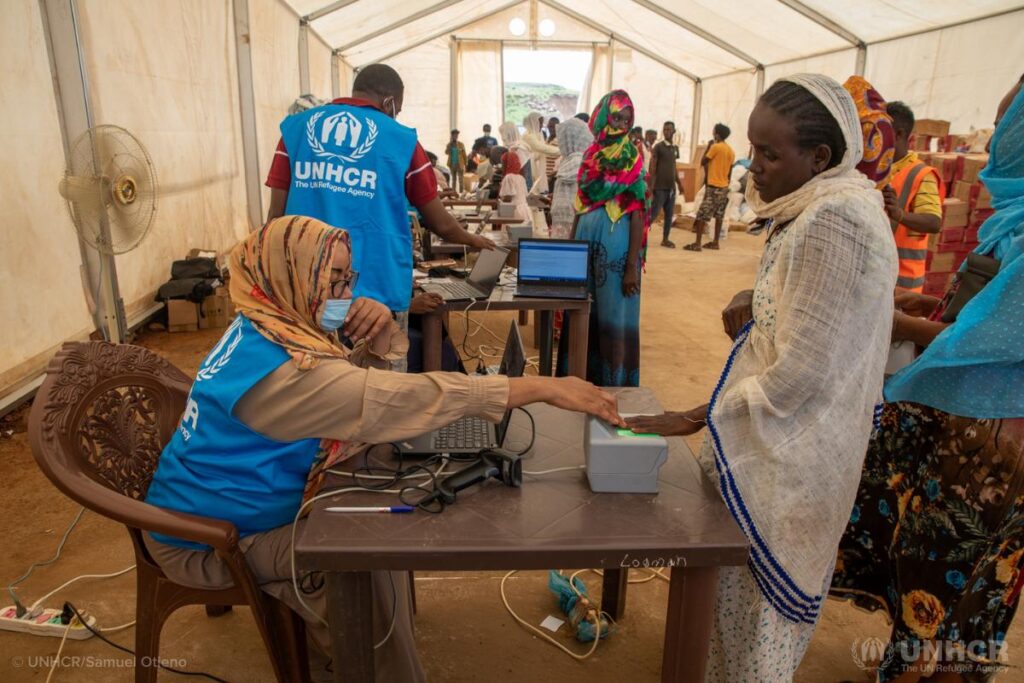
The United Nations High Commissioner for Refugees, in partnership with the International Organization for Migration and national refugee authorities in South Sudan, Ethiopia, Chad, Uganda, and Kenya, should implement a unified displacement registration system for Sudan-origin populations. The mechanism should integrate biometric registration, movement history capture, and cross-border identity verification into a single interoperable database governed by UNHCR data standards. National authorities should conduct frontline registration at reception and transit centres using harmonised protocols aligned with IOM mobility tracking systems. UNHCR and IOM should oversee data validation, duplication detection, and cross-jurisdiction reconciliation to prevent fragmented population records. IGAD should coordinate regional interoperability frameworks to ensure alignment across national systems. Technical infrastructure maintenance should be jointly supported by UN agencies to ensure continuous data flow integrity, reducing gaps in population visibility across high-volume displacement corridors shaped by sustained conflict-driven mobility pressures across Greater Eastern Africa.
4.3 Activate Regional Arms Tracing Enforcement Network
The African Union Peace and Security Council, in coordination with defence ministries of Sudan, South Sudan, Ethiopia, and Uganda, should activate a regional arms tracing enforcement network targeting conflict-linked weapons flows. The mechanism should operate through a centralised AU-managed ballistic tracking and seizure database integrating forensic marking data, border interception records, and weapons recovery logs. National military and customs agencies should be mandated to submit standardised weapons recovery reports through structured digital reporting cycles. Interpol regional offices should provide forensic verification and traceability analysis to map cross-border weapon movement patterns. IGAD should coordinate intelligence exchange and enforcement harmonisation across affected corridors to ensure operational consistency. Monitoring should be conducted through biannual joint assessments measuring interdiction effectiveness along identified trafficking routes linked to Sudan’s conflict spillover zones, ensuring sustained disruption of weapons circulation embedded within regional mobility systems and porous frontier enforcement environments.
4.4 Enforce Corridor-Based Illicit Economy Disruption System
The African Union Commission, in partnership with Financial Action Task Force regional bodies and financial intelligence units in Sudan, South Sudan, Ethiopia, Chad, and Uganda, should enforce a corridor-based illicit economy disruption system targeting smuggling networks operating across displacement-linked routes. The mechanism should integrate financial transaction monitoring, commodity flow tracking, and customs intelligence into a unified enforcement dashboard managed at AU coordination level. National financial intelligence units should conduct real-time suspicious transaction reporting and escalate findings to customs and border enforcement agencies. IGAD should coordinate corridor risk mapping and enforcement synchronisation to ensure alignment of financial, customs, and border control systems across member states. Implementation should be supported through AU compliance auditing frameworks to ensure enforcement consistency, traceability of illicit flows, and operational coherence across high-risk mobility corridors shaped by conflict-driven displacement and embedded transnational smuggling structures.
5.0 References
African Union Peace and Security Council. (2025). Report on cross-border arms flows and regional security threats in Eastern Africa. African Union Commission. https://au.int
Dabanga Sudan. (2025, May 10). Sudan without a centre: State disintegration amid war and the absence of sovereignty. https://www.dabangasudan.org
Gai, P. G., & Wanyama, K. (2025). Sudan conflict: Regional dynamics and international implications. International Journal of Research and Innovation in Social Science, 9(6), 1614–1629. https://rsisinternational.org
Global Initiative Against Transnational Organized Crime. (2025). The illicit transnational supply chains sustaining Sudan’s conflict. https://globalinitiative.net
International Federation of Red Cross and Red Crescent Societies. (2026). Sudan crisis spills across borders as humanitarian pressure intensifies. https://www.ifrc.org
International Organization for Migration. (2026). Displacement tracking matrix: Sudan regional situation report. https://www.iom.int
International Rescue Committee. (2026). Crisis in Sudan: Regional displacement and protection risks. https://www.rescue.org
Intergovernmental Authority on Development. (2026). Regional security coordination framework for cross-border instability. https://igad.int
Interpol. (2025). Illicit arms trafficking routes and forensic tracing systems in Eastern Africa. https://www.interpol.int
Office for the Coordination of Humanitarian Affairs. (2026). Sudan humanitarian update: Cross-border displacement trends. United Nations. https://www.unocha.org
United Nations High Commissioner for Refugees. (2026). Sudan emergency regional refugee response update. https://www.unhcr.org
World Bank. (2025). Fragility, conflict and migration dynamics in the Horn of Africa. https://www.worldbank.org