


1.0 Introduction
South Africa’s anti-migrant crisis is converting a domestic governance failure into a regional security challenge across Greater Eastern Africa. Two vigilante movements, March and March and Operation Dudula, led anti-migrant protests across major South African cities from April 2026. March and March set a public deadline of 30 June 2026, ordering undocumented migrants to leave or face physical harm (Human Rights Watch, 2026). South Africa’s unemployment rate stood at 32% in Q1 2026 after 350,000 jobs were lost, creating conditions in which political actors blamed migrants rather than addressing structural economic failures (CNN, 2026). The Border Management Authority confirmed that over 13,000 foreign nationals, including 9,000 Malawians and 3,000 Zimbabweans, were repatriated or deported within a fortnight, disrupting remittance flows and fracturing diplomatic trust across SADC region (South African Government News Agency, 2026). These developments expose critical gaps in the African Union Peace and Security framework (African Commission on Human and Peoples’ Rights, 2026). The 2026 mobilisation is the largest xenophobic campaign since the 2008 pogroms, confirming that anti-migrant violence in South Africa is a structural regional stability threat (World Socialist Web Site, 2026). This commentary assesses how South Africa’s anti-migrant crisis is reshaping regional stability and institutional resilience across Greater Eastern Africa.
2.0 Key Issues
2.1 Forced Displacement Generates Multilateral Cross-Border Instability
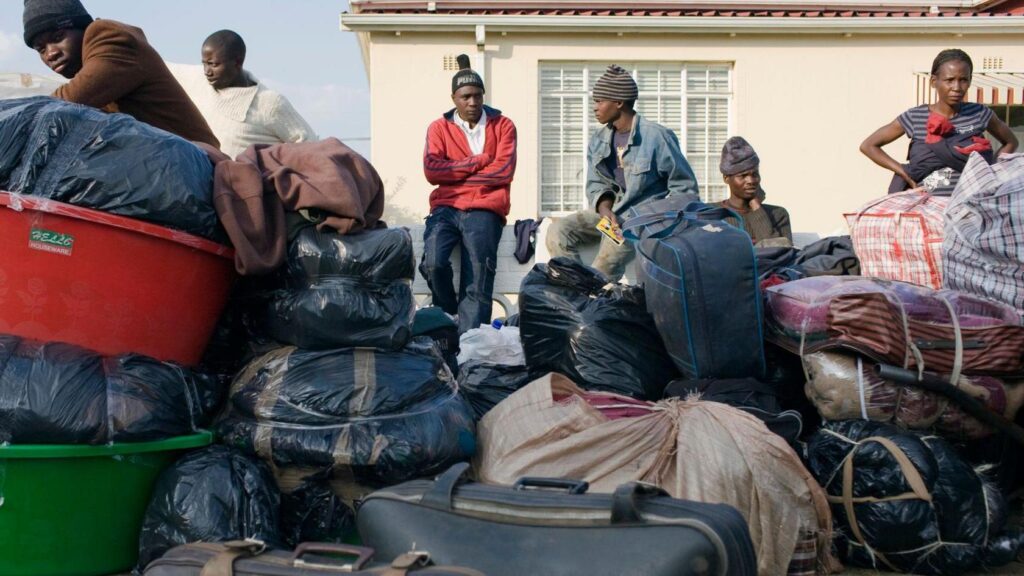
South Africa’s anti-migrant crisis has produced verifiable cross-border instability affecting six states at once. By June 2026, Malawi, Zimbabwe, Mozambique, Nigeria, Ghana, and Kenya had repatriated nationals, issued travel advisories, or summoned South African diplomats over the crisis (Al Jazeera, 2026). Nigeria’s Foreign Minister announced repatriation flights after summoning South Africa’s acting High Commissioner, while 5,056 immigration arrests were recorded in the week of 15 June 2026 alone (South African Government News Agency, 2026). Receiving states absorbed the fiscal and administrative burden of unplanned return migration without advance bilateral notice or coordinated resource transfer agreements (Migration Data Portal, 2020). These uncoordinated population movements generated compounding diplomatic friction extending beyond SADC into West Africa (African Commission on Human and Peoples’ Rights, 2026). The absence of binding SADC or AU crisis protocols forced each state into separate bilateral responses, blocking the collective early warning the Continental Early Warning System was built to provide (CNN, 2026).
2.2 Remittance Disruption and Trade Distrust Undermine Regional Integration
In Malawi, remittances represent approximately 3% of GDP, making the sudden mass return of thousands of workers an immediate fiscal shock to a government without reintegration capacity (Migration Data Portal, 2020). South Africa is the primary corridor through which SADC migrants send remittances home, with Southern African states receiving an estimated USD 7 billion annually, converting mass displacement into a direct economic blow across the sub-region (World Socialist Web Site, 2026). As migrant-run businesses closed ahead of the 30 June deadline, cross-border supply chains serving Mozambique, Zimbabwe, and Malawi faced serious and compounding disruption (CNN, 2026). South Africa’s AfCFTA role, anchoring a trade arrangement spanning 54 countries with a combined GDP of USD 3.4 trillion, now depends on SADC goodwill, which is publicly contested (Institute for Justice and Reconciliation, 2026). Ghana’s AU petition framed anti-migrant violence as a treaty-compliance breach, elevating the crisis beyond security into trade governance (FW de Klerk Foundation, 2026).
2.3 Systematic Protection Failures Erode Pan-African Solidarity
Documented failures reveal systematic rights violations rather than isolated incidents. On 3 May 2026, five Ethiopian nationals were killed in Johannesburg, and five Mozambicans died after mob attacks in Mossel Bay. The African Commission on Human and Peoples’ Rights (ACHPR) placed these events within a pattern extending to the 2008 pogroms, which caused 60 deaths, 1,700 injuries, and 100,000 displacements (African Commission on Human and Peoples’ Rights, 2026). Operation Dudula continued blocking migrant access to health facilities despite a November 2025 South Gauteng High Court order prohibiting that conduct, showing court rulings alone cannot stop vigilante enforcement (Human Rights Watch, 2026). Xenowatch at Wits University recorded over 430 xenophobic killings in South Africa since 2008, confirming a recurring structural pattern (Pindula, 2026). The UN Secretary-General issued a formal statement on 27 April 2026, while regional bodies responded without enforcement power (United Nations, 2026). This gap is eroding the credibility of Pan-African solidarity (African Commission on Human and Peoples’ Rights, 2026).
2.4 Reactive Regional Institutions Reveal a Governance Architecture Gap
African regional institutions responded to the 2026 crisis through procedures rather than action, revealing a gap between displacement scale and institutional speed. The AU Peace and Security Council(AUPSC) addressed the crisis only after Nigeria, holding the Council’s June 2026 chairmanship, formally raised xenophobic attacks as a security priority (Vanguard, 2026). Ghana petitioned for a debate at the AU Cairo Mid-Year Summit on 24 June 2026, but South Africa’s Department of International Relations described the violence as sporadic confrontations, blocking binding regional action (DIRCO, 2026). SADC held a Senior Labour Officials meeting in February 2026 acknowledging labour market challenges, yet issued no migrant protection guidance before the crisis peaked (SADC, 2026). Direct Nigerian lobbying was required before the AU PSC engaged substantively, confirming institutions lack an automatic trigger for cross-border displacement (Human Rights and Legal Research Centre, 2026). This reactive posture carries direct consequences for regional stability (African Commission on Human and Peoples’ Rights, 2026).
3.0 Conclusion
South Africa’s anti-migrant crisis has moved beyond a domestic governance failure and now represents a measurable regional stability threat across Greater Eastern Africa. Over 13,000 foreign nationals were displaced within a fortnight, six states launched repatriation or diplomatic responses, and the AfCFTA’s foundation of regional trust sustained concrete damage within three months. The underlying causes, a 32% unemployment rate, organised vigilantism, and weak enforcement, will not ease without deliberate continental action. Regional institutions engaged only when lobbied, confirming that Pan-African solidarity statements are not backed by operational frameworks with enforceable triggers. Meeting these challenges requires institutional responses that are fast, specific, and backed by genuine enforcement authority.
4.0 Policy Recommendations
4.1 Establish a Regional Migration Crisis Response Mechanism
The African Union Commission(AUC), SADC Secretariat, and International Organization for Migration should establish a Regional Migration Crisis Response Mechanism that activates automatically when confirmed cross-border displacement from any member state reaches 500 persons within 30 days. This removes dependence on member state lobbying and directly addresses the delay that allowed displacement to reach 13,000 persons before institutional coordination engaged in 2026. The mechanism should bring together immigration authorities, disaster management agencies, and social protection ministries under shared standard operating procedures for voluntary returns and humanitarian assistance, drawing legal authority from Article 4(h) of the AU Constitutive Act. Biannual reports to the AU Peace and Security Council should assess implementation, identify emerging risks, and ensure decisions precede wider regional crises.
4.2 Protect Regional Labour Mobility Through Common Standards

The SADC Secretariat, AfCFTA Secretariat, and International Labour Organization should create a Regional Labour Mobility Coordination Framework built on the AfCFTA Protocol on Movement of Persons and the unimplemented provisions of SADC’s 2016 to 2019 Labour Migration Action Plan. The framework should connect labour ministries, immigration authorities, employer organisations, and worker representatives through a shared digital employment verification system that protects documented workers during national enforcement operations. Common documentation standards and a regional database tracking cross-border employment flows would close the legal gaps that left workers in Johannesburg, Durban, and Cape Town vulnerable to vigilante document checks in May 2026. Annual reporting to SADC Labour Ministers and the AfCFTA Council of Ministers should mandate compliance timelines and measurable indicators.
4.3 Codify and Enforce Regional Migrant Protection Standards
The AUC, SADC Secretariat, ACHPR, and United Nations High Commissioner for Refugees(UNHCR) should convert the ACHPR’s six directives of 27 April 2026, covering investigation, accountability, dismantlement of vigilante groups, enhanced protection, accessible remedies, and public directives, into binding treaty obligations for all member states. These standards should set clear limits on force during enforcement operations, require independent monitoring by National Human Rights Institutions under AU mandate, and establish 24-hour multilingual reporting channels for migrants. Independent monitors must have unimpeded access, replacing state self-reporting as the primary accountability mechanism. Annual reports to the AU Peace and Security Council and SADC Summit should measure compliance against fixed indicators and trigger formal engagement when standards are not met.
4.4 Build a Regional Diplomatic Accountability Framework
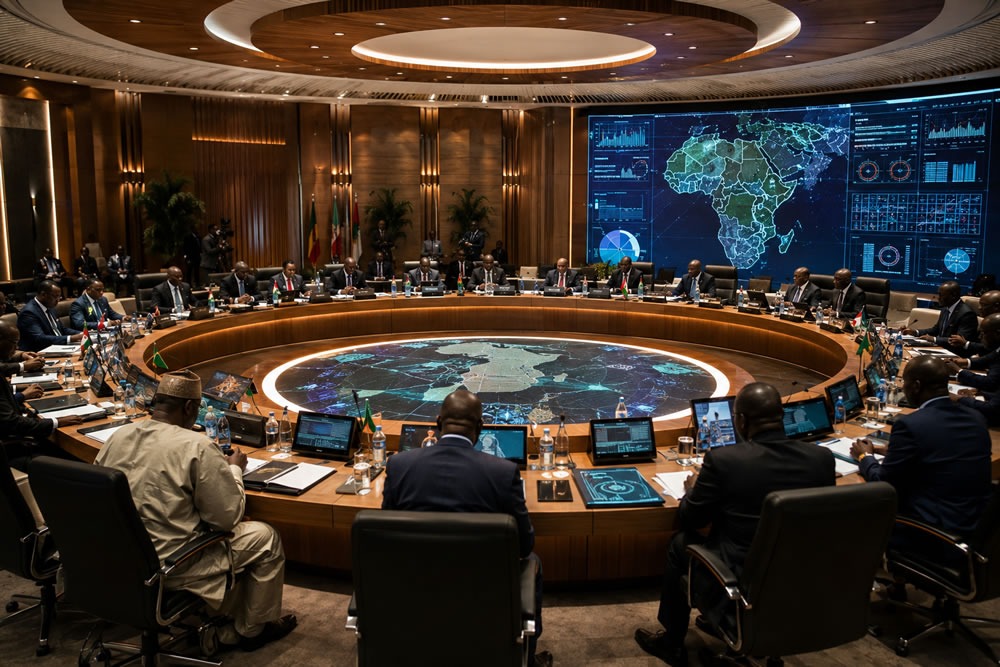
The AUC and SADC Secretariat, should establish a Regional Diplomatic Accountability Framework requiring structured political consultations to begin within 14 days of any confirmed cross-border displacement event meeting defined thresholds. This replaces the current system requiring a member state to lobby for an AU agenda item, the process that delayed engagement until June 2026. The framework should connect foreign affairs ministries, Continental Early Warning System units, and resident diplomatic missions through a rapid assessment protocol with graduated response levels. States whose enforcement operations cause confirmed cross-border displacement should face proportional diplomatic consequences. Annual reporting to the AU Executive Council and SADC Summit should measure outcomes against the displacement and protection benchmarks from the 2026 crisis.
5.0 References
African Commission on Human and Peoples’ Rights. (2026, April 27). The African Commission on Human and Peoples’ Rights deplores the xenophobic attacks and vigilante conduct perpetrated on nationals of other African countries in the Republic of South Africa.https://achpr.au.int/en/news/press-releases/2026-04-27/xenophobic-attacks-and-vigilante-conduct-perpetrated-nationals-other
Al Jazeera. (2026, May 23). Why are anti-migrant attacks increasing in South Africa? https://www.aljazeera.com/news/2026/5/23/why-are-anti-migrant-attacks-increasing-in-south-africa
CNN. (2026, June 29). Leave or return in a coffin’: The threat driving migrants out of South Africa.
https://www.cnn.com/2026/06/29/africa/south-africa-anti-migrant-deadline-intl
Department of International Relations and Cooperation, Republic of South Africa. (2026, May 8). South Africa’s response to the request by the Republic of Ghana for a debate at the AU on the “Xenophobic Attacks in the Republic of South Africa against African Nationals.” https://dirco.gov.za/south-africas-response-to-the-request-by-the-republic-of-ghana-for-a-debate-at-the-au-on-the-xenophobic-attacks-in-the-republic-of-south-africa-against-african-nationals/
FW de Klerk Foundation. (2026, July 2). Xenophobia is now a trade policy problem, not just a law-and-order one. https://fwdeklerk.org/xenophobia-is-now-a-trade-policy-problem-not-just-a-law-and-order-one/
Human Rights and Legal Research Centre. (2026, April 27). Xenophobic violence in South Africa: Government inaction and African Union silence fuel a human rights crisis. https://hrlrc.org/2026/04/27/xenophobic-violence-in-south-africa-government-inaction-and-african-union-silence-fuel-a-human-rights-crisis/
Human Rights Watch. (2026, May 20). South Africa: New waves of xenophobic attacks. https://www.hrw.org/news/2026/05/20/south-africa-new-waves-of-xenophobic-attacks
Institute for Justice and Reconciliation. (2026, May 27). Xenophobia and the paradox of post-apartheid reconciliation in South Africa. https://www.ijr.org.za/2026/05/xenophobia-and-the-paradox-of-post-apartheid-reconciliation-in-south-africa/
Migration Data Portal. (2020). Migration data in the Southern African Development Community (SADC). IOM Global Migration Data Analysis Centre. https://www.migrationdataportal.org/regional-data-overview/southern-africa
Modern Diplomacy. (2026, May 10). South Africa, beloved South Africa with xenophobic attitudes. https://moderndiplomacy.eu/2026/05/10/south-africa-beloved-south-africa-with-xenophobic-attitudes/
Pindula. (2026). 2026 anti-immigration protests in South Africa. https://www.pindula.co.zw/2026_Anti-Immigration_Protests_in_South_Africa
South African Government News Agency. (2026, June). Government continues repatriation and deportation operations, successes recorded. https://www.sanews.gov.za/south-africa/government-continues-repatriation-and-deportation-operations-successes-recorded
Southern African Development Community. (2026, March 3). SADC strengthens regional collaboration to address employment and labour market challenges. https://www.sadc.int/latest-news/sadc-strengthens-regional-collaboration-address-employment-and-labour-market-challenges
United Nations. (2026, April 27). Statement attributable to the Spokesperson for the Secretary-General on the situation in South Africa. https://www.un.org/sg/en/content/sg/statements/2026-04-27/statement-attributable-the-spokesperson-for-the-secretary-general-the-situation-south-africa
Vanguard. (2026, July 1). Nigeria urges AU to make xenophobic attacks a top security priority. https://www.vanguardngr.com/2026/07/nigeria-urges-au-to-make-xenophobic-attacks-a-top-security-priority/amp/
World Socialist Web Site. (2026, July 6). Nearly 25,000 migrants flee South Africa amid xenophobic violence.
https://www.wsws.org/en/articles/2026/07/06/bunb-j06.html