

1.0 Introduction
Health governance across Greater Eastern Africa has increasingly become a structural determinant of human security futures within interconnected systems spanning the East African Community(EAC), the Intergovernmental Authority on Development(IGAD) and Horn of Africa(HoA). Recent Ebola-related alerts and response escalations in the Democratic Republic of Congo(DRC) and the surrounding borderlands underscore persistent fragilities in cross-border early-warning synchronisation and outbreak-containment capacity (BBC, 2026). Reuters reporting further highlights operational constraints in rapid surveillance activation and emergency coordination during initial detection phases across regional entry points (Reuters, 2026). These developments expose limitations in anticipatory governance where delayed identification converts localised health shocks into broader regional insecurity (African Union Commission, 2022).
Mobility corridors linking informal trade routes, displacement pathways, and porous border settlements continue to intensify transmission risk beyond formal containment systems (The East African, 2026). Structural deficits in laboratory infrastructure and workforce distribution weaken diagnostic reliability in peripheral and conflict-affected zones (World Bank, 2026). Weak integration between health surveillance and security intelligence systems further constrains real-time risk sequencing across jurisdictions (Al Jazeera, 2026). Information disorder circulating across regional and international media ecosystems continues to erode institutional trust and compliance with containment directives. The purpose of this commentary is to examine how health governance structures shape evolving human security futures in the Greater Eastern Africa.
2.0 Key Issues
2.1 Fragmented surveillance weakens anticipatory governance
Early warning systems across Greater Eastern Africa remain fragmented across EAC, IGAD, and other AU surveillance architectures, generating delayed interoperability during outbreak detection cycles. Ebola alerts in eastern DRC and Ugandan border spillovers indicate inconsistent synchronization between national surveillance units and regional reporting platforms (BBC, 2026). Reuters reporting on epidemic intelligence highlights persistent lags in validation of cross-border health data during initial verification stages (Reuters, 2026).
African Union Commission(AUC) assessments identify structural weaknesses in anticipatory governance where fragmented reporting channels limit early risk detection capacity (African Union Commission, 2022). World Health Organization(WHO) surveillance updates confirm uneven laboratory confirmation timelines across outbreak-affected jurisdictions (World Health Organization, 2026). Deutsche Welle coverage of regional preparedness systems underscores structural delays in translating epidemiological signals into coordinated regional alerts across mobility corridors (DW, 2026). These conditions reflect systemic misalignment between epidemiological exposure patterns and institutional early warning infrastructures across integrated regional spaces.
2.2 Mobility systems intensify cross-border transmission risk
Mobility structures across Greater Eastern Africa generate sustained epidemiological exposure through trade corridors, displacement routes, and informal border crossings linking DRC, South Sudan, Uganda, and Kenya. International Organization for Migration tracking data indicates continuous movement through unofficial entry points beyond formal health screening coverage (International Organization for Migration, 2025). BBC outbreak reporting highlights reactive border restrictions imposed after detection rather than anticipatory mobility governance systems (BBC, 2026).
The East African analysis documents persistent reliance on informal trade corridors that bypass surveillance infrastructure (The East African, 2026). Reuters epidemiological coverage during outbreak alerts indicates heightened transmission probability associated with unmonitored cross-border movement flows (Reuters, 2026). World Bank border infrastructure assessments identify uneven investment in health screening capacity at peripheral entry points affecting detection reliability (World Bank, 2026). These dynamics demonstrate structural coupling between regional mobility systems and constrained epidemiological containment thresholds across integrated economic and social spaces.
2.3 Asymmetric health systems distort regional response capacity
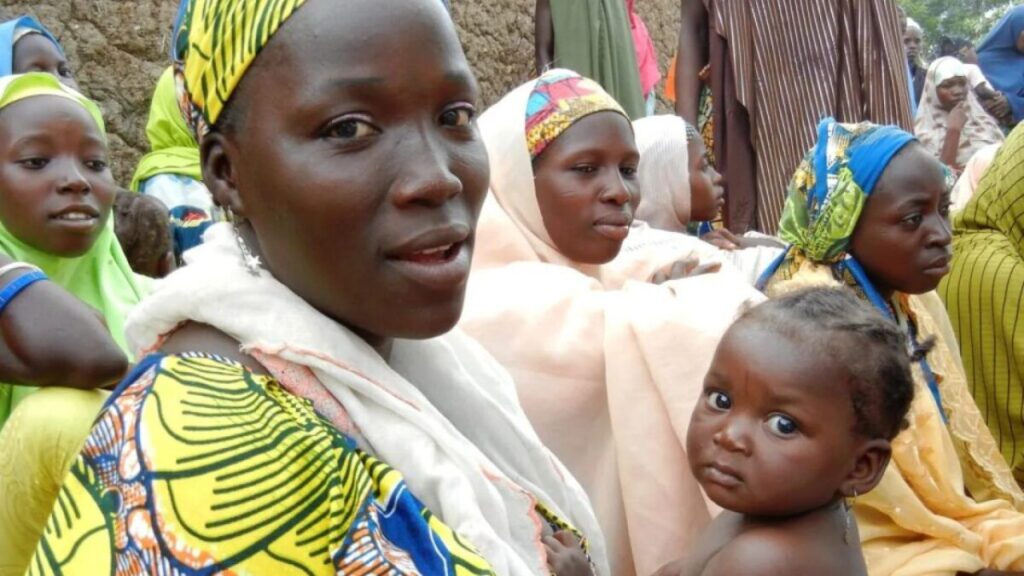
Health system capacity across Greater Eastern Africa remains uneven, producing asymmetries between urban centres, border districts, and conflict-affected peripheries. World Bank infrastructure assessments highlight persistent deficits in laboratory systems, workforce density, and emergency preparedness in rural and frontier regions (World Bank, 2026). WHO outbreak reports identify delayed case confirmation linked to weak diagnostic infrastructure in eastern DRC (World Health Organization, 2026). Al Jazeera English coverage of Ebola resurgence indicates operational strain on frontline health facilities during peak transmission phases in fragile environments (Al Jazeera English, 2026).
Nation Media Group reporting on regional health response highlights uneven distribution of emergency response capacity across national jurisdictions (Nation, 2026). African Union(AU) health security frameworks acknowledge structural disparities in system resilience across member states within shared epidemiological space (African Union Commission, 2022). These asymmetries produce differentiated outbreak trajectories shaped by uneven institutional capacity rather than uniform epidemiological exposure across the region.
2.4 Information disorder erodes institutional response legitimacy
Information ecosystems across Greater Eastern Africa increasingly influence outbreak governance through rapid circulation of verified and unverified health narratives across digital and broadcast platforms. BBC reporting on Ebola communication dynamics highlights persistent uncertainty during early outbreak phases in border communities with limited official information flow (BBC, 2026). Reuters crisis communication analysis identifies that delayed institutional updates create informational vacuums filled by informal sources (Reuters, 2026). Al Jazeera English coverage of regional health emergencies demonstrates how misinformation accelerates distrust in containment directives and public health messaging systems (Al Jazeera English, 2026).
DW reporting on digital information flows in health emergencies highlights the amplification of unverified narratives across transnational media ecosystems (DW, 2026). WHO risk communication frameworks identify structural weaknesses in coordinated outbreak messaging across multiple administrative levels (World Health Organization, 2026). These dynamics illustrate how epistemic instability becomes a determinant of outbreak control effectiveness within interconnected governance environments.
3.0 Conclusion
Health governance across Greater Eastern Africa is increasingly shaped by the convergence of fragmented surveillance systems, mobility-driven exposure networks, asymmetric health system capacity, and destabilised information environments operating across interconnected regional security architectures. Within EAC, IGAD, and other AU frameworks, these interacting pressures generate compounded vulnerabilities that alter the trajectory of epidemic detection, containment, and coordination across borders. The evidence indicates that system fragility is not isolated but structurally interdependent, producing uneven risk amplification across jurisdictions. These conditions collectively reconfigure how epidemiological threats translate into governance stress within shared regional space. The resulting analytical condition is one of systemic convergence under persistent uncertainty, where institutional coordination capacity becomes the decisive variable shaping human security futures in Greater Eastern Africa.
4.0 Policy Recommendations
4.1 Surveillance Fragmentation Control
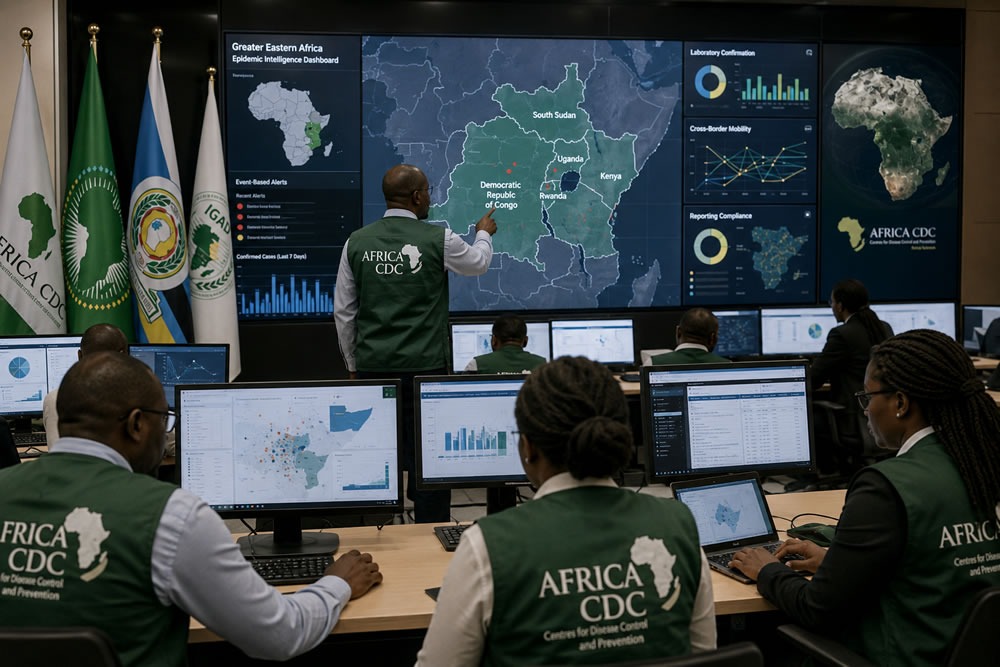
The Africa Centres for Disease Control and Prevention should serve as the lead coordinating authority for a unified epidemic intelligence system across Greater Eastern Africa, in collaboration with the EAC Secretariat and IGAD Health and Social Development Division. A harmonised regional surveillance architecture should be established to connect national public health institutes in the DRC, Uganda, South Sudan, Rwanda, and Kenya through interoperable real-time reporting systems. These systems should integrate laboratory confirmation data, event-based alerts, and cross-border mobility-linked epidemiological intelligence. An AU health security instrument should guide implementation under Africa CDC oversight. Standardised reporting timelines and unified case definitions should be adopted across member states. A continental verification mechanism should be established to audit data submissions and ensure compliance consistency across jurisdictions.
4.2 Cross-Border Health Security Corridors
The EAC should lead the establishment of cross-border health security corridors in coordination with national Ministries of Health and the International Organization for Migration within the sub region. Structured health-secured mobility routes should be designated across formal and informal crossing points linking eastern DRC, Uganda, Rwanda, and South Sudan. These corridors should integrate biometric traveller identification, mandatory health declaration systems, and portable diagnostic screening capacity. Real-time epidemiological risk classification should be applied at points of entry. Regional free movement protocols should be revised to incorporate binding public health safeguards. Joint border operational units should be established to coordinate immigration, customs, and epidemiological screening functions under a unified operational framework. A regional mobility monitoring platform should support continuous risk tracking and early containment activation.
4.3 Diagnostic Capacity Equalisation Facility

The World Bank(WB) should provide financial leadership for a Regional Diagnostic Capacity Equalisation Facility in partnership with the African Development Bank(ADB) and Africa CDC. The facility should support deployment of standardized outbreak detection infrastructure across underserved and high-risk areas in eastern DRC, northern Uganda, South Sudan, and western Kenya. This infrastructure should include modular biosafety laboratories, mobile genomic sequencing units, and rapid diagnostic response teams. Financing should be structured through a pooled multi-donor trust mechanism. Disbursement should be performance-based, linked to detection speed and diagnostic accuracy. Laboratory systems should be harmonised through accreditation standards and cross-border sample referral protocols. A regional laboratory data exchange platform should ensure interoperability across national health systems.
4.4 Regional Information Integrity and Risk Governance System
The WHO should lead the establishment of a regional information integrity and risk communication system in coordination with UNESCO and national communication authorities across Greater Eastern Africa. A unified verification architecture should be developed to monitor and validate outbreak-related information across digital platforms, broadcast systems, and community communication channels in Kenya, Uganda, Tanzania, Rwanda, and the DRC. Real-time verification should be integrated into national emergency operations centres under WHO Africa Regional Office coordination. Structured partnerships should be maintained with BBC Media Action, Reuters regional bureaus, Al Jazeera verification units, and The East African media consortium. These partnerships should support synchronized dissemination of verified public health information. Standardised emergency communication protocols should ensure rapid correction of misinformation during health emergencies.
5.0 References
African Union Commission. (2022). Africa health security and emergency preparedness framework. African Union. https://au.int
Al Jazeera English. (2026). Ebola resurgence strains health systems in eastern Democratic Republic of Congo. Al Jazeera Media Network. https://www.aljazeera.com
BBC News. (2026). Ebola alerts and border response measures in East Africa. British Broadcasting Corporation. https://www.bbc.com/news
Deutsche Welle. (2026). Cross-border health communication gaps in epidemic response systems. DW. https://www.dw.com
International Organization for Migration. (2025). Displacement tracking matrix: Mobility flows in Eastern Africa. IOM. https://www.iom.int
Nation Media Group. (2026). Regional disparities in health emergency response capacity. Daily Nation. https://nation.africa
Reuters. (2026). Cross-border surveillance delays complicate Ebola response efforts in Africa. Thomson Reuters. https://www.reuters.com
The East African. (2026). Informal trade corridors and cross-border health risks in East Africa. Nation Media Group. https://www.theeastafrican.co.ke
World Bank. (2026). Health systems strengthening and diagnostic infrastructure gaps in fragile states. World Bank Group. https://www.worldbank.org
World Health Organization. (2026). Ebola outbreak situation reports and regional surveillance updates. World Health Organization. https://www.who.int