


1.0 Introduction
Trump visa restrictions in 2026 have reconfigured mobility governance across Greater Eastern Africa, altering the legal architecture of transnational movement and its resilience functions (U.S. Government, 2026). Within Greater Eastern Africa frameworks, mobility operates as an adaptive mechanism linking households to labour markets, education systems and climate response pathways (IOM, 2026). Cross-border migration is embedded in livelihood diversification strategies across Kenya, Somalia, Uganda, Tanzania, Eritrea and South Sudan (Borderon et al., 2019). Diaspora remittance flows stabilise drought-exposed economies through consumption smoothing, health expenditure and local investment channels (World Bank, 2026). Reuters reporting indicates that visa restriction regimes have generated secondary adjustments in regional mobility governance and routing patterns (Reuters, 2026). Environmental stress and demographic pressure intensify mobility dependence across IGAD member states (IGAD, 2026). Academic and professional mobility networks sustain institutional resilience in public health, environmental governance and technical capacity formation (Munyaka et al., 2026). These combined dynamics reposition mobility as a structural variable in regional security and adaptation architectures across Eastern Africa. This commentary examines how external visa regimes restructure mobility governance and reconfigure resilience outcomes across Greater Eastern Africa.
2.0 Key Issues
2.1 Fragmented Legal Corridors Intensify Irregular Rerouting Architectures
Restrictive visa regimes affecting Eastern African nationals have reconfigured legal mobility corridors linking Greater Eastern Africa member states to North American and European labour markets, producing structural rerouting effects across established migration systems (U.S. Government, 2026). These shifts interact with pre-existing irregular migration infrastructures embedded within Horn of Africa transit geographies, where enforcement asymmetries shape corridor substitution dynamics (IOM, 2026). Empirical mobility studies indicate that reductions in legal access correlate with expanded reliance on informal facilitation networks across Sudan–Libya trajectories (Borderon et al., 2019). Labour segmentation patterns continue to influence differentiated migration selectivity among skilled cohorts across Kenya, Uganda and Tanzania (ILO, 2026). Media tracking further documents adaptive recalibration in visa-allocation regimes that influence departure-decision architectures (Reuters, 2026). These interacting dynamics expose a widening structural divergence between formal migration governance systems and operational mobility practices across Greater Eastern Africa, where regulatory constraints increasingly reorganise rather than suppress cross-border movement pathways within interconnected household resilience strategies.
2.2 Diaspora Financial Systems Absorb Mobility Governance Shocks
Diaspora remittance systems constitute a central stabilisation infrastructure for household economies across Greater Eastern Africa, particularly in drought-exposed and conflict-sensitive subregions (World Bank, 2026). These flows remain structurally dependent on predictable transnational labour mobility channels linking IGAD states to external labour markets (IOM, 2026). Visa restriction regimes have introduced temporal and procedural friction into these mobility-finance circuits, altering consistency and routing efficiency of cross-border transfers (U.S. Government, 2026). Financial systems research indicates that remittance volatility increases under constrained legal mobility regimes, particularly where irregular migration exposure rises (KNOMAD, 2024). Digital financial infrastructures, including mobile money ecosystems, partially absorb transfer disruptions but remain uneven across regional economies (Central Bank of Kenya, 2026). Media reporting further shows continued counter-cyclical stabilisation effects of diaspora capital flows during climate stress cycles in Somalia, Kenya and Uganda (Reuters, 2026). These interdependencies illustrate how mobility governance interventions propagate indirectly into financial resilience systems without altering underlying dependency structures across Greater Eastern Africa.
2.3 Epistemic Mobility Disruption Reshapes Institutional Learning Gradients
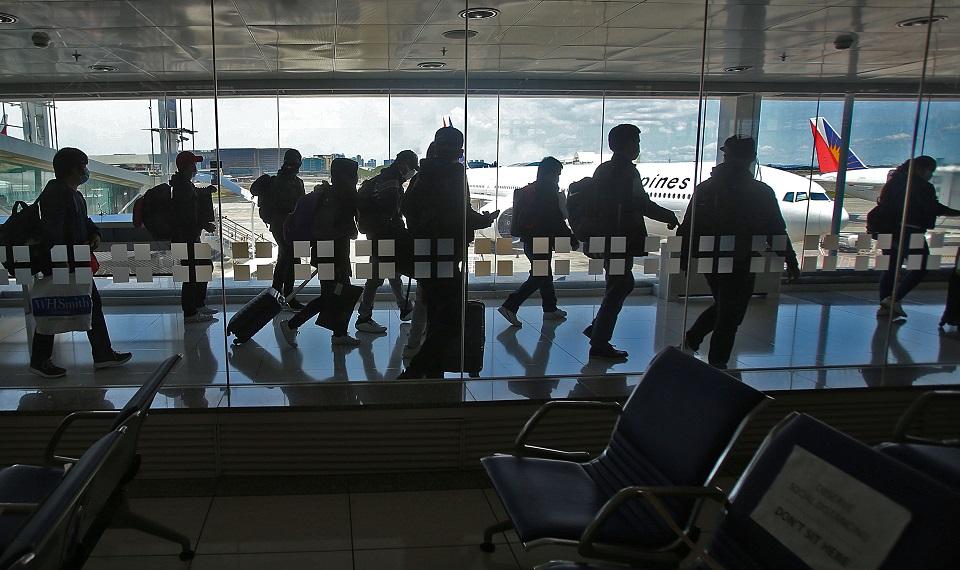
Academic and professional mobility channels linking Eastern African institutions to global research ecosystems constitute a core vector of institutional learning and technical capability formation (Munyaka et al., 2026). Visa restriction regimes imposed by destination states introduce friction into these epistemic mobility pathways, constraining access to advanced training, postgraduate systems and collaborative research infrastructures (U.S. Government, 2026). UNESCO mobility diagnostics indicate that reduced outward academic circulation alters institutional upgrading trajectories in climate adaptation and public health governance systems (UNESCO, 2024). Regional universities in Kenya, Uganda and Tanzania remain dependent on transnational research partnerships for methodological transfer and scientific infrastructure access (World Bank, 2026). Media analysis confirms the gradual diversification of academic destinations toward Asian and Middle Eastern education systems under shifting visa regimes (Reuters, 2026). These adjustments produce uneven reorientation of knowledge networks across IGAD member states (BBC, 2026). The resulting epistemic reconfiguration reflects the structural redistribution of global knowledge hierarchies, shaping Eastern Africa’s institutional learning continuity under mobility constraint conditions.
2.4 Overlapping Governance Regimes Deepen Mobility-Security Misalignment
Mobility governance across Greater Eastern Africa operates within overlapping institutional architectures involving IGAD, EAC and external destination-state visa systems, producing layered regulatory asymmetries (BBC, 2026). External visa restriction regimes have introduced discontinuities between regional free movement frameworks and external labour and academic mobility controls (U.S. Government, 2026). Conflict monitoring datasets indicate that constrained mobility pathways interact with existing insecurity corridors across borderland regions in the Horn of Africa (ACLED, 2026). Migration governance research highlights persistent gaps between formal regional protocols and national enforcement capacities across member states (IOM, 2026). Media tracking further shows that visa policy shifts influence strategic recalibration among skilled labour cohorts across Kenya, Uganda and Tanzania (Reuters, 2026). These interacting governance layers generate systemic misalignment between regional integration aspirations and external mobility restriction regimes, producing cumulative mobility-security feedback effects that reshape institutional stability conditions across Greater Eastern Africa’s interconnected regulatory landscape.
3.0 Conclusion
Mobility governance across Greater Eastern Africa is increasingly shaped by the interaction between external visa restrictions, regional labour circulation, and institutional adaptation within Greater Eastern Africa systems. These pressures reconfigure household resilience by intensifying dependence on remittance flows while exposing fiscal vulnerabilities within national economies. Academic and technical mobility further determines the capacity of regional institutions to sustain policy-relevant knowledge production under constrained cross-border exchange conditions. Border governance systems are simultaneously recalibrated through tighter linkages between migration flows, security monitoring, and anticipatory risk frameworks operating across interconnected corridors. Collectively, these dynamics confirm that mobility functions as a central structural determinant of resilience, institutional continuity, and regional stability. The analysis clarifies how intersecting external and internal pressures reshape governance architectures and reconfigure mobility-security relations across Greater Eastern Africa.
4.0 Policy Recommendations
4.1 IGAD Mobility Coordination Requires Regulatory Integration
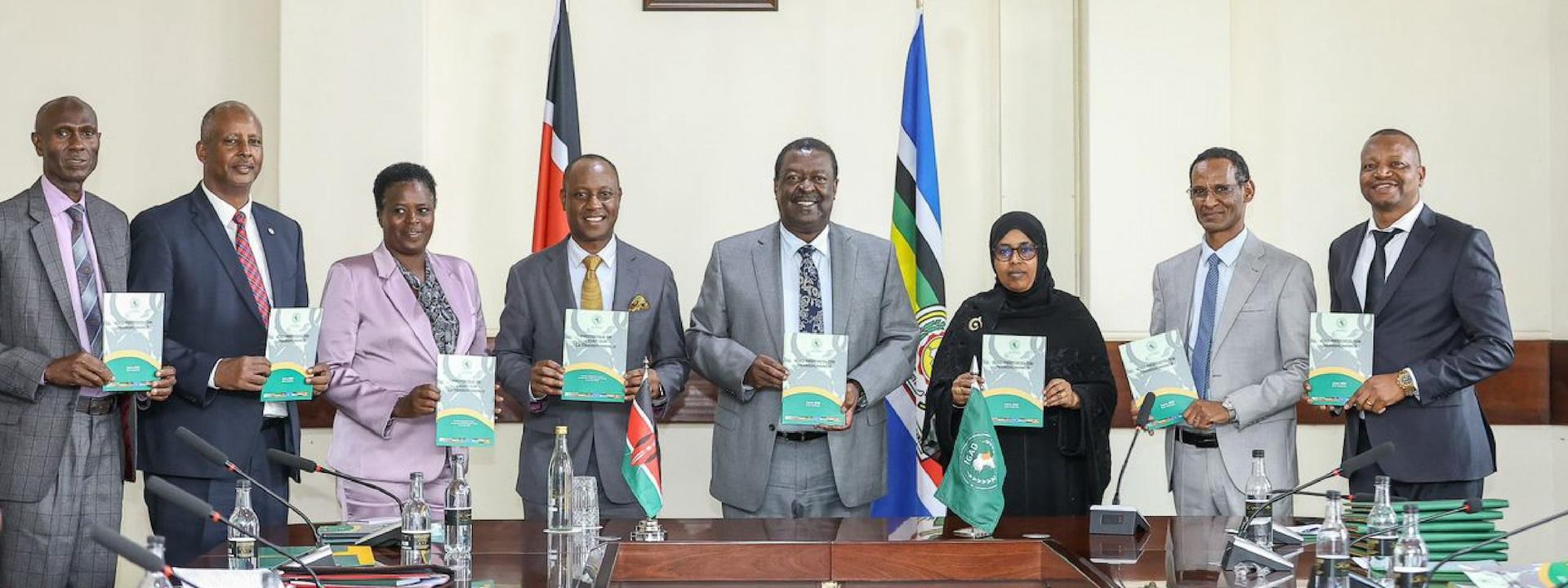
The IGAD Council of Ministers shall first adopt a unified regional mobility regulatory framework under the IGAD Free Movement of Persons Protocol and the EAC Common Market architecture. The IGAD Secretariat shall then design a Regional Mobility Governance Platform defining interoperability standards for labour migration, student mobility, and protection data systems across Greater Eastern Africa. National immigration ministries in Kenya, Uganda, Tanzania, Somalia, Eritrea, and South Sudan shall implement standardised digital reporting protocols through designated national migration units responsible for quarterly data submission. The IGAD Health and Social Development Division shall operate the technical integration unit responsible for system interoperability and cross-border verification architecture. The African Union Commission shall conduct annual compliance validation through migration governance audits assessing regulatory adherence, system coherence, and institutional continuity across member states.
4.2 Diaspora Finance Requires Climate-Resilience Institutionalisation
Finance ministries and central banks in Kenya, Somalia, Uganda, and Tanzania shall adopt national diaspora climate-finance frameworks linking remittance inflows to structured resilience investment channels. National treasuries shall design dedicated diaspora-backed financial instruments targeting drought mitigation infrastructure, climate-adaptive agriculture systems, and social protection mechanisms. Central banks shall deploy interoperable digital remittance monitoring systems integrated with licensed money transfer operators and telecommunications financial platforms under financial intelligence unit supervision. National diaspora directorates shall manage capital mobilisation processes through regulated diaspora bond issuance and structured investment registration mechanisms. The IGAD Economic Cooperation Division shall conduct annual regional remittance stability reviews assessing volatility patterns, transaction efficiency, and climate exposure correlation. Regulatory enforcement shall be executed through national financial oversight authorities applying harmonised regional reporting standards to ensure fiscal traceability and resilience-linked capital allocation.
4.3 Regional Research Systems Require Coordinated Mobility Architecture
Education ministries, national research councils, and higher education commissions in Greater Eastern Africa member states shall establish a Greater Eastern Africa Knowledge Mobility Compact under a harmonised intergovernmental agreement. The first operational step shall define a regional accreditation standard governing recognition of postgraduate qualifications, research credentials, and technical training across member states. National higher education authorities shall implement interoperable digital credential verification systems linked to regional education and labour mobility databases. IGAD scientific and climate institutions shall conduct annual research-policy coherence assessments evaluating alignment between academic outputs and regional development priorities. A joint intergovernmental technical secretariat shall administer system interoperability, funding coordination, and institutional continuity mechanisms. Compliance oversight shall be conducted through peer-review validation processes embedded within IGAD–EAC scientific governance structures, ensuring structured academic circulation and controlled knowledge system integration across Greater Eastern Africa.
4.4 Regional Security Systems Require Mobility-Risk Coordination
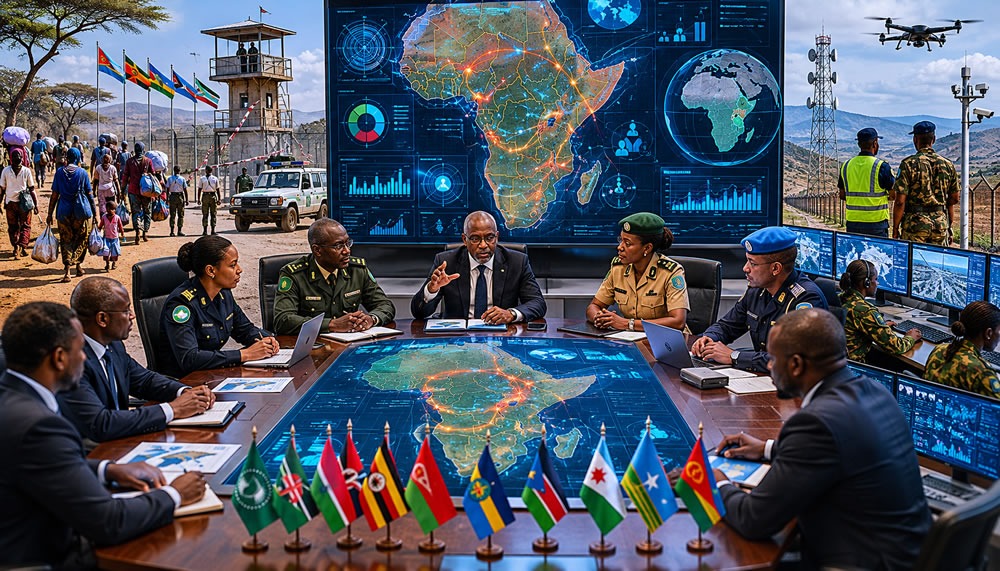
Interior ministries, border management authorities, and national security agencies in IGAD member states shall establish an IGAD–EAC Mobility Risk Coordination Mechanism under a joint intergovernmental security framework. The first operational action shall standardise mobility-risk indicators covering displacement flows, trafficking corridors, recruitment networks, and transit instability zones across Greater Eastern Africa. National border agencies shall implement structured quarterly intelligence reporting through designated mobility-security coordination units. The IGAD Security Sector Programme and EAC Peace and Security structures shall consolidate regional risk dashboards for anticipatory governance and early warning activation. The African Union Peace and Security Department shall conduct annual institutional resilience evaluations assessing mobility-driven security pressures and governance stress points. A joint regional intelligence fusion centre shall operationalise real-time data integration, predictive analytics systems, and coordinated response protocols, ensuring structured alignment between mobility governance and regional security architecture.
5.0 References
Amde, W. K., Sanders, D., Sidat, M., Nzayirambaho, M., Haile-Mariam, D., & Lehmann, U. (2020). The politics and practice of initiating a public health postgraduate programme in three universities in sub-Saharan Africa: The challenges of alignment and coherence. International Journal for Equity in Health, 19(1), 52. https://doi.org/10.1186/s12939-020-01163-x
Borderon, M., Sakdapolrak, P., Muttarak, R., Kebede, E., Pagogna, R., & Sporer, E. (2019). Migration influenced by environmental change in Africa: A systematic review of empirical evidence. Demographic Research, 41, 491–544. https://doi.org/10.4054/DemRes.2019.41.18
Brown, O., & Madar, S. (2026). The intersection of mobility, environmental and climate change, and conflict in the East and Horn of Africa. Climate Diplomacy. https://climate-diplomacy.org
Chonka, P., Sahgal, G., & Wasuge, M. (2026). Mobile money, (dis)empowerment and state reconstruction in Somalia’s conflicted digital economy. International Affairs, 101(1), 117–136. https://doi.org/10.1093/ia/iiae273
IGAD. (2026). IGAD population and migration statistics report (2nd ed.). Intergovernmental Authority on Development. https://igad.int
ILO. (2026). Labour market assessment and skills mapping for reintegration of returned migrant workers in Greater Kampala Metropolitan Area. International Labour Organisation. https://doi.org/10.54394/PTJG9109
IOM. (2026). Navigating climate, conflict, and migration: Insights from Ethiopia and the East and Horn of Africa. International Organisation for Migration. https://reliefweb.int
JEPA Africa. (2026). Talent in transit: The double-edged sword of East Africa’s skilled migration and diaspora potential. JEPA Africa.
Lacher, W. (2026). The political fallout of European migration policy in Libya: Consolidating the detention system, empowering warlords and provoking backlash from the Libyan public. SWP Comment 41/2026. Stiftung Wissenschaft und Politik. https://doi.org/10.18449/2026C41
Munyaka, J.-C. B., Hlal, M., Lolemtum, J. T., Abdem, S. A. E., Gallay, O., & Chenal, J. (2026). Integrating indigenous and scientific early warning systems for climate resilience in the Karamoja Cluster of Kenya and Uganda. Discover Sustainability. https://doi.org/10.1007/s43621-026-03271-0
Reuters. (2026, June 5). Trump bans nationals from 12 countries, citing security concerns. Reuters. https://www.reuters.com
Rougier, É., & Yol, N. (2019). The volatility effect of the diaspora’s location. The World Economy, 42(6), 1796–1827. https://doi.org/10.1111/twec.12773
World Bank. (2026). Migration and development brief. World Bank Group. https://www.worldbank.org