


1.0 Introduction
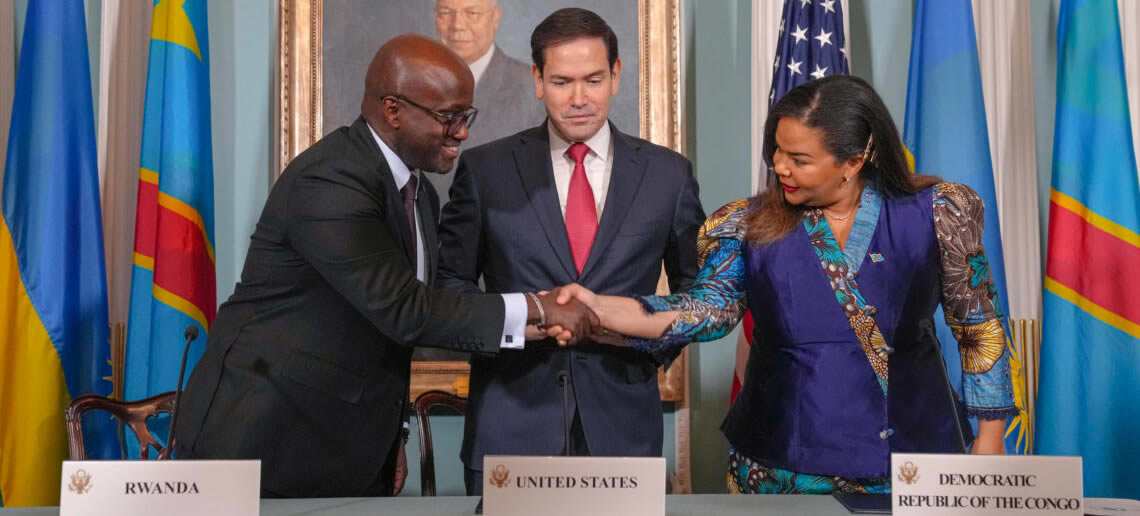
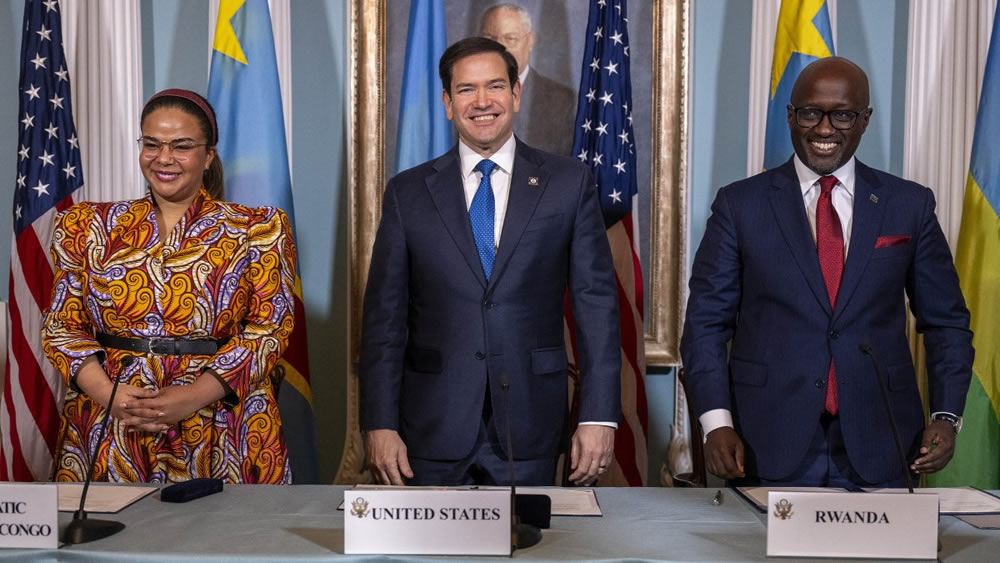
On 1 August 2025, the EAC and SADC Co-Chairs met at State House, Nairobi, with the Panel of Facilitators to align peace efforts in eastern DRC. Chaired by Presidents William Ruto of Kenya and Emmerson Mnangagwa of Zimbabwe, the meeting underscored the urgency of coordinated regional action. The DRC now stands at a defining crossroad where local grievances, entrenched rivalries, and surging global demand for critical minerals converge. In the eastern provinces, particularly North and South Kivu, armed groups such as the M23 exploit illicit mineral extraction to fuel violence, mass displacement, and governance collapse—threatening both Congolese sovereignty and wider regional stability (BBC, 2025). The humanitarian toll is staggering: millions displaced, civilian casualties mounting, and humanitarian access shrinking. External initiatives—including the U.S.-brokered Rwanda–DRC accord and parallel AU, EAC, and SADC tracks—remain fragmented, often sidelining local actors and leaving critical implementation gaps (ReliefWeb, 2025). The purpose of this commentary is to examine four urgent key issues—fragmented peace efforts, resource geopolitics, exclusion of armed groups, and humanitarian governance—and to propose policy options to anchor current momentum in inclusive and accountable strategies. The stakes are clear: failure risks escalation and wider destabilization, while success could turn the DRC’s vast resources into a platform for peace (Al Jazeera, 2025).
2.0 Key Issues
2.1 Fragmented Peace Processes

Peace efforts in the DRC remain undermined by overlapping and poorly coordinated tracks. The Kinshasa–Kigali accord, Nairobi State-house Meeting, Luanda dialogues, and AU–EAC–SADC consultations operate with divergent mandates, timelines, and priorities (African Union, 2025; Reuters, 2025). This fragmentation fosters duplication, weakens monitoring, and reduces legitimacy among local populations. The exclusion of civil society and influential armed groups exacerbates the problem. Agreements that address only interstate dynamics, such as the Washington accord, fail to account for local actors controlling territory and mineral rents, creating implementation gaps. Past experiences in the region show that partial settlements reduce violence briefly but leave grievances unresolved. A coherent, sequenced framework is essential. Without coherence, fragmentation risks prolonging insecurity and eroding public trust (African Union, 2025).
2.2 Geopolitical Transactions and Mineral Exploitation
Minerals are central to DRC’s conflict and its future. Recent foreign investment deals, such as the KoBold Metals lithium contract, tie security guarantees to resource access (KoBold Metals, 2023). These arrangements often privilege external actors while marginalizing local communities. Meanwhile, artisanal mining of coltan and lithium continues to fund armed groups, incentivizing territorial control through violence (Reuters, 2025). Without transparent frameworks, revenues bypass public services and reinforce governance deficits. Weak institutions and opaque contracts heighten the risk that resource wealth becomes a liability rather than a driver of stability. Mitigating these risks requires binding safeguards: enforceable contracts, independent oversight, and transparent revenue-sharing with affected communities, which is lacking(OECD, 2023).
2.3 Exclusion of Key Armed Groups
The exclusion of powerful armed groups threatens the viability of ongoing peace efforts. The M23 movement, which controls strategic corridors in North Kivu, remains outside core regional negotiations, pursuing separate talks in Doha. This marginalization incentivizes violent escalation to secure leverage and complicates demobilization and reintegration (Institute for the Study of War, 2025). Peace processes that omit actors with de facto power create parallel tracks, undermining enforcement and legitimacy. Durable stabilization demands conditional pathways for inclusion, such as amnesties tied to verifiable disarmament, power-sharing arrangements, and economic integration. Such mechanisms must balance accountability with incentives to end hostilities. Without calibrated inclusion, interstate agreements risk remaining paper commitments incapable of stopping violence or protecting civilians (Institute for the Study of War, 2025).
2.4 Humanitarian Crisis and Governance Challenges
The humanitarian emergency in eastern DRC is escalating. As of mid-2025, millions remain displaced, food insecurity is worsening, and agencies face persistent access constraints (ReliefWeb, 2025; OCHA, 2025). Weak governance deepens the crisis: many rural zones lack state presence, allowing armed groups to tax populations and provide minimal services, undermining legitimacy. This vacuum sustains cycles of grievance. Addressing humanitarian needs alone is insufficient without structural governance reform. A “triple nexus” approach—linking relief, development, and political dialogue—is required to rebuild resilience. International support should prioritize flexible financing, aid protection corridors, and gender-sensitive programming for displaced populations. Linking humanitarian relief to governance reform is essential to dismantle war economies and strengthen fragile institutions across the east (OCHA, 2025).
3.0 Conclusion
The DRC’s crossroads moment in 2025 is both a crisis and an opportunity. Fragmented peace initiatives, opaque resource deals, and humanitarian governance crises present enormous risks of escalation. Yet, coordinated action rooted in inclusivity, transparency, and accountability can unlock a pathway toward peace and stability. Regional and international actors must align their interventions under a harmonized framework that integrates local perspectives and ensures that resource wealth benefits the citizens. Failure to act decisively risks entrenching cycles of exploitation and violence. Success, however, could transform the DRC into a catalyst for regional integration and global sustainable development.
4.0 Policy Recommendations
4.1 Establish a unified mediation framework under AU leadership, harmonizing Nairobi, Luanda, and Washington tracks, with civil society and armed group representation. A unified framework would streamline peace initiatives, reduce duplication, and close the gaps exploited by spoilers. By embedding armed groups and civil society representatives, it strengthens legitimacy and ensures that agreements address both state and community-level concerns.
4.2 Enforce transparent resource governance by mandating OECD-style due diligence, digital traceability, and independent audits (OECD, 2023). Given the centrality of minerals to conflict financing, resource governance reforms are urgent. Mandatory compliance with OECD guidelines, combined with blockchain or digital traceability systems, would curb illicit supply chains. Independent third-party audits and local oversight bodies can enhance accountability, by ensuring revenues reach communities.
4.3 Create conditional inclusion pathways for armed groups, linking amnesty, reintegration, and community investments to verified disarmament. Exclusion has historically undermined peace durability. There is need to offer armed groups structured reintegration options—such as conditional amnesties, vocational training, and economic reinvestment into communities.
4.4 Adopt a humanitarian-governance nexus approach that synchronizes relief with long-term reforms in fiscal management, justice, and local service delivery. Addressing humanitarian needs in isolation risks perpetuating cycles of dependency. Embedding community participation ensures aid effectiveness while bridging the gap between short-term humanitarian response and long-term institutional resilience.
5.0 References
African Union. (2025). AU communiqués and peace process updates. Retrieved from https://au.int
Al Jazeera. (2025). DRC crisis and regional dynamics. Retrieved from https://www.aljazeera.com
Institute for the Study of War. (2025). Analysis of M23 and regional armed group dynamics. Retrieved from https://www.understandingwar.org
KoBold Metals. (2023). KoBold Metals signs DRC lithium exploration contract. Retrieved from https://www.koboldmetals.com/news
OECD. (2023). Responsible supply chains in mining. Retrieved from https://www.oecd.org/corporate/mne/mining.htm
OCHA. (2025). Humanitarian response in the Democratic Republic of the Congo. Retrieved from https://www.unocha.org
ReliefWeb. (2025). Crisis reports on the Democratic Republic of the Congo. Retrieved from https://reliefweb.int
Reuters. (2025). Coverage of the DRC conflict and peace agreements. Retrieved from https://www.reuters.com