

1.0 INTRODUCTION
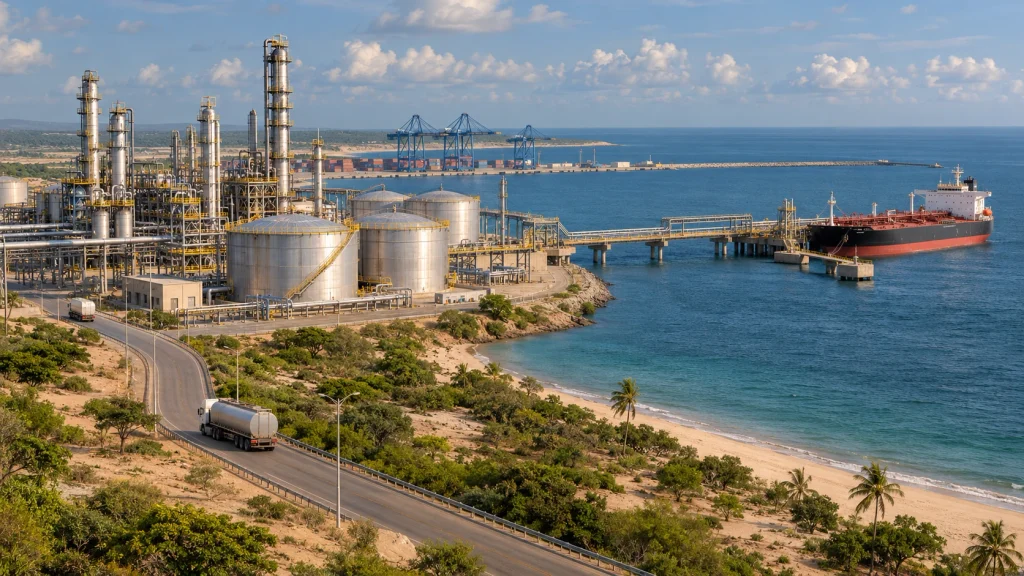
Lamu is increasingly gaining strategic significance at the intersection of energy processing, maritime trade, and regional connectivity. The proposed Dangote East Africa Petroleum Refinery, planned for 700,000 barrels per day, is intended to sit alongside Lamu Port and the Lamu Port-South Sudan-Ethiopia Transport Corridor, placing the project within a wider regional logistics network (Ministry of Roads and Transport, 2026). The project’s scale could affect Kenya’s position in regional petroleum markets over the coming decade, but its influence will depend on construction, financing, crude supply, and access to customers (Anyaogu, 2026). Lamu’s port infrastructure provides a maritime gateway to inland markets, although corridor connectivity remains central to translating location into trade (Kenya Ports Authority, 2026). Global shipping disruptions and route changes also expose energy logistics to external shocks (United Nations Conference on Trade and Development [UNCTAD], 2025). The refinery’s regional significance therefore rests not on capacity alone, but on how supply chains and cross-border links develop (Associated Press, 2026). The purpose of this commentary is to assess how the refinery could reposition Lamu within Greater Eastern Africa’s regional politics and security.
2.0 KEY ISSUES
2.1 Lamu’s Regional Role Depends on Corridor Connectivity
Lamu’s port location gives the refinery value only if maritime access connects inland regional markets. The government presents the project as an anchor for Lamu Port and LAPSSET, linking coastal infrastructure with regional transport plans (Ministry of Roads and Transport, 2026). The port’s operational capacity and services will determine whether geography translates into a competitive logistics gateway (Kenya Ports Authority, 2026). The refinery’s planned scale could increase demand for shipping, storage and supporting services, while construction timing remains a condition of delivery (Associated Press, 2026). Regional integration plans provide a rationale for cross-border connectivity, but do not guarantee commercial flows (African Development Bank Group, 2023). Changing maritime routes and shipping costs can alter the value of particular gateways (United Nations Conference on Trade and Development [UNCTAD], 2025). Lamu’s port position is therefore conditional, not automatic.
2.2 Refinery Capacity Redistributes Regional Energy Dependencies
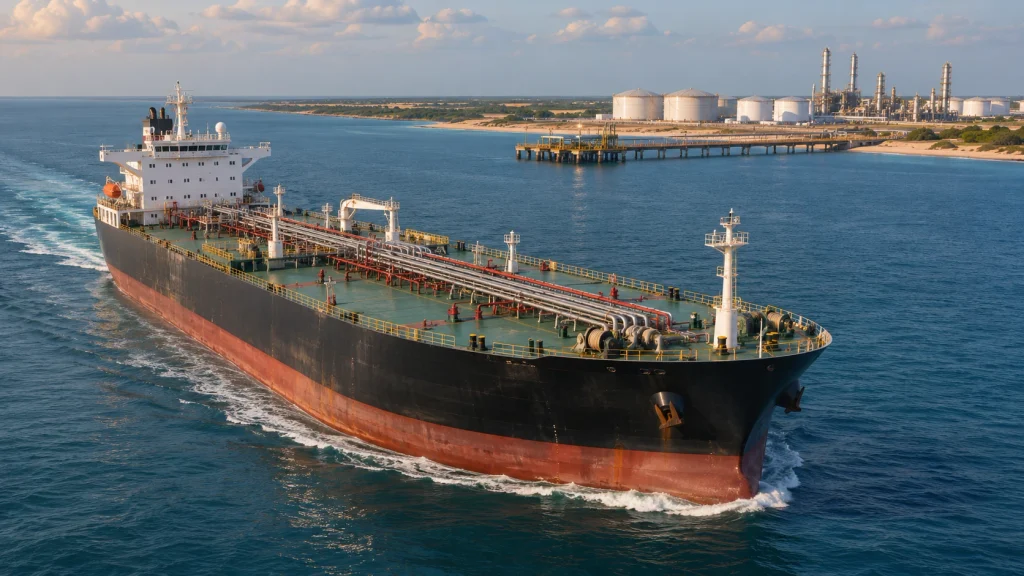
The refinery could change where Greater Eastern Africa obtains refined petroleum, but it would not remove upstream dependencies. Its planned capacity of 700,000 barrels per day requires reliable crude supply; reporting identifies Uganda and other African producers as intended sources (Associated Press, 2026). This exposes the project to producer decisions, transport arrangements, and crude-delivery costs (Anyaogu, 2026). The refinery is expected to serve Kenya and neighbouring markets, linking output to cross-border distribution (Ministry of Roads and Transport, 2026). Regional strategies link infrastructure to trade, but actual flows depend on commercial terms and functioning routes (African Development Bank Group, 2023). Maritime disruption raises freight costs and voyage times, affecting energy supply chains (United Nations Conference on Trade and Development [UNCTAD], 2025). The central uncertainty is how dependencies will be distributed across suppliers, routes and buyers.
2.3 LAPSSET’s Regional Role Depends on Delivery
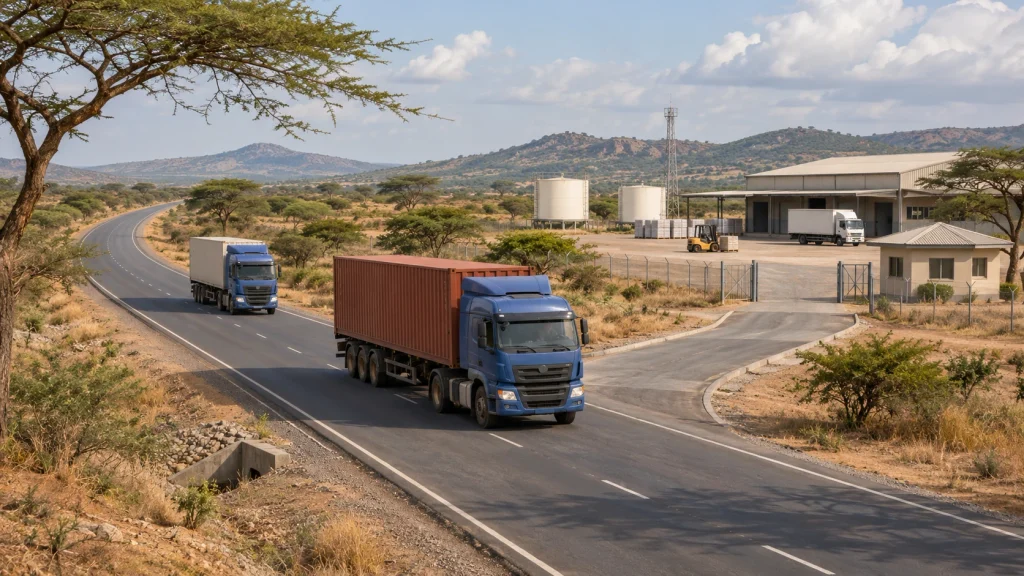
LAPSSET’s geopolitical value depends on whether a port-and-refinery complex becomes a functioning corridor rather than an isolated investment. The corridor is intended to connect Lamu with Kenya’s hinterland and neighbouring markets, including Ethiopia and South Sudan (African Development Bank Group, 2023). The government links the refinery project to Lamu Port, logistics and regional trade (Ministry of Roads and Transport, 2026). Proximity alone does not establish that road, rail, pipeline and border connections will be completed or commercially viable (Kenya Ports Authority, 2026). Financing and construction schedules will shape when additional cargo and investment might materialise (Kitimo, 2026). Regional demand may attract competing gateways, while maritime route instability changes the cost of moving goods (United Nations Conference on Trade and Development [UNCTAD], 2025). LAPSSET’s regional role will be determined by working connections, not planned infrastructure alone.
2.4 Infrastructure Concentration Compounds Lamu’s Security Exposure
Concentrating refining, port, storage, and corridor functions in Lamu County makes continuity depend on port services and transport links (Kenya Ports Authority, 2026). The refinery is a planned investment, but delivery remains exposed to construction and market conditions (Anyaogu, 2026). Maritime disruptions demonstrate how route insecurity can lengthen voyages and raise transport costs, affecting supply reliability (UNCTAD, 2025). Lamu’s coastal setting also includes Manda Bay, where defence and commercial infrastructure occupy one coastal area. Residents’ land claims and environmental concerns could affect local support and implementation around the project (Ogbonna et al., 2026). Regional integration plans depend on transport links functioning across jurisdictions, so disruption at one node can affect wider connectivity (African Development Bank Group, 2023). These risks are connected: local disputes, infrastructure disruption and external supply shocks may compound rather than remain separate.
3.0 CONCLUSION

The refinery places Lamu at the intersection of energy supply, maritime access and regional infrastructure, but its geopolitical value is not guaranteed by its planned capacity. Port performance and corridor completion will determine whether the project connects coastal investment to inland markets. Crude sourcing and cross-border demand will distribute dependencies across producers, shipping routes and buyers rather than remove them. At the same time, maritime disruption, local disputes and infrastructure exposure could affect continuity beyond the site. The question is whether the refinery, Lamu Port and LAPSSET operate as a connected system or remain separate assets with limited spillover. That distinction will shape Lamu’s regional role in Greater Eastern Africa.
4.0 POLICY RECOMMENDATIONS
4.1 Coordinate Protection Across Lamu’s Critical Infrastructure
The Kenya Ports Authority should work with the Ministry of Roads and Transport, LAPSSET Corridor Development Authority and the Kenya Revenue Authority to identify the transport and border links needed to move refinery products from Lamu to regional buyers. The agencies should create a corridor-access plan that records port handling capacity, road conditions, border-clearance procedures, storage connections and delivery constraints. Quarterly reviews should compare planned links with operating conditions and cargo movements. The Authority should publish a progress report identifying bottlenecks, the responsible agency, and corrective action, while protecting sensitive information. The Ministry should review inter-agency barriers and assign follow-up responsibilities through existing transport coordination mechanisms. This would connect port investment to market access rather than assume location guarantees trade.
4.2 Map Regional Petroleum Dependencies and Contingencies

The Ministry of Energy and Petroleum should convene energy authorities from Kenya, Uganda, Ethiopia and South Sudan through East African Community channels to map crude sources, refinery output, storage, transport routes and downstream demand. Participating authorities should agree on a supply-risk template covering supplier concentration, shipping disruption, cross-border bottlenecks and emergency stocks. Each state should nominate a focal point to update the template quarterly and notify counterparts when a disruption threatens contracted deliveries. The EAC Secretariat should consolidate national submissions into a regional risk review, and record agreed contingency actions. The review should identify feasible alternative suppliers and routes without assuming that uncontracted volumes are available. Energy ministers should assess implementation annually and assign follow-up actions to named national agencies.
4.3 Track LAPSSET Delivery Through Existing Monitoring Systems
The LAPSSET Corridor Development Authority should incorporate project-tracking fields into its existing monitoring procedures, working with the Kenya Ports Authority and relevant transport, energy and foreign-policy agencies. The system should track project milestones, port activity, corridor links, cross-border approvals, investment commitments and material changes in competing routes. Agencies should submit standardized quarterly updates, distinguish confirmed developments from projections and identify delays that affect regional connectivity. The Authority should convene a regular quarterly coordination review with designated counterparts from Ethiopia and South Sudan where appropriate, recording decisions, responsible agencies and deadlines. An annual public summary should report implementation status without disclosing commercially sensitive or security-relevant information. This approach would provide a practical evidence base for decisions without creating a separate institution.
4.4 Resolve Local Grievances Before They Disrupt Operations

The National Security Council Secretariat should coordinate a risk assessment with the Kenya Coast Guard Service, Kenya Defence Forces, Kenya Ports Authority, Energy and Petroleum Regulatory Authority, National Environment Management Authority, and Lamu County Government. The assessment should cover physical protection, maritime disruption, cyber incidents, emergency response, and land or environmental grievances at Lamu Port, the refinery, and Manda Bay. Each agency should identify threats and record prevention, response, and recovery procedures in a shared protocol. Exercises should test information exchange, continuity of essential services, and incident response. After each exercise, the Secretariat should assign corrective actions to institutions and track completion. Lamu County Government should report grievances through the review process, without treating peaceful opposition as a security threat.
5.0 REFERENCES
African Development Bank Group. (2023). East Africa regional integration strategy paper 2023-2027. https://www.afdb.org/sites/default/files/documents/projects-and-operations/east_africa_-_regional_integration_strategy_paper_2023-2027_0.pdf
Anyaogu, I. (2026, July 7). Dangote to fund proposed Kenya refinery with cash, bonds and an IPO. Reuters. https://www.reuters.com/business/energy/dangote-fund-proposed-kenya-refinery-with-cash-bonds-an-ipo-2026-07-07/
Associated Press. (2026, September 30). African heads of state break ground for $16B oil refinery project. https://apnews.com/article/a0ae7108ae4f4144222aea101baed3a5
Kenya Ports Authority. (2026). Performance contract 2025/2026. https://portal.kpa.co.ke/web-uploads/documents/ae9db1c2-d5b3-4ca1-a81c-76530f3229a2.pdf
Kitimo, A. (2026, September 22). Indian firm wins $450m contract in Dangote Lamu refinery ahead of launch. The East African. https://www.theeastafrican.co.ke/tea/business-tech/indian-firm-wins-450m-contract-in-dangote-lamu-refinery-5605320
Ministry of Roads and Transport. (2026, September 30). Dangote refinery groundbreaking marks new chapter for Lamu’s economic development. https://www.transport.go.ke/dangote-refinery-groundbreaking-marks-new-chapter-lamus-economic-development
Ogbonna, N., Mwaura, W., Mwangangi, P., & Oganga, O. (2026, October 1). Africa’s richest man launches Kenya oil refinery despite land protests. BBC News. https://www.bbc.com/news/articles/cmkg8dpwy25po
United Nations Conference on Trade and Development. (2025). Review of maritime transport 2025: Staying the course in turbulent waters. https://unctad.org/publication/review-maritime-transport-2025