
1.0 INTRODUCTION
On September 2, 2026, the U.S. President signed H.R. 6500 into law, extending the African Growth and Opportunity Act (AGOA) through December 31, 2028, for eligible sub-Saharan African countries (Congress, 2026). The programme provides duty-free access to more than 1,800 products, subject to statutory conditions and annual country review (USTR, 2026a). For 2026, 33 countries were designated beneficiaries, including Kenya, Rwanda and Tanzania, while Uganda was not designated (USTR, 2026b). Kenya retains textile and apparel benefits, with the sector supporting more than 66,000 direct jobs (The Star, 2026a). Intra-EAC trade reached US$19.3 billion in 2025, placing the Kenyan case within a wider regional production system (EAC, 2026a). The security question is therefore not whether market access has been restored, but whether its economic effects can become less concentrated, more productive and more regionally distributed. That question matters because employment, investment and cross-border production determine how external trade shocks can affect economic and social stability across the wider region. The purpose of this commentary is to assess the security implications of the AGOA extension for Kenya and Greater Eastern Africa.
2.0 KEY ISSUES
2.1 Kenya’s AGOA Exposure Remains Concentrated in Apparel
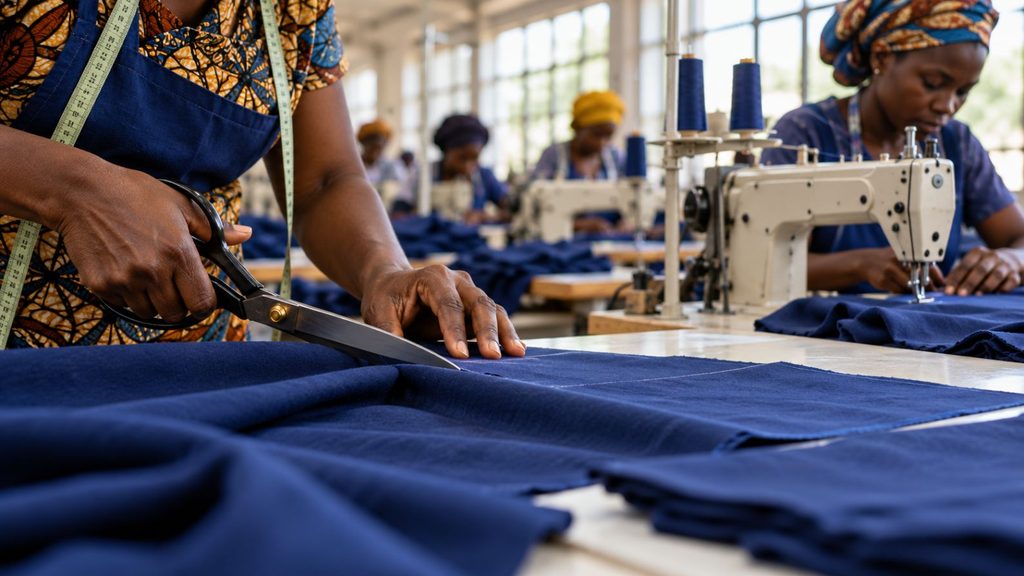
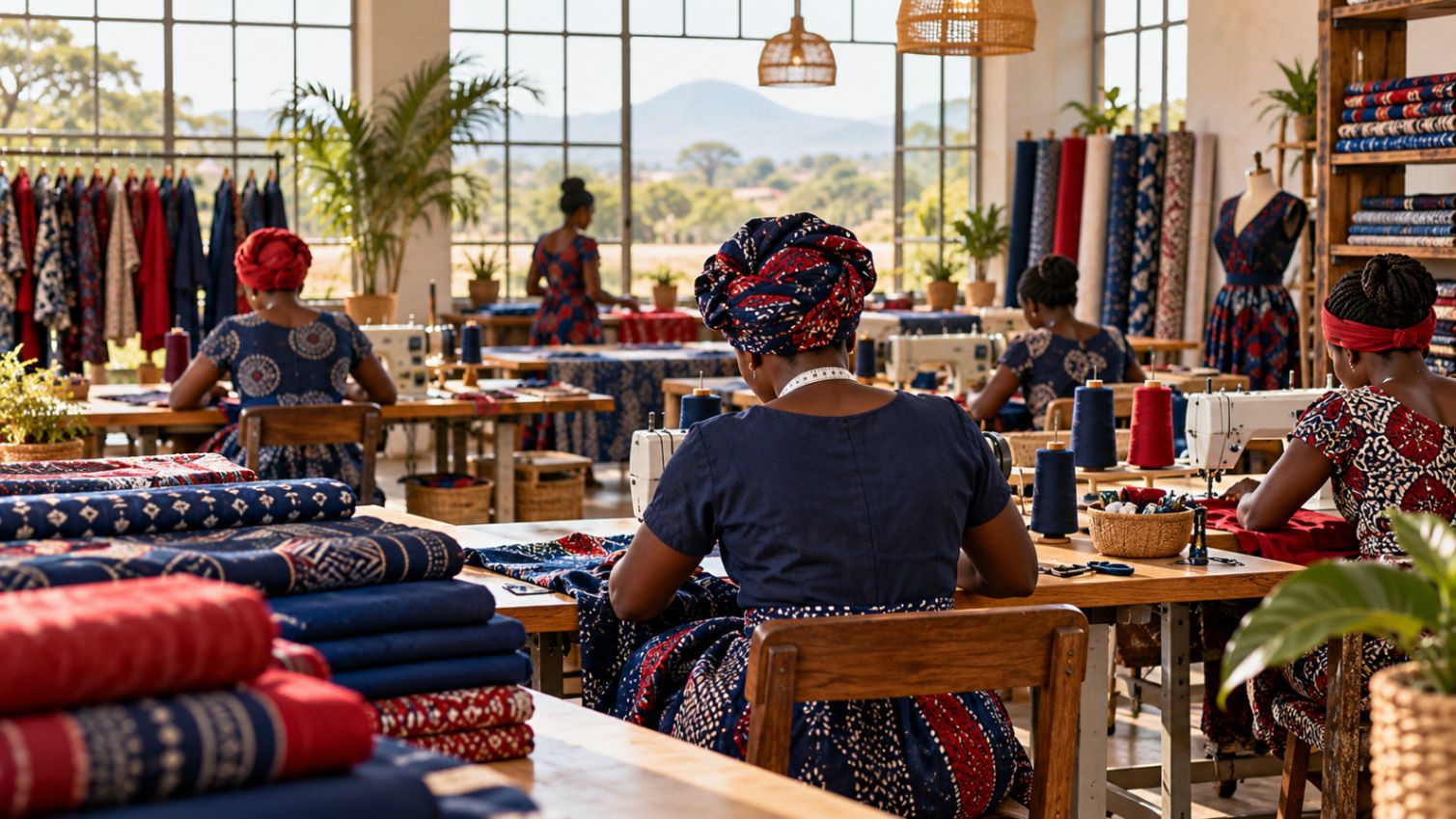
Kenya’s AGOA exposure remains concentrated in apparel, linking US market access to a narrow employment base. The sector supports more than 66,000 direct jobs in the export-oriented apparel industry, making external demand consequential (The Star, 2026a). Kenya qualifies for textile and apparel benefits, while country eligibility remains subject to annual review (USTR, 2026b). AGOA covers more than 1,800 products, yet Kenya’s strongest utilisation remains associated with garments (USTR, 2026a). Kenya’s export-processing model also leaves manufacturing activity connected to preferential market conditions, making continuity relevant to industrial employment (Nation, 2026). The resulting exposure is structural rather than merely commercial. A change in demand, competitiveness, or eligibility would affect a concentrated export channel, with consequences for incomes and industrial activity. The security concern arises from limited diversification: a wider employment and production base reduces transmission of an external trade shock.
2.2 The Investment Horizon Remains Finite

The extension restores continuity but leaves investment decisions tied to a finite preference horizon. H.R. 6500 also retains the third-country fabric provision relevant to apparel producers (Congress, 2026). AGOA had lapsed before being restored, exposing exporters and manufacturers to uncertainty over production and investment planning (Nation, 2026). Kenyan reporting associated that uncertainty with delayed investment decisions and described the new extension as improving certainty for firms and investors (Nation, 2026). USTR has also framed AGOA around securing greater market access for US businesses, indicating that the programme remains part of a wider trade relationship subject to policy choices (Standard, 2026). The exposure extends beyond tariffs. Long-term investments and supply contracts can extend beyond preferential periods. A finite policy horizon consequently affects how firms value new capacity, locate production, and assess the durability of export-linked employment.
2.3 Market Access Has Not Guaranteed Higher-Value Exports
Preferential entry does not translate into higher domestic value capture. Kenya’s 2026 Economic Survey records 44 AGOA-accredited enterprises, 82,026 employees, and KSh42.3 billion in capital investment in 2025, showing industrial activity (KNBS, 2026). The government identifies value-added agriculture, leather, pharmaceuticals, and manufactured goods as areas for US-market participation (Standard, 2026). USTR records US goods imports from Kenya at $862.2 million in 2025, providing a base for assessing export diversification (USTR, 2026c). Reporting also describes the extension as an opportunity to broaden the export basket beyond apparel (The Star, 2026b; Citizen Digital, 2026). The issue is capture. If access mainly sustains established production, employment and export earnings remain exposed to changes in a limited set of activities. Greater processing, greater product diversity and domestic supplier participation would alter that exposure, but evidence does not establish upgrading at scale.
2.4 Regional Integration Shapes How Gains Spread
Regional security implications depend on whether exports connect production across neighbouring economies. Intra-EAC trade reached US$19.3 billion in 2025, showing expanding regional commerce (EAC, 2026a). EAC reporting identifies non-tariff barriers, regulatory inconsistencies, infrastructure bottlenecks, and limited finance as constraints on deeper integration (The East African, 2026a). AfDB similarly identifies fragmentation in infrastructure, trade systems and regulatory frameworks as barriers to regional value chains (AfDB, 2026a). Its 2026 regional outlook places integration and productive transformation within East Africa’s growth challenge (The East African, 2026b). Kenya’s AGOA position therefore sits within a regional system whose production links remain uneven. When firms source inputs, process goods and serve external buyers through national channels, neighbouring economies capture fewer spillovers. Security exposure is regional: fragmented production limits capacity to distribute employment, absorb shocks and sustain cross-border interdependence across the regional economy.
3.0 CONCLUSION
The extension reduces immediate uncertainty but does not resolve the structural exposure surrounding Kenya’s AGOA model. Apparel remains an important employment and production base, investment decisions still face a finite preference horizon, and higher-value exports are not automatic outcomes of market access. Regionally, expanding intra-EAC commerce co-exists with incomplete production connections. These conditions determine whether preferential access becomes a source of wider resilience or remains concentrated in established sectors and national export channels. The regional security implication is economic: resilience depends on the breadth of productive activity, the durability of investment and the strength of cross-border linkages. Those factors define the practical value of the extension across Greater Eastern Africa.
4.0 POLICY RECOMMENDATIONS
4.1 Diversification Requires a Measurable US Export Pipeline
The Ministry of Investments, Trade and Industry and Kenya Export Promotion and Branding Agency should establish a US Export Diversification Pipeline by December 2026 covering five non-apparel product groups with Kenyan production capacity and US demand. The pipeline should record target buyers, applicable standards, certification requirements, shipment milestones, and responsible firms. KNCCI and sector associations should validate participating firms and maintain a quarterly readiness register. The Ministry should publish a scorecard covering export value, new exporters, repeat buyers and unresolved market-entry constraints. Quarterly review meetings should assign each unresolved constraint to a responsible institution and record a dated corrective action. This mechanism would shift AGOA utilisation beyond apparel while linking product diversification to measurable export performance, employment exposure and resilience.
4.2 Investment Planning Requires a Defined Post-2028 Horizon
The Ministry of Investments, Trade and Industry and Kenya Investment Authority should establish an AGOA Investment Horizon Facility by December 2026 for manufacturers whose US-facing investments depend on preferential access. The facility should maintain a 2026–2028 register covering capacity, employment, financing and implementation status. Kenya Investment Authority should coordinate investor aftercare, industrial-site requirements, and regulatory bottlenecks, while the Ministry should publish aggregate indicators without disclosing commercially sensitive information. The facility should maintain post-2028 access scenarios and communicate them through industry briefings. Quarterly reviews should identify stalled investments, assign responsible agencies and record resolution deadlines. This mechanism would give investors a basis for evaluating capacity, employment and financing decisions that extend beyond the current preference period and investor confidence.
4.3 Export Upgrading Requires Sector Delivery Tracks

The Ministry of Investments, Trade and Industry, Agriculture and Food Authority, and Kenya Leather Development Programme should establish export delivery tracks for agriculture, leather, pharmaceuticals and manufactured goods by March 2027. Each track should identify firms, standards, certification gaps, processing requirements, target US buyers, and financing needs. Kenya Export Promotion and Branding Agency should coordinate buyer matching, while Kenya Bureau of Standards should maintain compliance schedules. The Ministry should publish quarterly results covering certified firms, products introduced, buyers engaged, and export value. Review meetings should retain tracks showing buyer traction and redesign delivery for those failing to secure qualified buyers or sustained export growth. This mechanism would connect preferential access to upgrading and broaden value capture beyond established export categories.
4.4 Regional Linkages Require a Common Export Platform

The EAC Secretariat, working with Partner States’ trade ministries and the AfCFTA Secretariat, should establish a Greater Eastern Africa Export Linkage Platform by June 2027 for firms supplying US-bound value chains. The platform should map inputs, processing capacity, standards, logistics, and suppliers, with Kenya as the pilot. EAC technical committees should review cross-border bottlenecks quarterly and assign actions to responsible agencies. The AfCFTA Secretariat should support alignment of rules-of-origin and sourcing information where applicable, while the EAC Secretariat should publish participation and resolution dashboards. Annual reviews should measure participating firms, cross-border transactions, regional sourcing and US-bound export value. This mechanism would connect AGOA access to regional industrial integration and create an accountability system for expanding productive linkages across neighbouring economies.
5.0 REFERENCES
African Development Bank Group. (2026). Annual development effectiveness review 2026: Integrate Africa: Regional integration and trade. African Development Bank Group.
Citizen Digital. (2026, September 4). Relief for Kenyan exporters as US extends AGOA to 2028. Citizen Digital.
Congress. (2026, September 3). Continuing Appropriations and Extensions Act, 2027 (H.R. 6500). U.S. Government Publishing Office.
East African Community. (2026, April 9). EAC trade performance strengthens as export growth improves external balance in Q4 2025. East African Community.
Kenya National Bureau of Statistics. (2026). Economic survey 2026. Kenya National Bureau of Statistics.
Nation. (2026, September 5). Trump saves thousands of Kenyan jobs as AGOA extended to 2028. Daily Nation.
Standard. (2026, September 4). Kenya welcomes AGOA extension to December 2028. The Standard.
The EastAfrican. (2026, August 14). US Senate backs AGOA extension to 2028. The EastAfrican.
The EastAfrican. (2026, September 6). EAC single market: What has been agreed in the revised Rules of Origin. The EastAfrican.
The Star. (2026, September 4). Kenyan exporters get two-year lifeline as US extends AGOA. The Star.
The Star. (2026, September 5). Trump signs AGOA extension, hands Kenya exporters lifeline to 2028. The Star.
U.S. Trade Representative. (2026a). African Growth and Opportunity Act (AGOA). Office of the United States Trade Representative.
U.S. Trade Representative. (2026b). List of eligible countries. Office of the United States Trade Representative.
U.S. Trade Representative. (2026c). Kenya. Office of the United States Trade Representative.