
1.0 INTRODUCTION
Africa’s demand for permanent representation on the United Nations Security Council has returned to multilateral diplomacy during the 81st United Nations General Assembly (UNGA). The Council has 15 members, including five permanent members, while Africa has no permanent seat despite comprising 54 UN Member States (United Nations, 2026a; United Nations, 2026b). The African Union’s Common African Position, anchored in the Ezulwini Consensus and Sirte Declaration, calls for at least two permanent seats with full prerogatives, including the veto while it exists, and five non-permanent seats (African Union, 2026a; United Nations, 2026c). During UNGA 2026, Secretary-General António Guterres described the absence of permanent African representation as unjust and indefensible, while the President of the General Assembly called for greater representation of underrepresented regions (United Nations, 2026d; United Nations, 2026e). President William Ruto and other African leaders renewed it, linking representation to legitimacy and contemporary global realities (The Kenya Times, 2026; Ghana News Agency, 2026). The issue has regained attention. This commentary examines the renewed African demand, the constraints surrounding Security Council reform, and its implications for Africa and Greater Eastern Africa.
2.0 KEY ISSUES
2.1 Africa’s Representation Gap and Security Council Legitimacy
Africa’s exclusion from permanent Security Council membership represents a structural representation gap, not an absence from Council activity. African states participate through elected non-permanent seats, but none holds permanent status (United Nations, 2026a). With 54 Member States, Africa represents more than one-quarter of UN membership, giving the continent weight in the General Assembly (United Nations, 2026b). The Secretary-General has repeatedly connected Africa’s absence from permanent membership with questions of Council legitimacy and effectiveness (United Nations, 2026d). The African Union frames reform through the Ezulwini Consensus and Sirte Declaration, which seek correction of historical underrepresentation (African Union, 2026a). Kenya’s formal position similarly argues that prolonged exclusion has produced a legitimacy deficit and supports the African model of expanded permanent and non-permanent membership (Republic of Kenya, 2026). The central issue is participation in the Council’s highest level of peace and security decision-making.
2.2 UNGA 2026 and the Renewed African Diplomatic Push
UNGA 2026 has given renewed diplomatic visibility to Africa’s longstanding position because UN and African leaders have articulated converging concerns about representation. The President of the General Assembly identified Africa as requiring particular attention (United Nations, 2026e). Secretary-General António Guterres described the continued absence of permanent African representation as “unjust and indefensible” (United Nations, 2026d). President William Ruto argued that Africa’s 54 states lack a permanent voice despite their weight (The Kenya Times, 2026). Ghana’s President John Dramani Mahama called for permanent African representation with permanent membership
rights and responsibilities (Ghana News Agency, 2026). Nigeria, represented at UNGA by Vice President Kashim Shettima, reiterated the African position of at least two permanent seats with veto rights while the veto exists, alongside five non-permanent seats (Channels Television, 2026). These positions reinforce continuity between the AU position and national advocacy across Africa.
2.3 Reform Remains Constrained by Negotiation and Charter Requirements
Security Council reform remains constrained by prolonged negotiations, competing reform models, and UN Charter amendment requirements. The General Assembly’s negotiations have continued without agreement on the Council’s future composition (United Nations, 2026f). Member States differ over the number and distribution of permanent and non-permanent seats, while veto positions remain contested (United Nations, 2026f). Africa’s common position calls for at least two permanent seats with all prerogatives, including the veto while it exists, plus five non-permanent seats (African Union, 2026a). Kenya supports this model and the AU’s role in selecting African representatives (Republic of Kenya, 2026). Any Charter amendment requires adoption by two-thirds of the General Assembly and ratification by two-thirds of UN Member States, including all permanent members (United Nations, 2026g). Successful reform therefore requires sustained coalition-building, African coordination and negotiations capable of reconciling regional demands with wider institutional interests.
2.4 Implications for Africa and Greater Eastern Africa

For Africa and Greater Eastern Africa, Security Council representation matters because Council decisions influence mandates, sanctions, peace operations and regional responses. UN analysis identifies the Horn of Africa, Sudan and the Great Lakes among African security priorities (United Nations Office of the Special Adviser on Africa, 2026). African states also
contribute personnel and political support to peace operations, linking continental security responsibilities with global decision-making (United Nations, 2026h). Resolution 2719 established a framework for financing AU-led peace support operations through assessed UN contributions, illustrating the Council’s importance to African peace architectures (United Nations Security Council, 2023). Kenya has linked permanent representation to equitable participation in decisions affecting international peace and security (Republic of Kenya, 2026). Permanent representation could provide continuity in Council deliberations, although it would not guarantee common African positions or outcomes. Its significance is therefore institutional and diplomatic.
3.0 CONCLUSION
The African demand at UNGA 2026 raises a persistent question of Security Council legitimacy while a continent central to the UN peace and security agenda remains without permanent representation. The convergence of the Secretary-General, General Assembly leadership, President Ruto, and other African leaders has increased diplomatic visibility, but attention does not resolve negotiations. Africa’s common position remains anchored in the Ezulwini Consensus and Sirte Declaration, while Charter amendment requirements make reform dependent on broad agreement. For Greater Eastern Africa, the implications extend to conflict management, peace operations, sanctions, financing and diplomacy. The policy challenge is converting renewed attention into coordinated, sustained and technically prepared African engagement that can advance reform.
4.0 POLICY RECOMMENDATIONS
4.1 Establish an African Security Council Representation Coordination Mechanism
The African Union Commission should establish an African Security Council Representation Coordination Unit within its peace and security architecture to consolidate the continental negotiating position. The Unit should work with the Committee of Ten, Permanent Representatives Committee and African missions in New York to maintain a negotiating matrix covering membership categories, veto arrangements, regional allocation and working methods. It should produce diplomatic briefs identifying convergence and divergence among groups and assign follow-up to designated African missions. The AUC should require reporting after each negotiation session and review progress through the Peace and Security Council. This would convert political consensus into negotiating capacity, strengthen message discipline, preserve the African Common Position, and provide measurable diplomatic progress without creating a parallel structure.
4.2 Build a Structured Cross-Regional Coalition for Reform
The African Union Commission, through the Committee of Ten and African UN missions, should establish a coalition mechanism for Security Council reform. The mechanism should engage regional groups and Member States across Europe, Asia-Pacific, Latin America and the Caribbean through consultations, briefings and diplomatic outreach. Each engagement should record positions on membership, regional allocation, veto arrangements and Charter requirements in an AU matrix. The AUC should assign missions follow-up responsibility and review the matrix quarterly through the Committee of Ten. This would broaden support for African reform proposals while allowing structured discussion of concerns raised by other regions and preserving space. It would strengthen coalition-building efforts without fragmenting the African Common Position or transferring negotiating authority from the African Union.
4.3 Develop an African Selection and Accountability Framework
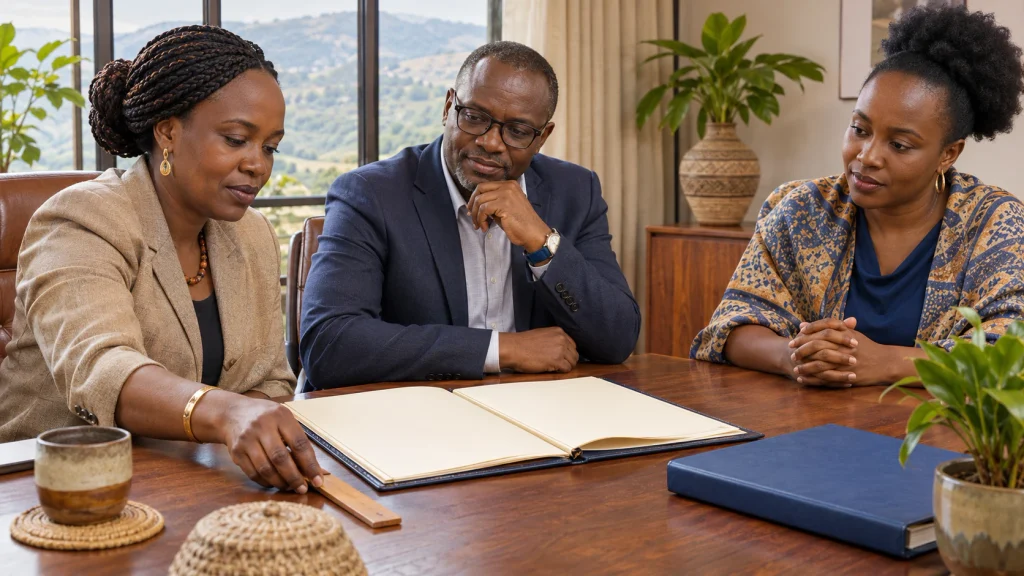
The African Union Commission should develop an agreed selection and accountability framework for African permanent representatives before Security Council expansion. The AUC should lead formal consultations with the Committee of Ten, regional economic communities and Member States to establish criteria covering diplomatic capacity, peace and security experience, geographic balance, institutional capability and adherence to African positions. The framework should specify nomination, consultation, rotation and reporting procedures, with periodic performance review. Regional consultations should inform an AU Assembly decision rather than parallel national processes. It would clarify selection, continental accountability and regional balance while providing a transparent basis for representation. Early adoption would strengthen negotiating credibility and demonstrate institutional readiness for permanent membership if reform is agreed before implementation begins. formally.
4.4 Establish a Greater Eastern Africa Security Council Policy Coordination Mechanism
The governments and regional institutions of Greater Eastern Africa should establish a Security Council policy coordination mechanism linking foreign ministries with the African Union, IGAD and the East African Community. States should nominate focal points to track Council agenda items affecting Somalia, Sudan, the Great Lakes and peace-support operations. It should produce briefs, maintain a calendar of Council consultations and resolutions, and convene quarterly coordination meetings. It should document national positions, identify convergence, and prepare options for coordinated messaging before
decisions. It should preserve state diplomatic authority while improving regional information flow and policy continuity. Its output would be a common evidence base connecting regional security priorities with African participation in global peace and security decision-making. This supports regional coordination.
5.0 REFERENCES
African Union. (2026a, May 11). AUC Chairperson reaffirmed Africa’s united & principled position on UN Security Council reform. https://au.int/en/pressreleases/20260511/auc-chairperson-reaffirmed-africas-position-un-security-council-reform
Channels Television. (2026, September 24). Nigeria addresses global leaders at 81st UNGA. https://www.channelstv.com/2026/09/24/full-text-nigeria-addresses-global-leaders-at-81st-unga/
Ghana News Agency. (2026, September 24). Africa must have permanent representation on UN Security Council – Mahama. https://gna.org.gh/2026/09/africa-must-have-permanent-representation-on-un-security-council-mahama/
Republic of Kenya. (2026, January 21). Statement by Kenya on Security Council reform. https://www.kenyaunmission.org/
The Kenya Times. (2026, September 24). Ruto full speech at UNGA 2026 in New York: Complete text. https://thekenyatimes.com/latest-kenya-times-news/ruto-united-nations-general-assembly-2026-address/
United Nations. (2026a). Current members: Security Council. https://main.un.org/securitycouncil/en/content/current-members
United Nations. (2026b). How many African countries are members of the United Nations? https://ask.un.org/faq/22882
United Nations. (2026c). Intergovernmental negotiations on the question of equitable representation on and increase in the membership of the Security Council and other matters related to the Council. https://transcripts.un.org/en/asset/k1o/k1o3gm311g
United Nations. (2026d, September 22). Guterres: “Cracks have become canyons” as world faces four tests of power. https://india.un.org/en/323306-guterres-%E2%80%98cracks-have-become-canyons%E2%80%99-world-faces-four-tests-power
United Nations. (2026e, September 22). Remarks at the opening of the general debate of the eighty-first session. https://www.un.org/pga/81/documents/speeches/general-debate-opening-22-september-2026/
United Nations. (2026f). Intergovernmental negotiations on Security Council reform. https://www.un.org/en/ga/screform/
United Nations. (2026g). Chapter XVIII: Articles 108 and 109 — Charter of the United Nations. https://legal.un.org/repertory/art108_109.shtml
United Nations. (2026h). Security Council calls for strengthening Africa’s role in addressing global security, development challenges. https://press.un.org/en/2024/sc15706.doc.htm
United Nations Office of the Special Adviser on Africa. (2026). Insights into Africa’s priorities ahead of UNGA 2026. https://www.un.org/osaa/
United Nations Security Council. (2023, December 21). Security Council opens door to UN funding for African-led peace missions, unanimously adopting resolution 2719 (2023). https://press.un.org/en/2023/sc15544.doc.htm