


1.0 Introduction
On January 21, 2026, the United States announced an indefinite suspension of immigrant visa processing for nationals of 75 countries, a policy framed by the Department of State as part of a broader review of screening and vetting to reduce potential reliance on public assistance and enhance self-sufficiency among incoming immigrants. This suspension affects permanent migration streams, family reunification, employment-based visas, and diversity lottery allocations while maintaining non-immigrant categories such as temporary work or tourist visas (U.S. Department of State, 2026; Reuters, 2026). Affected nations in Greater Eastern Africa include Somalia, Ethiopia, Sudan, South Sudan, Uganda, Tanzania, the Democratic Republic of the Congo and Rwanda, with Kenya and Burundi excluded from the list (The Star, 2026; NBC Online, 2026).
High mobility dynamics, significant cross-border labour flows, large displaced populations, and remittance-dependent households characterise greater Eastern Africa. The Intergovernmental Authority on Development’s 2025 Population and Migration Report documents that international migrants in the IGAD sub-region grew substantially over the past decade, remittances reached USD 12.3 billion in 2022, and the region hosted millions of refugees primarily from South Sudan, Somalia and Sudan (IGAD, 2025). At the same time, UNHCR data indicate that forced displacement remains a defining regional feature, with tens of millions displaced across the continent and significant protection needs (UNHCR Global Appeal, 2025). This commentary examines the structural implications of the US visa suspension on mobility governance, economic resilience, humanitarian protection, and regional institutional capacity and proffers policy implications in the future stability of Greater Eastern Africa.
2.0 Key Issues
2.1 Legal Pathways, Irregular Migration and Mobility Barriers

The US suspension of immigrant visas removes established legal pathways that facilitated family reunification, permanent employment mobility and long-term migration planning. Legal channels have historically provided regulated routes for nationals from Greater Eastern Africa to access foreign labour markets and reunite with relatives abroad, contributing to social stability and cross-border networks. When such pathways are removed, prospective migrants may redirect towards irregular channels that bypass formal vetting, exposing them to exploitative recruitment, trafficking networks and dangerous transit corridors. IGAD’s Population and Migration Report shows that international migrants from the IGAD region increased by nearly 66 per cent between 2010 and 2022, underscoring the demand for structured mobility options (IGAD, 2025). In parallel, broader analyses suggest that restrictive legal measures tend to increase the role of informal brokers and debt-financed migration, amplifying vulnerability among would-be migrants. The suspension’s emphasis on a “public charge” criterion, aimed at ensuring financial self-sufficiency, may inadvertently suppress legal demand while inflating incentives for irregular movement (U.S. Department of State, 2026). In regions where enforcement capacity varies, porous borders and inconsistent data sharing limit the ability to distinguish irregular from regular movement, creating conditions that empower smugglers and erode regional mobility governance.
2.2 Remittances, Economic Resilience and Informal Finance Dynamics
Remittances are a critical external finance source for households and national economies across Greater Eastern Africa. According to the 2025 IGAD Population and Migration Report, remittance inflows in 2022 totalled an estimated USD 12.3 billion across the sub-region, with significant contributions to household consumption and investment in Kenya, Ethiopia and Somalia (IGAD, 2025). Remittances buffer shocks linked to environmental stress, political instability and market fluctuations. The suspension of immigrant visa processing constrains access to pathways that support formal employment abroad and thus may dampen future remittance flows, particularly those associated with long-term settlement and higher earnings. In addition, the disruption of formal remittance channels may push financial flows into informal value transfer systems, which are costlier, opaque and harder to regulate. IGAD notes structural inequalities in reporting systems that limit coherent remittance data, complicating policy planning and financial inclusion strategies (IGAD, 2025). Within informal markets, mobile money and cash-based transfers account for a large share of cross-border settlement. This proliferation of unregulated channels raises concerns about anti-money-laundering and counter-terrorism financing oversight, as well as macro-financial visibility. Ultimately, constrained remittances reduce households’ capacity to smooth consumption, invest in education and health, and absorb external shocks, undermining economic resilience across the region.
2.3 Protection, Displacement and Humanitarian Vulnerabilities
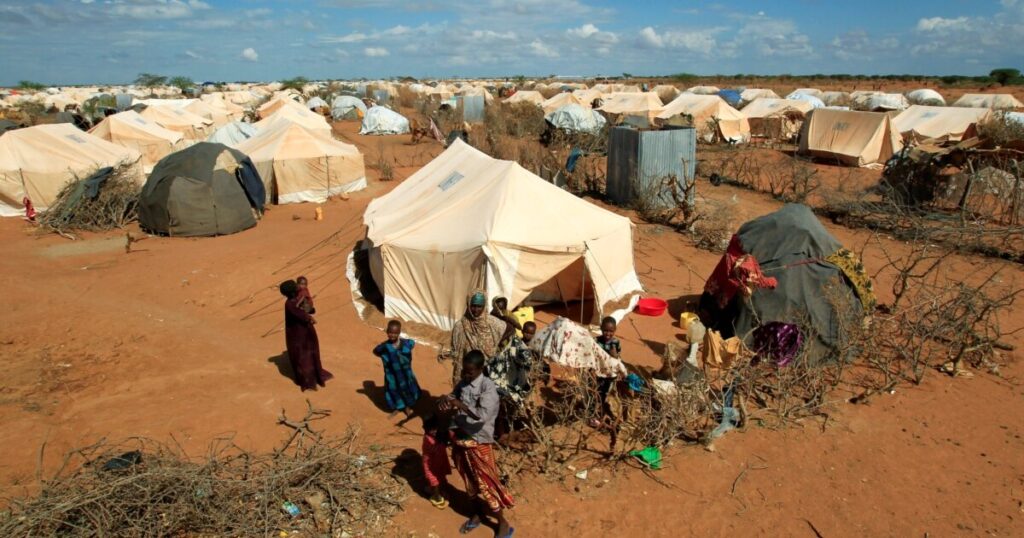
Greater Eastern Africa hosts large displaced populations driven by conflict, environmental degradation and chronic instability. By the end of 2022, IGAD member states hosted at least 4.3 million refugees primarily from Somalia, South Sudan and Sudan, while cumulative displacement across the wider region remains substantial (IGAD, 2025). UNHCR’s Global Appeal 2025 projects continued high levels of forced displacement, with global figures indicating millions of refugees, internally displaced people and asylum-seekers (UNHCR Global Appeal, 2025). The suspension of immigrant visas compresses pathways that might otherwise offer durable solutions for refugees and their families, intensifying dependence on overstretched humanitarian systems in Kenya, Uganda and Ethiopia. When refugees and asylum-seekers cannot access regulated resettlement, family-based migration or complementary protection channels, they may remain in protracted displacement with limited prospects for safety and self-sufficiency. In contexts where host states already struggle to provide basic services, this may deepen protection gaps, elevate risks such as child protection concerns and gender-based violence, and strain social cohesion. Moreover, displaced populations lacking legal status face heightened vulnerability to exploitation in informal labour markets and may be subject to punitive migration enforcement, complicating humanitarian responses and undermining regional protection commitments.
2.4 Institutional Capacity, Coordination and Regional Governance
The suspension reveals structural limitations in regional governance mechanisms tasked with managing migration, displacement and cross-border security. IGAD and the EAC have normative frameworks aimed at harmonising migration data, policy responses and free movement protocols, but implementation gaps persist due to divergent national priorities, limited resources and fragmented information systems (IGAD, 2025). The absence of interoperable data platforms restricts real-time monitoring of mobility flows and undermines early warning capacities for displacement and irregular movement. In addition, while continental frameworks such as the African Union’s Migration Policy Framework advocate for coherent approaches to labour mobility and protection, financing constraints and divergent legal systems impede unified regional responses. Weak institutional integration reduces the capacity of regional bodies to pre-emptively assess and mitigate external shocks such as visa policy changes that originate outside the region. National immigration regimes vary in enforcement and administrative capacity, producing uneven border governance that irregular actors can exploit. Without strengthened coordination, national responses risk being reactive and disconnected, increasing vulnerability to displacement pressures, economic shocks and security spillovers, and limiting the region’s collective capacity to negotiate or adapt to evolving global mobility policies.
3.0 Conclusion
The United States’ suspension of immigrant visa processing for seventy-five countries reflects a broader recalibration of global immigration policy linked to public benefit screening and national security considerations. This action intersects with longstanding mobility, displacement and economic resilience challenges in Greater Eastern Africa. Removal of structured legal pathways amplifies pressures on irregular channels, constrains remittance-linked stability, and exposes gaps in protection systems. Structural limits in regional governance hinder coherent adaptation to external policy shocks. Addressing these multidimensional risks requires strengthened institutional coordination, harmonised data systems, formal financial inclusion mechanisms, and integrated protection frameworks. Only through cohesive regional strategies can Greater Eastern Africa enhance stability, resilience and inclusive mobility in a shifting global policy environment.
4.0 Policy Recommendations
4.1 Strengthen Regional Mobility Governance Architecture
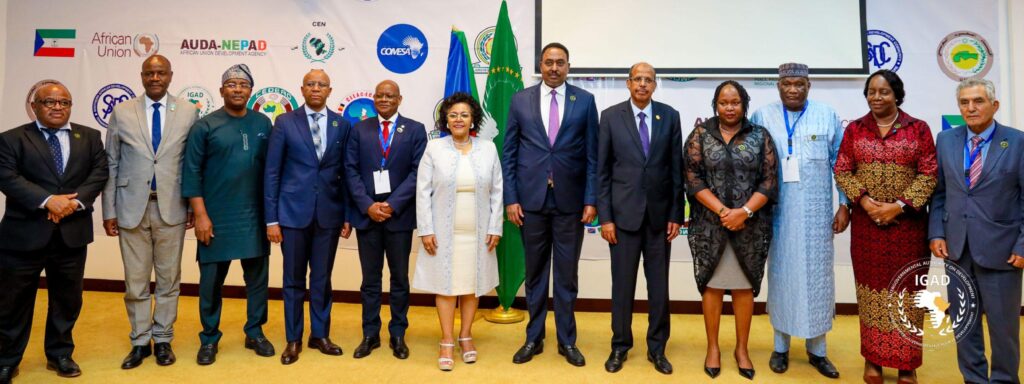
The EAC Secretariat, in collaboration with IGAD and the African Union Commission, should establish a Regional Mobility Governance Unit tasked with harmonising migration data standards, border management protocols and visa policy impact assessments across member states. This unit will produce systematic mobility dashboards synthesising national data and external policy signals, support interoperable information exchange among immigration and labour ministries, and coordinate region-wide responses to external policy shifts such as visa suspensions. By enhancing institutional integration and data interoperability, the unit will enable evidence-based decision-making and early identification of irregular movement patterns. Engagement with regional economic communities will ensure that coordinated approaches to labour mobility, protection and displacement are aligned with market integration objectives and social stability priorities.
4.2 Expand Formal Remittance Channels and Financial Inclusion
Central banks of Greater Eastern African states, supported by the EAC Secretariat and the African Development Bank, should implement a harmonised remittance facilitation framework that expands formal channels and reduces reliance on informal value transfer systems. This framework will integrate anti-money-laundering compliance standards, promote interoperable payment infrastructure, and incentivise entry of licensed remittance service providers. National financial regulators will introduce targeted financial literacy programs for diaspora and recipient households, emphasising secure and cost-effective transfer mechanisms. A regional remittance observatory will publish periodic analyses on remittance trends, enabling macro-financial policymakers to respond to external pressures. By strengthening formal remittance systems, the framework will enhance transparency, reduce transaction costs and support economic resilience amid constrained legal mobility.
4.3 Enhance Humanitarian Protection and Complementary Pathways
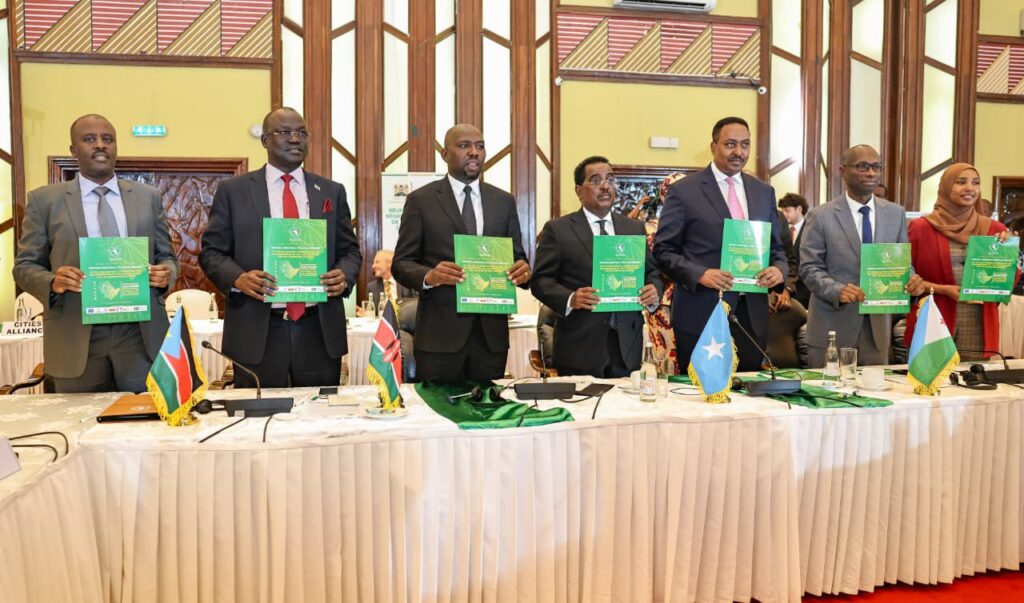
The IGAD , with operational support from the United Nations High Commissioner for Refugees and the International Organisation for Migration, should develop a Regional Protection and Complementary Pathways Framework. This framework will standardise refugee registration practices, protection case management and cross-border referral processes among member states. It will establish common minimum protection standards, including mechanisms for family reunification and pathways that offer durable solutions beyond first asylum, while respecting national legal systems. Regional humanitarian coordination structures will integrate protection metrics with displacement trend analyses to support proactive planning. Collaboration with donor partners will secure multi-year humanitarian funding and contingency reserves to strengthen frontline responses. This framework will reinforce protection continuity, reduce duplication, and bridge gaps linked to restrictive external visa regimes.
4.4 Build Integrated Migration-Security Observation and Response Systems
The African Union Commission, supported by the East African Community and IGAD, should operationalise an Integrated Migration-Security Observation System that consolidates border incident data, displacement trends and security risk indicators across the sub-region. This system will establish analytics units within national interior and security ministries to monitor irregular movement and smuggling networks, and share insights with regional bodies. It will support capacity building in biometric enrolment, audit tracking and anti-corruption practices in border management. Civil society and academic institutions will be engaged in risk modelling to enrich evidence bases. Through this coordinated mechanism, region-wide assessments will inform policy dialogues and support anticipatory responses to external policy changes affecting mobility and security dynamics.
5.0 References
Intergovernmental Authority on Development. (2025). IGAD population and migration report 2025 (Second edition). https://igad.int/the-igad-population-and-migration-report-2025-second-edition/
U.S. Department of State. (2026). Immigrant visa processing updates for nationals at high risk of public benefits usage. https://travel.state.gov/content/travel/en/News/visas-news/immigrant-visa-processing-updates-for-nationalities-at-high-risk-of-public-benefits-usage.html
Reuters. (2026, January 15). Trump administration to suspend immigrant visa processing for 75 nations. https://www.reuters.com/world/us/us-suspend-visa-processing-75-nations-next-week-fox-news-reports-2026-01-14/
The Star. (2026, January 15). Kenya and Burundi are spared as the US freezes all visa processing for 75 countries. https://www.the-star.co.ke/news/2026-01-15-us-freezes-all-visa-processing-for-75-countries/
NBC Online. (2026). US pauses immigrant visa processing for 75 countries, affecting 26 in Africa. https://nbcnews.na/index.php/node/114600
United Nations High Commissioner for Refugees. (2025). Global appeal 2025. https://www.unhcr.org/global-appeal-2025
World Bank. (2024). Migration and remittances factbook 2024. World Bank. (Note: specific figures reflect broader remittance trends relevant to the region.)