

1.0 Introduction
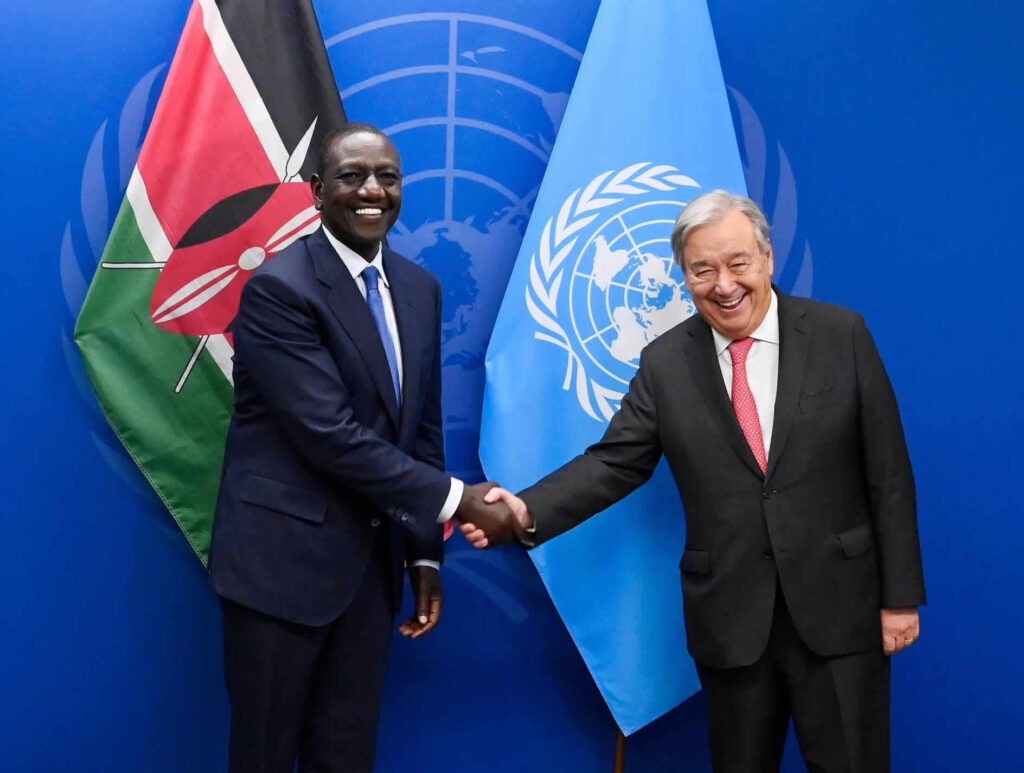
The accelerated relocation of United Nations headquarters functions from traditional policy centres in the West to Eastern Africa constitutes a structural reorientation in multilateral governance. In 2025, UNFPA transferred a significant portion of its New York–based workforce to Nairobi, aiming to consolidate operational proximity to priority regions while achieving fiscal efficiencies and supporting system-wide decentralisation (UNFPA, 2025a). Nairobi’s evolution into a major UN hub carries implications beyond logistics, directly affecting workforce stability, institutional risk management, and regional governance coordination (UNON, 2025).
The relocation unfolded against a volatile funding environment. In early 2026, the United States suspended contributions to multiple multilateral institutions, including UNFPA, undermining financial projections underlying prior organisational planning (United Nations News, 2026). This sequence exposed relocated personnel to compounded uncertainty: geographic displacement followed by fiscal volatility within a compressed adjustment window. Personnel decisions were made under materially different assumptions than those prevailing months earlier, creating asymmetric risk exposure.
Eastern Africa already contends with high humanitarian pressure, governance fragility, and complex mobility dynamics. The concentration of internationally mobile staff intersects with local housing, labour, and security systems, producing systemic effects on host-city resilience and operational continuity (AfDB, 2026). Workforce instability within major multilateral agencies carries second-order implications for program delivery, anticipatory governance, and institutional credibility. This article examines structural tensions arising from UNFPA’s Nairobi relocation, highlighting patterns of psychosocial strain, economic compression, career asymmetries, and duty-of-care gaps that inform policy for current and future relocations across the UN system.
2.0 Key Issues
2.1 Psychosocial Stress Exposure under Sequential Institutional Shocks
Relocated UN personnel in Nairobi face layered psychosocial pressures arising from sequential organisational shocks, including relocation from headquarters and abrupt funding adjustments (United Nations, 2025; International Labour Organisation [ILO], 2024). These stressors affect professional identity, household stability, and institutional belonging. Staff concurrently manage operational demands linked to regional displacement, climate-related humanitarian stress, and high-intensity coordination responsibilities, amplifying cognitive and emotional load (United Nations Office for the Coordination of Humanitarian Affairs [OCHA], 2025). Preventive wellbeing mechanisms, effective under stable conditions, demonstrate reduced efficacy during compounded disruptions, weakening organisational trust and workforce resilience (World Health Organisation [WHO], 2024).
The convergence of geographic displacement with fiscal volatility produces asymmetrical stress outcomes. Expectations of stabilisation are disrupted by funding contractions, undermining coping strategies and constraining mobility planning (UN Joint Staff Pension Fund, 2025). Localised psychosocial infrastructure often lacks the capacity to address sequential-event stress, leaving critical protection gaps unmitigated. Staff surveys indicate elevated burnout where institutional communication prioritises operational continuity over personnel certainty.
In Eastern Africa, these dynamics intersect with fragile governance and high-density duty stations, generating systemic rather than episodic stress. Understanding these patterns is essential for anticipatory workforce governance and regional operational planning (African Development Bank [AfDB], 2025).
2.2 Household Economic Compression in High-Density Duty Stations

Nairobi’s development as a high-density UN duty station has intensified pressure on housing, education, and healthcare systems serving international personnel (UNON, 2025). Relocated households initially anticipated income continuity and secure tenure, yet subsequent funding adjustments compressed financial margins amid fixed relocation-related obligations. Cost-of-living analyses indicate that, although aggregate expenses may be lower than in New York, initial liquidity demands are elevated due to security deposits, upfront tuition fees, and reliance on private healthcare (World Bank, 2025). International school fee structures, requiring advance payments, constrain household flexibility during periods of income uncertainty. Health coverage for internationally mobile staff remains primarily private, increasing out-of-pocket exposure when employment or insurance status shifts (WHO, 2024).
Concentrated household financial stress has observable spillovers: housing instability, rental disputes, and abrupt mobility decisions contribute to local market volatility and influence institutional credibility. The absence of calibrated economic buffers within relocation frameworks exposes misalignment between organisational mobility strategies and the operational realities of high-growth duty stations. These conditions highlight structural vulnerability in workforce stability, linking personnel economic pressures directly to operational resilience in Eastern Africa (AfDB, 2025).
2.3 Career Pathway Disruption and Institutional Visibility Asymmetries
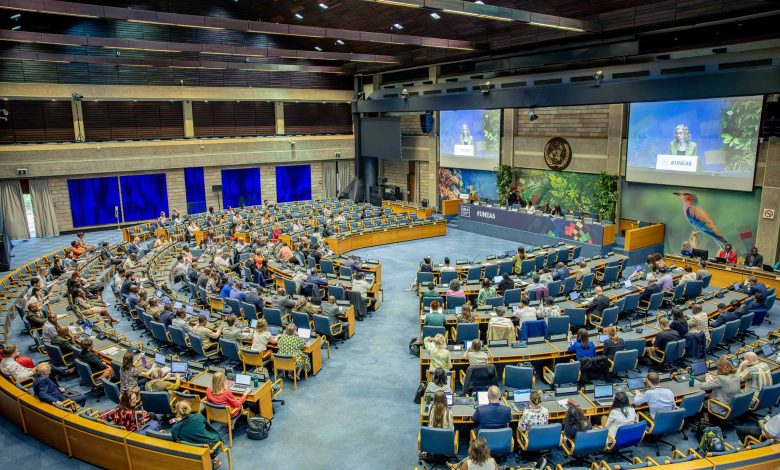
Career progression in the United Nations system is shaped by structural proximity to policy-shaping centres and integrated workforce mobility frameworks (UN Office of Human Resources, “People for 2030” Strategy, 2025). Relocation of HQ‑classified personnel from New York to Nairobi shifted visibility and access to strategic assignments, exposing asymmetries in professional trajectory dynamics before subsequent organisational budget adjustments. Integrated talent management systems instituted under People for 2030 have expanded mobility pathways and career development platforms, yet geographic relocation continues to alter exposure to core decision nodes and informal professional networks that influence advancement (UNDP, People for 2030 Annual Report, 2023; UNDP Strategy 2022–2025). Funding contractions have intensified employment uncertainty while personnel are distanced from alternative global labour markets.
Disruptions to career planning intersect with workforce planning challenges documented in multi-agency decentralisation reviews, where staff mobility exercises reveal structural trade-offs between decentralised positioning and systemic career progression mechanisms (UN Secretariat Administrative Instruction on mobility, 2023). In Eastern Africa, unresolved visibility asymmetries risk uneven talent retention and weaken anticipatory capacity across security, humanitarian, and development portfolios, illustrating a foundational tension in workforce governance and institutional resilience.
2.4 Duty of Care Gaps during Compound Organisational Transitions
Duty of care frameworks within international organisations are primarily structured around discrete operational events: relocation, restructuring, or funding adjustment (UN Ethics Office, 2024). The UNFPA Nairobi case illustrates the constraints that emerge when these events converge sequentially, producing temporal protection gaps. Relocated personnel experienced support mechanisms optimised for logistical relocation that did not extend to funding-related uncertainty, exposing vulnerability in welfare and decision-making capacities. Governance reviews highlight that risk management systems frequently underweight personnel-centred indicators relative to program delivery metrics (OECD, 2025). During funding contractions, communication asymmetries increase as leadership retains scenario visibility unavailable to staff, limiting informed personal choices. The structural imbalance is amplified in high-cost, geopolitically sensitive duty stations, where reversing mobility decisions entails high personal and professional costs. In Eastern Africa, these dynamics intersect with volatile security and governance environments, producing second-order effects on institutional legitimacy, host-government engagement, and operational continuity. The absence of integrated transition governance linking mobility, funding risk, and personnel welfare signals a persistent misalignment between decentralisation ambitions and protective organisational architecture (African Union Commission, 2025).
3.0 Conclusion
The UNFPA Nairobi relocation demonstrates that workforce mobility, when sequenced against funding volatility, functions as a strategic risk multiplier within multilateral governance rather than a neutral administrative adjustment. In Eastern Africa, where institutional presence intersects with humanitarian pressure, security complexity, and host-city resilience, personnel stability directly conditions organisational credibility and delivery capacity. The evidence examined shows that psychosocial exposure, household financial compression, career visibility asymmetries, and fragmented duty of care frameworks are not isolated effects but mutually reinforcing structural tensions. When unaddressed, these tensions weaken anticipatory governance and erode confidence in decentralisation as a reform instrument. Sustaining effective multilateral engagement in the region, therefore, depends on embedding workforce protection into transition governance, ensuring that institutional reform absorbs mobility risk internally rather than displacing it onto personnel. How the UN system operationalises this alignment will shape the durability of its regional footprint and the resilience of its strategic operations under continued geopolitical uncertainty.
4.0 Policy Recommendations
4.1 Institutionalised Psychosocial Risk Management for Relocated Personnel
The UN Secretariat, through UNON Medical Services and agency human resources divisions, should enhance existing psychosocial support structures to address the specific and evolving needs of internationally relocated personnel in Nairobi. Units should integrate licensed clinical psychologists and organisational psychologists with expertise in mobility-related stress, compound organisational transitions, and cross-cultural adaptation. Activation protocols should target sequences such as funding adjustments, restructuring announcements, or operational changes affecting relocated staff and their immediate families. Access should remain confidential, independent of supervisory chains, and extended to dependents. Services should include individual and family counselling, structured group sessions, rapid-response interventions, and stress mitigation workshops. Aggregated anonymised utilisation data should be reported quarterly to executive boards to inform anticipatory workforce risk management. This approach strengthens institutional resilience while building on current capacities.
4.2 Relocation-Linked Household Economic Buffer Mechanisms

UN agencies operating in Eastern Africa should establish inter-agency relocation stabilisation facilities administered through UNON to provide short-term financial continuity instruments for households of internationally relocated personnel. These facilities should cover housing security guarantees, education fee bridging, and medical cost absorption directly linked to organisational transitions, ensuring continuity of household stability during compound shocks. Eligibility criteria should be standardised across agencies to prevent inequity and ensure transparency. Partnerships with host-country financial institutions and educational providers should formalise deferment and guarantee arrangements. Oversight should rest with agency executive boards, which should receive annual reports on utilisation and measurable outcomes. Integrating economic buffers into relocation planning internalises household risk, reduces spillover stress on host-city systems, and aligns personnel security with broader institutional and regional operational resilience objectives.
4.3 Protected Career Mobility Frameworks for Decentralised Headquarters Staff

The UN Department of Management Strategy, Policy and Compliance should implement protected career mobility pathways for personnel relocated from traditional headquarters to regional hubs in Eastern Africa. The framework should guarantee priority consideration across UN agencies for equivalent roles, standardise performance records, and maintain a centralised career placement platform accessible to all relocated staff. Professional development credits, certifications, and reference documentation should be allocated automatically upon relocation to preserve long-term employability within multilateral systems. Inter-agency agreements shall formalise interview guarantees and equitable selection procedures, with executive boards overseeing annual reporting on placement outcomes. The system shall include structured mentoring, skill-mapping, and career guidance support to mitigate visibility asymmetries, sustain voluntary mobility, retain institutional knowledge, and strengthen operational resilience in complex regional operational environments.
4.4 Integrated Duty of Care Governance for Compound Transitions
The UN General Assembly, through the Office of Internal Oversight Services, should mandate integrated duty of care audits for UN personnel whenever relocation coincides with significant funding adjustments in Eastern Africa. Audits shall assess communication transparency, continuity of welfare provisions, and timing impacts on personnel decision-making. Findings shall be reported to governing boards with mandatory follow-up action plans. An independent personnel ombudsperson, reporting directly to agency boards rather than operational management, shall be appointed at each relocated duty station to provide confidential grievance channels. Standardised monitoring metrics shall track mental health service utilisation, household support disbursements, and career placement outcomes. Embedding duty of care into transition governance ensures organisational reforms internalise mobility and funding risks, reinforce institutional credibility, and sustain operational effectiveness in fragile regional contexts.
5.0 References
African Development Bank. (2025). African economic outlook 2025: Mobilising Africa’s capital for resilient growth. https://www.afdb.org/en/news-and-events/press-releases/african-economic-outlook-2025-africas-short-term-outlook-resilient-despite-global-economic-and-political-headwinds-84038
African Union Commission. (2025). AU governance and institutional resilience report. https://au.int/en/documents
International Labour Organisation. (2024). Work-related stress and organisational change. https://www.ilo.org/global/publications
Organisation for Economic Co-operation and Development. (2025). Public governance reviews: Risk management in international organisations. https://www.oecd.org/governance/public-governance-reviews-risk-management-in-international-organisations.htm
United Nations. (2025). System mental health and wellbeing strategy implementation review. https://www.un.org/en/healthy-workforce-home
United Nations Ethics Office. (2024). Duty of care standards in international organisations. https://www.un.org/en/ethics-office
United Nations Joint Staff Pension Fund. (2025). Workforce stability and retention report. https://www.unjspf.org/en/publications
United Nations News. (2026). UN response following the United States funding withdrawal. https://press.un.org/en/2026/db260108.doc.htm
United Nations Office at Nairobi. (2025). Nairobi is a global UN hub. https://www.unon.org/
United Nations Population Fund. (2025a). UNFPA headquarters optimisation. https://www.unfpa.org/unfpa-hq-optimization
World Bank. (2025). Urban cost‑of‑living dynamics in emerging global cities. https://www.worldbank.org/en/news/press-release/2025/10/07/sub-saharan-africas-economy-remains-resilient-with-growth-projected-to-reach-3-8-percent World Health Organisation. (2024). Mental health at work: Policy framework. https://www.who.int/publications/i/item/9789240057944