

1.0 Introduction
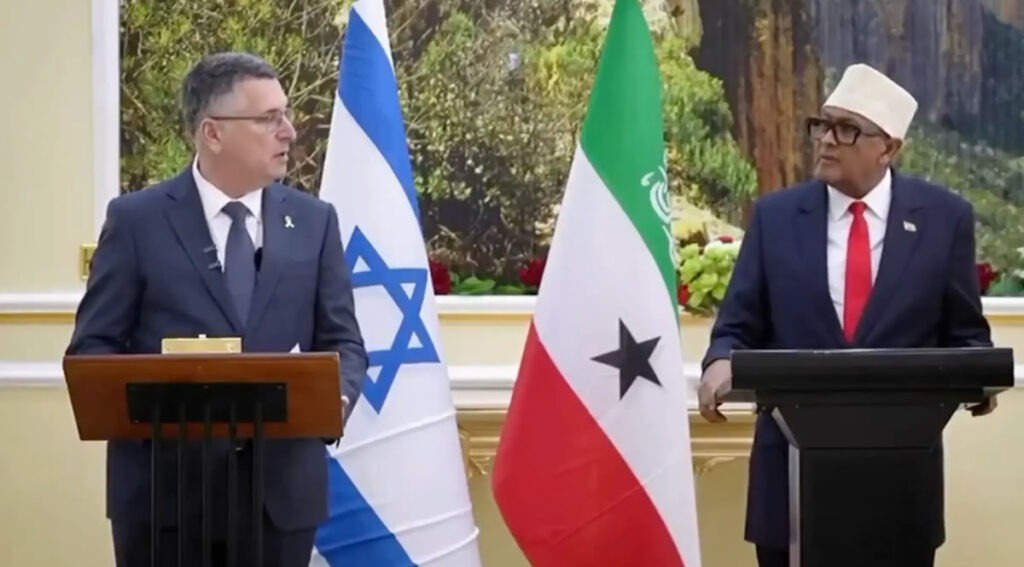
The recognition of Somaliland by Israel signals a structural disruption within Greater Eastern Africa’s governance and institutional architecture, highlighting tensions between sovereignty norms, regional integration frameworks, and international influence. Somaliland’s self-declared independence intersects historical unification trajectories, unresolved colonial legacies, and contemporary geostrategic alignments, challenging African Union’s principles on territorial integrity and complicating United Nations mediation protocols (AU, 2025; UN, 2025). The convergence of external actors’ recognition policies with local state fragility amplifies systemic vulnerability, particularly in cross-border security and migration dynamics. These dynamics create cascading pressures on institutional resilience as IGAD and EAC organs confront asymmetric influence while attempting to enforce regional dispute resolution mechanisms. The engagement of non-regional states introduces anticipatory governance challenges, where local institutions must reconcile external leverage with domestic political cohesion. Risk sequencing is apparent as early recognition precipitates potential normative erosion in sovereignty enforcement, while mobility-security linkages manifest in displaced populations’ political leverage and local tension. This commentary examines how the Israeli-Somaliland recognition exposes structural governance contradictions, escalates regional security complexity, and challenges institutional continuity across Greater Eastern Africa.
2.0 Key Issues
2.1 Unilateral Recognition Undermines Regional Sovereignty Architecture

Unilateral recognition of Somaliland by an external actor exposes structural divergences between IGAD and AU governance frameworks, revealing gaps in procedural authority and institutional alignment (IGAD Secretariat, 2025; African Union Peace and Security Council, 2026; EAC Secretariat, 2025). These asymmetries constrain anticipatory governance, as regional bodies cannot pre-empt diplomatic provocations without harmonised protocols. Risk sequencing is disrupted when member states interpret normative obligations differently, prioritising bilateral interests over collective cohesion. Institutional resilience is weakened as enforcement mechanisms fail to deter unilateral actions, creating precedents that challenge sovereignty norms across Greater Eastern Africa. The divergence in member state responses highlights the operational fragility of collective security instruments and the limits of current mediation frameworks, underscoring how unilateral recognition transforms normative disputes into structural vulnerabilities across overlapping regional institutions.
2.2 Fragmented Governance Weakens Collective Regional Order
Disparities in institutional capacity among IGAD, AU, and EAC members amplify governance fragmentation, undermining coordinated regional responses (IGAD Secretariat, 2025; African Union Commission, 2025; EAC Secretariat, 2025). Anticipatory governance is impaired as some states prioritise bilateral agreements, bypassing multilateral frameworks, which creates parallel decision-making channels. Risk sequencing falters when conflicting timelines and objectives prevent coherent intervention strategies. Mobility-security linkages exacerbate these gaps, as cross-border population flows from contested zones stress domestic security and administrative systems. Institutional resilience is reduced when national ministries operate with uneven integration into regional mechanisms. Consequently, systemic vulnerabilities intensify: shocks propagate across borders, and regional governance instruments struggle to contain escalation. Fragmentation transforms routine administrative asymmetries into strategic obstacles, diminishing the collective capacity to manage security threats and enforce compliance with territorial integrity norms.
2.3 Mobility-Security Pressures Amplify Cross-Border Vulnerabilities
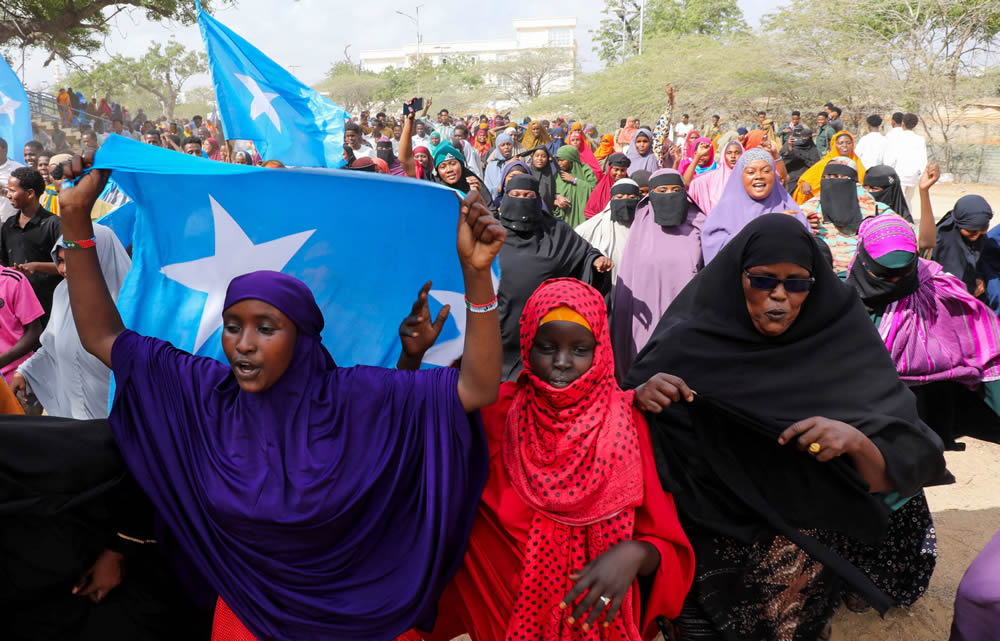
Cross-border population movements from Somali regions into Ethiopia and Kenya intensify structural vulnerabilities, revealing gaps in risk sequencing and anticipatory governance (IOM, 2025; UNHCR, 2025; OCHA, 2025). Episodic influxes and returns challenge domestic ministries’ capacity to maintain public service delivery and enforce security protocols. African Union border management and humanitarian coordination mechanisms are tested as demographic pressures intersect with contested governance statuses. Lack of harmonised data sharing and joint contingency planning weakens institutional resilience, leaving regional bodies reactive rather than proactive. Mobility-security linkages underscore the interdependence of governance, humanitarian capacity, and territorial integrity enforcement. Without integrated strategic planning, localised population pressures risk cascading into broader regional instability. The structural tension between population dynamics and institutional preparedness illustrates the need for coordinated mechanisms to pre-emptively mitigate cross-border vulnerabilities in Greater Eastern Africa.
2.4 External Geopolitics Reshape Regional Institutional Relations
External diplomatic and economic alignments create structural friction within Greater Eastern Africa’s multilateral institutions, revealing gaps in risk sequencing and institutional coherence (IGAD Secretariat, 2025; African Union Peace and Security Council, 2026; World Bank, 2025). Somaliland’s recognition by an external state exposes limitations in synchronised enforcement protocols, weakening anticipatory governance. Member states exploit asymmetries to pursue unilateral advantages, undermining collective institutional resilience. Mobility-security linkages intensify when external actors engage in contested areas, intersecting with population pressures and localised administrative vulnerabilities. These dynamics highlight how extraregional interventions can distort decision-making hierarchies and operational predictability across IGAD and AU mechanisms. The structural interplay between external engagement and internal institutional fragmentation underscores the urgency of harmonised regional strategies to maintain coherent governance, pre-empt cross-border destabilisation, and preserve the normative authority of regional bodies.
3.0 Conclusion
The structural rupture caused by unilateral recognition, institutional fragmentation, mobility security pressures, and external geopolitical realignments collectively exposes the vulnerabilities of Greater Eastern Africa’s governance and security architecture. Divergent institutional capacities across IGAD, AU, and EAC bodies limit anticipatory governance, weaken risk sequencing, and undermine institutional resilience. Cross-border population movements intersect with contested political statuses, further amplifying systemic pressures on regional coordination. These tensions highlight the fragility of normative frameworks governing sovereignty, collective action, and territorial integrity. Addressing these structural contradictions requires regionally aligned strategies capable of restoring coherence, reinforcing institutional linkages, and preserving the integrity of collective security mechanisms.
4.0 Policy Recommendations
4.1 Strengthen Coordinated Sovereignty Protocols
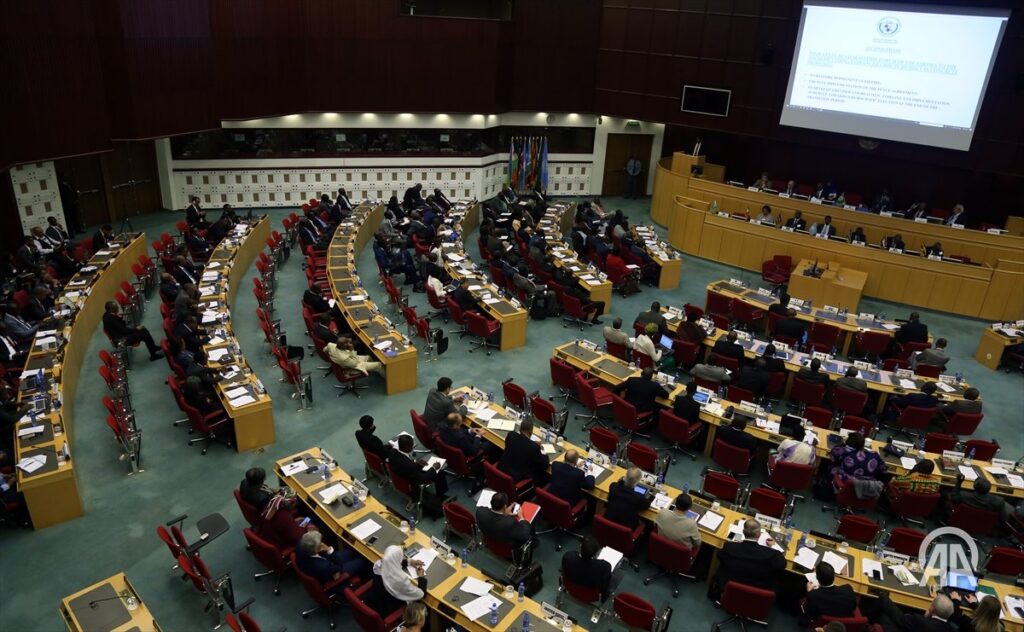
IGAD and the African Union should operationalise a joint recognition and dispute-resolution protocol to address unilateral acts affecting sovereignty within Greater Eastern Africa. Ministries of Foreign Affairs and Justice in Somalia, supported by the IGAD Secretariat and the AU Peace and Security Council, must implement binding procedures for vetting external recognition actions. This includes an integrated verification unit and a harmonised legal framework referencing the UN Charter and the AU Constitutive Act. Mechanisms for collective response and reporting should be enforced through quarterly IGAD-AU compliance sessions and cross-member state data sharing. Coordinated engagement will reinforce anticipatory governance, reduce normative divergence, and restore institutional resilience across regional legal architectures, ensuring a structured response to unilateral recognition while preserving multilateral decision-making coherence.
4.2 Harmonise Regional Governance Capacities
To mitigate fragmented institutional governance, IGAD, AU, and EAC organs should develop a unified governance assessment and coordination platform. National ministries of Foreign Affairs, Defence, and Interior must interface with this platform through standardised reporting protocols, operationalised via secure digital channels. The AU Peace and Security Council should supervise periodic capacity audits to align implementation standards, addressing discrepancies in institutional resilience and anticipatory governance. Joint scenario planning exercises should be conducted biannually to strengthen risk sequencing for regional contingencies. This harmonisation ensures that all member states respond consistently to cross-border challenges, limits unilateral policy divergence, and consolidates multilateral frameworks to maintain structural order and institutional credibility across Greater Eastern Africa.
4.3 Establish Integrated Mobility-Security Mechanisms
IGAD, AU, and national ministries of Interior and Defence should create a shared mobility-security coordination platform to manage population movements and cross-border vulnerabilities. The platform must integrate real-time IOM and UNHCR displacement data, enabling harmonised planning for resource allocation, border management, and security deployment. Standardised operational protocols should define escalation triggers, contingency activation, and inter-agency communication. Quarterly joint simulations should be conducted to ensure crisis anticipation and institutional resilience. By connecting mobility pressures with coordinated policy and operational frameworks, regional governance architectures will be capable of responding preemptively to population movements, minimising localised shocks, and reducing the likelihood of destabilisation that could cascade into wider security crises across Greater Eastern Africa.
4.4 Align Regional Strategy with External Engagements
IGAD and AU bodies should institutionalise protocols for monitoring and coordinating extraregional interactions affecting Greater Eastern Africa. National Ministries of Foreign Affairs and Economic Planning must submit planned bilateral agreements or recognitions for review through an AU-IGAD oversight mechanism. Harmonised guidelines will define permissible engagements, enforce transparency, and sequence regional responses to external actors. Scenario planning and strategic assessment units within the IGAD Secretariat should evaluate the impact of geopolitical realignments on collective security. This alignment strengthens anticipatory governance, addresses institutional asymmetries, and preserves mobility-security linkages while mitigating the risk of external actors exploiting fragmented regional responses. Coordinated oversight ensures that collective regional coherence remains central in diplomatic and economic interactions.
5.0 References
African Union. (2025). Annual report on peace and security in Africa 2025. African Union Commission. https://au.int/en/documents/peace-security-2025
African Union Peace and Security Council. (2026). Normative frameworks and operational guidance for territorial integrity enforcement. African Union. https://au.int/en/psc/frameworks-2026
East African Community Secretariat. (2025). EAC regional governance and integration report 2025. East African Community. https://www.eac.int/governance-report-2025
IGAD Secretariat. (2025). Regional security and integration assessment 2025. Intergovernmental Authority on Development. https://igad.int/2025-security-assessment
International Organisation for Migration. (2025). Displacement tracking matrix: Greater Eastern Africa. IOM. https://dtm.iom.int/greater-eastern-africa-2025
Office for the Coordination of Humanitarian Affairs. (2025). Cross-border humanitarian and security coordination report: Eastern Africa. UN OCHA. https://www.unocha.org/eastern-africa-2025
United Nations High Commissioner for Refugees. (2025). Regional population movements and governance pressures in Eastern Africa. UNHCR. https://www.unhcr.org/reports/eastern-africa-2025
World Bank. (2025). Economic and political risks in Greater Eastern Africa: Annual review 2025. World Bank Group. https://www.worldbank.org/en/region/eastern-africa/publication/2025-review