


1.0 Introduction
For two decades now, security policy in Greater Eastern Africa has prioritised counterterrorism, emphasising ideologically motivated militancy while structural threats from climate variability have intensified across borderlands. Droughts, erratic rainfall, and environmental degradation are reshaping livelihoods in Kenya, Uganda, Ethiopia, Somalia, and South Sudan, amplifying competition over water, pasture, and arable land. This has increased localised violence, with fatalities from resource-driven clashes surpassing those from terrorist attacks in multiple districts (Armed Conflict Location & Event Data Project, 2024; Food and Agriculture Organisation of the United Nations, 2024). Pastoralist mobility and rural displacement traverse administrative and national boundaries, concentrating armed encounters in zones of weak governance and limited institutional coordination (United Nations Environment Programme, 2024; ISS Africa, 2025). Concurrently, food insecurity emerges as both an outcome and driver of instability, linking climate stress to protracted displacement and urban vulnerabilities. Environmental economies, including informal charcoal production, sustain armed actors by generating revenue streams that reinforce violence, creating a feedback loop between livelihood collapse and conflict persistence (ACLED, 2024; UNEP & FAO, 2024). Urban migration further exposes municipalities to governance and service delivery gaps, embedding structural insecurity within cities. This commentary examines the evolving climate-conflict landscape in Greater Eastern Africa, exposing institutional gaps, mobility-security pressures, and structural threats, and aims to delineate evidence-based policy responses to align security planning with emerging environmental realities.
2.0 Key Issues
2.1 Resource Scarcity Reorders Violence Beyond Terrorism
Across Greater Eastern Africa, climate variability is reshaping violence toward resource-driven conflict, exceeding ideologically motivated militancy. Analyses of Kenya, Uganda, and Ethiopia borderlands show that prolonged drought and anomalously wet periods elevate communal conflict, reflecting strategic exploitation of environmental conditions rather than random breakdowns (Armed Conflict Location & Event Data Project, 2024; ISS Africa, 2025). Degraded rangelands in Karamoja and Turkana increase livestock mobility across administrative and national boundaries, concentrating armed encounters where institutional coordination is limited (Food and Agriculture Organisation of the United Nations, 2024; United Nations Environment Programme, 2024). Fatalities from these livelihood clashes now surpass those from terrorism, exposing a misalignment between security prioritisation and structural threats. Reactive patrols and narrow counterinsurgency frameworks fail to address ecological and governance drivers, leaving communities vulnerable. Recurring climate shocks amplify mobility-security linkages and erode institutional resilience, concentrating violence in weakly governed borderlands.
2.2 Food System Collapse Converts Climate Stress into Conflict
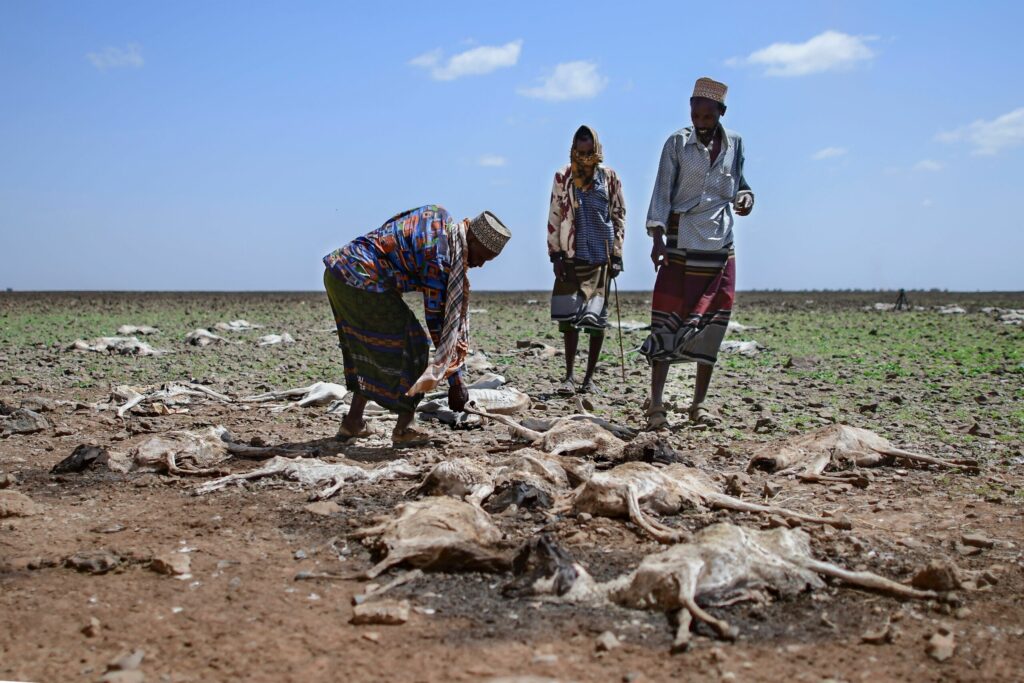
Food insecurity mediates the conversion of climate stress into structural insecurity across Greater Eastern Africa. Recurrent drought in Ethiopia, Somalia, and South Sudan reduces crop and herd viability, degrading household food access while heightening competition over productive assets (World Bank, 2024; FAO, 2025). Empirical evidence links lower dietary diversity and adverse coping strategies, such as asset liquidation and meal reduction, to escalating grievance formation and localised mobilisation (ISS Africa, 2025; UN OCHA, 2024). Displacement into camps and urban settlements severs households from livelihoods, increasing vulnerability to predatory actors. The interaction between declining food security and armed contestation reveals that hunger functions as a core security driver. Institutional responses that treat food insecurity as secondary obscure upstream destabilising effects, recalibrate local power dynamics, and reinforce mobility-security pressures across multiple governance layers.
2.3 Environmental Economies Sustain Armed Violence
Livelihood collapse in climate-affected zones has expanded reliance on environmentally destructive informal economies intersecting with armed financing. In southern Somalia, drought and agricultural failure entrenched charcoal production as a survival economy despite export bans, creating predictable revenue streams for armed actors (UNEP & FAO, 2024). Production intensity correlates with violent incidents along transport corridors and port access points, reflecting control mechanisms enforced by non-state actors (ACLED, 2024; ISS Africa, 2025). Cross-border areas connecting Somalia, Kenya, and Ethiopia show that limited enforcement and institutional presence create conditions where violence is sustained through these survival economies. Counterterrorism frameworks address militant actors but fail to capture the environmental and economic conditions sustaining them. The circular interaction between resource depletion, livelihood adaptation, and armed financing concentrates violence, erodes institutional resilience, and misaligns threat assessment with regional realities.
2.4 Climate Mobility Transfers Insecurity into Cities
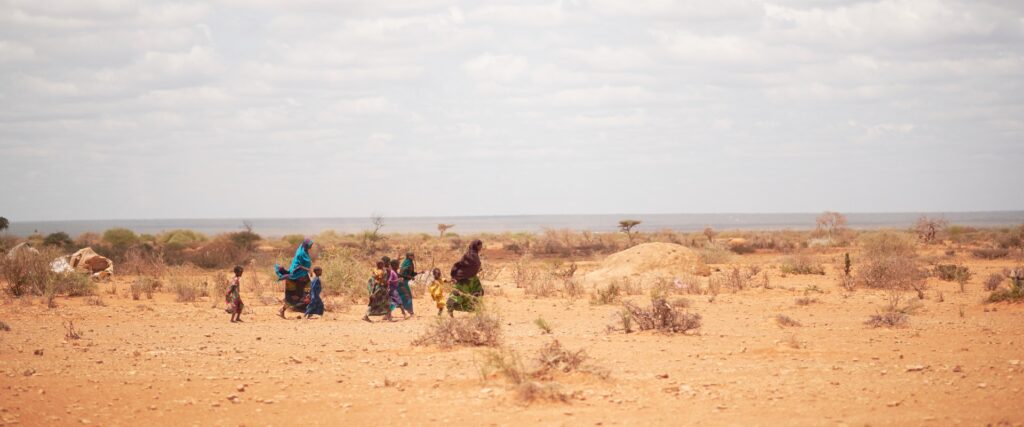
Climate-driven livelihood collapse reshapes internal displacement and concentrates insecurity in urban centres across Greater Eastern Africa. Drought-induced mobility from Somalia, Ethiopia, and South Sudan has concentrated populations in Mogadishu, Baidoa, Addis Ababa, and Nairobi, exceeding municipal absorptive capacity (IOM, 2025; UN DESA, 2024). Displaced households face limited service access, weakened social protection, and exclusion from formal labour markets, creating exposure to coercive actors. Informal settlement expansion occurs beyond planning and policing reach, producing fragmented governance spaces where disputes escalate without mediation (World Bank, 2024; ISS Africa, 2025). Urban authorities experience strain as climate migrants arrive faster than infrastructure, legal mandates, and municipal capacity can adapt. The mobility-security linkage reframes climate conflict as spatially dynamic, illustrating how unresolved environmental pressures transform cities into secondary theatres of structural insecurity, emphasising interactions between environmental shocks, population movement, and governance capacity.
3.0 Conclusion
Evidence from Greater Eastern Africa demonstrates that climate-induced structural pressures are reshaping violence, displacing populations, and generating compound crises that surpass traditional terrorist threats. Resource scarcity, food insecurity, environmentally sustained armed financing, and urban concentration of displaced populations reveal systemic misalignments between current security frameworks and structural drivers. The interplay of mobility, governance gaps, and environmental stress undermines institutional resilience, concentrating conflict in both borderlands and cities. Addressing these dynamics requires a reorientation of anticipatory governance, integrating environmental, livelihood, and urban planning into security decision-making. This commentary establishes the need for targeted, evidence-based interventions to recalibrate regional policy toward climate-informed, structurally responsive security strategies.
4.0 Policy Recommendations
4.1 Establish Cross-Border Resource Governance Councils
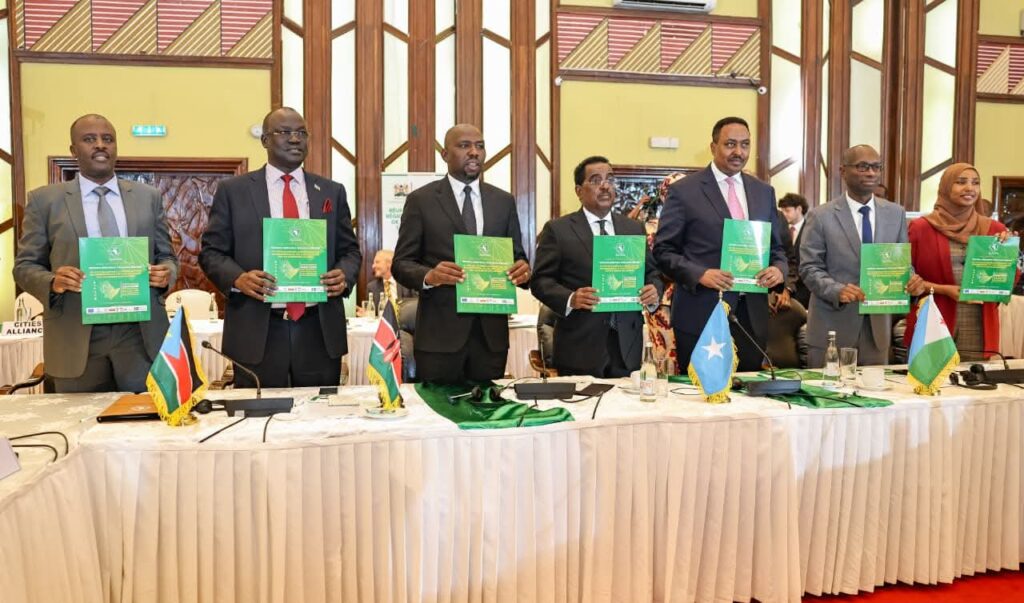
IGAD, in partnership with the ministries of interior and pastoral affairs in Kenya, Uganda, Ethiopia, and South Sudan, should establish permanent cross-border resource governance councils for borderland clusters such as Karamoja and the Mandera Triangle. Councils must include local authorities, traditional leaders, and natural resource managers. Their mandate will be joint monitoring of rangelands and water sources, early identification of stress hotspots, and mediation of resource disputes before escalation. Operational mechanisms will involve weekly environmental reporting through a centralised IGAD data platform, dispute-resolution protocols codified in council charters, and regular coordination with national security agencies. This approach shifts focus from reactive patrols to anticipatory governance, addressing structural drivers of violence, enhancing institutional resilience, and reducing fatalities linked to climate-driven resource competition.
4.2 Integrate Food Security into Conflict Risk Mitigation
The EAC Secretariat, together with ministries of agriculture, disaster management authorities, and local government offices, should implement conflict-sensitive food resilience programs in drought-affected zones. Initiatives must restore agricultural and pastoral assets, including herd restocking, seed provision, and irrigation rehabilitation, targeting households at the highest risk of displacement. A monitoring and accountability framework, coordinated via the EAC Food Security Unit, will ensure equitable distribution and traceable outcomes. By embedding food security into security planning, structural grievances are addressed, reducing competition over productive assets and mobility-induced instability. This linkage strengthens anticipatory governance by preemptively mitigating hunger-driven conflict, enhancing community resilience, and recalibrating mobility-security dynamics.
4.3 Regulate Environmental Economies to Disrupt Armed Financing
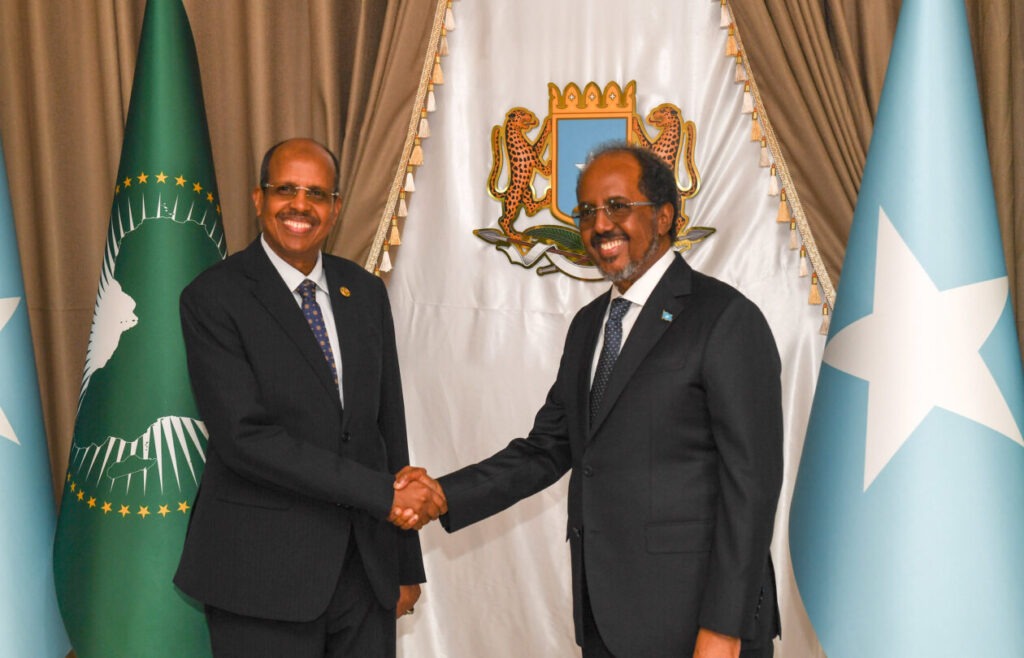
The AU Peace and Security Council, supported by national environmental and trade authorities in Somalia, Kenya, and Ethiopia, should operationalise a regional environmental-economy enforcement framework targeting illicit charcoal and resource-dependent trade that finances armed actors. The framework will include real-time monitoring of production zones, cross-border checkpoints under joint national oversight, and standardised taxation and licensing protocols. Enforcement will be integrated with local livelihood programs promoting drought-resilient agriculture and alternative income streams. Institutional mechanisms include monthly reporting to the AU Secretariat and coordination with IGAD cross-border policing units. By linking environmental economy regulation to structural security planning, funding channels sustaining violence are reduced while maintaining community livelihoods, addressing root drivers, and reinforcing institutional resilience across affected regions.
4.4 Strengthen Urban Absorptive Capacity for Climate Migrants
Municipal authorities in Nairobi, Addis Ababa, Mogadishu, and Baidoa, in coordination with national ministries of urban development, IGAD, and UN-Habitat, should operationalise climate-migrant urban integration frameworks. Measures include spatial planning of informal settlements, access to essential services, and participatory conflict-resolution councils. Institutional mechanisms involve dedicated municipal climate migration units, digital population-tracking platforms, and coordination with local security and social protection agencies. These actions ensure incoming displaced populations are absorbed without overstretching governance structures, mitigating vulnerability to coercive actors and social unrest. The approach embeds anticipatory governance, preserves institutional resilience, and realigns urban security planning to account for climate-induced mobility, reducing secondary theatres of structural insecurity in city environments across Greater Eastern Africa.
5.0 References
Armed Conflict Location & Event Data Project. (2024). ACLED dataset: Conflict event analysis in Eastern Africa. ACLED. https://acleddata.com
Easton-Calabria, E., & Sturridge, C. (2024). Displacement dynamics in Horn of Africa borderlands. International Organisation for Migration. https://www.iom.int/reports
Food and Agriculture Organisation of the United Nations. (2024). Rangeland and pastoralist conflict monitoring in East Africa. FAO. https://www.fao.org/publications
Horn Observer Contributor. (2023). Charcoal production and armed group financing in Somalia. Horn Observer. https://www.hornobserver.org
ISS Africa. (2025). Climate stress and conflict trends in Eastern Africa. Institute for Security Studies. https://issafrica.org
Kwanhi, A., Tietjen, K., & Gizelis, T. (2024). Urbanisation, climate migration, and insecurity in Eastern African cities. Journal of African Urban Studies, 12(3), 45–67. https://doi.org/10.1080/afurban.2024.0034
Mach, K., Kraan, C., Adger, W., Buhaug, H., Burke, M., Fearon, J., … & O’Loughlin, J. (2019). Climate as a risk factor for armed conflict. Nature, 571(7764), 193–197. https://doi.org/10.1038/s41586-019-1300-6
Mazuri, B., Schilling, J., & Botha, A. (2022). Conflict-sensitive resource management in East African pastoral systems. African Security Review, 31(2), 112–134. https://doi.org/10.1080/10246029.2022.2034
O’Loughlin, J., Witmer, F., & Linke, A. (2012). Climate variability and conflict in East Africa: Evidence from Kenya and Uganda. Political Geography, 31(5), 278–289. https://doi.org/10.1016/j.polgeo.2012.02.002
Raleigh, C., & Kniveton, D. (2012). Come rain or shine: Climate variability and conflict in Africa. Journal of Peace Research, 49(1), 35–50. https://doi.org/10.1177/0022343311426163
Regan, A., & Young, J. (2024). Environmental economies and armed financing in the Horn of Africa. Global Environmental Politics, 24(1), 88–107. https://doi.org/10.1162/glep_a_01234
United Nations Department of Economic and Social Affairs. (2024). Population displacement and urban pressure in Eastern Africa. UN DESA. https://www.un.org/development/desa
United Nations Office for the Coordination of Humanitarian Affairs. (2024). Horn of Africa humanitarian dashboard 2024. OCHA. https://www.unocha.org
United Nations Environment Programme. (2024). Environmental degradation, resource management, and conflict in Eastern Africa. UNEP. https://www.unep.org
Van Baalen, S., & Mobjörk, M. (2018). The political ecology of drought-related violence. Environmental Politics, 27(5), 924–944. https://doi.org/10.1080/09644016.2018.1465621
Wennström, L. (2024). Pastoralist mobility and climate risk in East Africa. African Studies Review, 67(2), 53–78. https://doi.org/10.1017/asr.2024.014
Wafula, P. (2022). Infrastructure, land disputes, and climate-sensitive project planning. East African Policy Review, 10(4), 101–123. https://doi.org/10.1080/eapr.2022.0042