

Few regions are undergoing geopolitical transformation as rapidly and consequentially as the Greater Eastern Africa.
Stretching from the Red Sea and the Gulf of Aden to the western Indian Ocean and the Great Lakes region, the region sits at the intersection of global trade routes, maritime competition, resource politics, and shifting power alignments. Many critical developments in countries across this geopolitical space cannot be viewed in isolation; they are interconnected drivers shaping regional and international stability. What unfolds in Somalia, Sudan, Democratic Republic of the Congo, Ethiopia, or the Red Sea maritime corridor often carries implications for regional integration, global trade, migration systems, diplomatic alignments, and international security.
This reality has posed an ever-growing challenge for governments, multilateral agencies, civil society, the private sector and other actors in the region.
A Region Historically Shaped by Influence–Driven Competition
The geopolitical importance of Greater Eastern Africa is deeply rooted in history. For centuries, the region served as a commercial and cultural crossroads linking Africa, the Middle East, Asia, and Europe through Indian Ocean and Red Sea trade systems. Coastal city-states, inland kingdoms, and transregional trade networks connected it to global economic systems long before the modern state emerged.
Colonial competition later transformed the region into a theatre of imperial rivalry, where European powers competed for maritime control, territorial influence, and resource access. Colonial borders laid the foundations for many contemporary political and security tensions.
During the Cold War, Greater Eastern Africa became an arena for ideological rivalry and geopolitical contest through proxy. Military alliances, insurgencies, and external interventions shaped the region’s security architecture in ways that continue to influence present-day geopolitics.
In the post-Cold War period, the region became increasingly defined by state fragility, civil wars, terrorism, piracy, humanitarian crises, and contested transitions. Yet beneath these crises, another transformation was quietly unfolding. Greater Eastern Africa was becoming one of the world’s most geopolitically interconnected spaces, shaped simultaneously by maritime competition, resource politics, demographic growth, infrastructure expansion, and emerging global power rivalries.
Today, those dynamics are accelerating at unprecedented speed.
Competition for Crucial Maritime Gateway
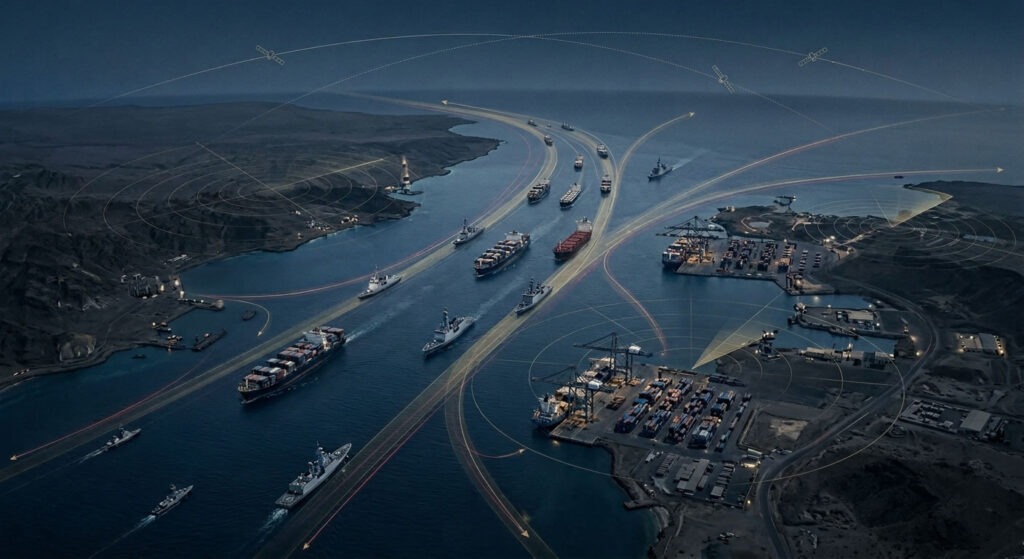
One of the most significant geopolitical shifts reshaping Greater Eastern Africa is the growing strategic importance of the Red Sea and western Indian Ocean corridor. The Bab el-Mandeb Strait remains one of the world’s most important maritime chokepoints, linking global trade flows between Africa, Europe, Asia, and the Middle East. Situated between the Arabian Peninsula and the Horn of Africa, the Strait has become an increasingly important flashpoint for international security.”
As geopolitical competition intensifies globally, external powers are expanding their diplomatic, economic, and military presence near this Strait. Djibouti has emerged as a major hub for foreign military presence, hosting bases from multiple global powers. Gulf states, China, the US, Russia, Türkiye, Japan, and European actors are all pursuing influence through infrastructure investments, security and trade partnerships, as well as port access agreements.
This competition is reshaping regional alignments and influencing domestic political calculations. Logistics corridors and other infrastructure are increasingly viewed as strategic instruments tied to influence, access, and long-term geopolitical positioning; not mere development assets.
At the same time, instability in the Red Sea space has amplified broader regional vulnerabilities. Disruptions to maritime routes and instability along shipping and trade corridors are generating significant economic and political effects across Greater Eastern Africa.
Internal Instability and Shifting Power Balances
Internal political transitions and conflicts are also redefining the balance of power across Greater Eastern Africa. The conflict in Sudan has become one of the most consequential crises in recent African history, generating mass displacement, economic disruption, arms proliferation, and cross-border instability. The conflict has also altered regional diplomatic alignments and intensified humanitarian crises across neighbouring states.
In Ethiopia, political restructuring and internal tensions continue to shape regional geopolitics. As one of the region’s largest military and demographic powers, developments in Ethiopia carry direct implications for regional diplomacy, water politics, border security, and trade integration.
Meanwhile, eastern Democratic Republic of the Congo remains central to regional security calculations due to persistent armed group activity, mineral competition, and cross-border interventions involving neighbouring states. The region’s mineral wealth has elevated its importance within global supply chains linked to energy transition technologies and advanced manufacturing.
These interconnected crises demonstrate how domestic instability intersects with transnational geopolitical interests across Greater Eastern Africa. Conflicts that may appear localized often involve broader struggles over influence, positioning, resource access, and economic leverage.
In such an environment, reactive policymaking is no longer sufficient. The growing convergence of geopolitical, economic, security and environmental forces demands a more anticipatory approach to decision-making grounded in strategic foresight and long-term planning.
Why Strategic Foresight Matters
At Mashariki Research and Policy Centre (MRPC), geopolitics is approached through a strategic foresight lens that goes beyond the study of state competition to examine the interconnected power dynamics shaping security, governance, economics, and regional stability across Greater Eastern Africa. The Centre converts complex regional and global developments into practical intelligence that enables governments, multilateral agencies, civil society, and the private sector to respond proactively to evolving regional realities.
MRPC’s analytical methodology combines long-term strategic foresight with analysis of state and non-state actors and their influence networks across the region.
The Centre also utilizes geospatial corridor analytics to assess trade routes, military movements, maritime dynamics, infrastructure vulnerabilities, and resource flows across the region.
In addition, simulations allow policymakers and institutional actors to stress-test assumptions under multiple future scenarios. These methodologies are reinforced through conflict vulnerability analysis, geopolitical risk mapping, horizon scanning, and trend forecasting tailored to evolving regional realities.
This forward-looking approach enables institutions to better understand layered geopolitical eventualities before they fully materialize.
MRPC’s products include the Mashariki Monthly Outlook, policy briefs and executive advisories that support crisis prevention, proactive investment planning, strategic diplomacy, and evidence-based governance.
In a region where geopolitical shifts increasingly shape both risk and opportunity, the ability to anticipate change before it escalates into crisis may become one of the most important strategic capabilities of all.