


1.0 Introduction
During the 2026 African Union Peace Summit, observers noted that the physical capacity of some African heads of state was visibly constrained and frail, requiring external support to walk and navigate formal proceedings (BBC News, 2026). This illustrated a broader governance challenge: declining executive operational capacity and its consequences on institutional stability and regional coordination. In many states in Africa, presidential health remains opaque, with limited disclosure and restricted media reporting, while frequent foreign medical visits create uncertainty over who is exercising executive functions (International Crisis Group, 2025). Such ambiguity slows decision-making, weakens oversight, and fragments cross-border coordination. Within the Intergovernmental Authority on Development (IGAD) and the East African Community (EAC) regions, consistent engagement by the head of state is essential for conflict mediation, regional security planning, and economic program implementation (IGAD Secretariat, 2025; EAC Secretariat, 2025). These dynamics reveal the tension between visible leadership, institutional resilience, and regional commitments amid executive uncertainty. The purpose of this commentary is to examine these challenges systematically and assess how declining executive capacity affects governance continuity, institutional integrity and overall regional security across Greater Eastern Africa.
2.0 Key Issues
2.1 Executive Capacity Ambiguity

Across Greater Eastern Africa, uncertainty about whether a sitting president is fully able to carry out official duties has tangible effects on governance and security. When a head of state is absent for medical reasons or limited in public activity, government departments face real delays in decisions, approvals, and instructions. Ministries responsible for finance, security, and humanitarian response may wait for executive authorisation, slowing down routine work and emergency action. Journalistic coverage has noted how vague or restricted information about leaders’ health fuels public uncertainty and speculation (BBC, 2024). Where constitutions do not clearly specify how authority should be shared or delegated during such periods, agencies remain unsure who holds decision rights. This uncertainty creates openings for political factions to contest power informally, undermining institutional trust. Without transparent systems to verify executive function, both national governance and regional cooperation risk paralysis during critical periods requiring timely decisions, occasioning threat to security.
2.2 Institutional Strain Under Unclear Leadership
Government institutions in several Greater Eastern African states are strained when executive capacity is unclear or limited. Public servants, civil servants, and security agencies often need direct presidential approval for key actions. If that approval is delayed or unavailable, work stalls: budgets are not released, security operations are not ordered, and disaster responses are postponed. Media reporting across the region highlights how opaque leadership situations contribute to administrative confusion and frustration among citizens when services and decisions are delayed (Al Jazeera, 2025). Ministries may resort to informal arrangements or assume temporary authority, but such practices lack legal clarity and contribute to inconsistent implementation of policy. Law enforcement and emergency services can be left without clear guidance when executive oversight is absent. Regional cooperation also suffers as institutional representatives cannot commit to joint programs without verified authority. Over time, repeated episodes of unclear leadership erode confidence in public institutions, creating a vicious cycle where institutional resilience weakens just when it is needed most to manage crises, security threats, and development challenges.
2.3 Regional Coordination Vulnerability
In Greater Eastern Africa, multinational cooperation for peace, security, trade, and disaster response depends on predictable, verifiable leadership participation. Bodies such as the African Union(AU), IGAD, and the EAC require confirmation that state executives are present and engaged when negotiating peace agreements, authorising joint security missions, and coordinating responses to humanitarian emergencies (World Bank, 2026). When leadership capacity is uncertain, decisions are postponed, plans remain unapproved, and urgent operations delay commencement. Journalistic accounts have highlighted how delayed executive engagement can slow regional responses to conflict outbreaks and refugee crises (BBC, 2025). Neighbouring states may hesitate to implement joint initiatives or may interpret inaction as a shift in political will. Structural gaps in executive verification generate confusion over who speaks for a state in multilateral settings, weakening trust among regional partners. This vulnerability undermines collective security efforts and can exacerbate tensions, especially in border areas where rapid, coordinated action is critical.
2.4 Governance and Succession Gaps
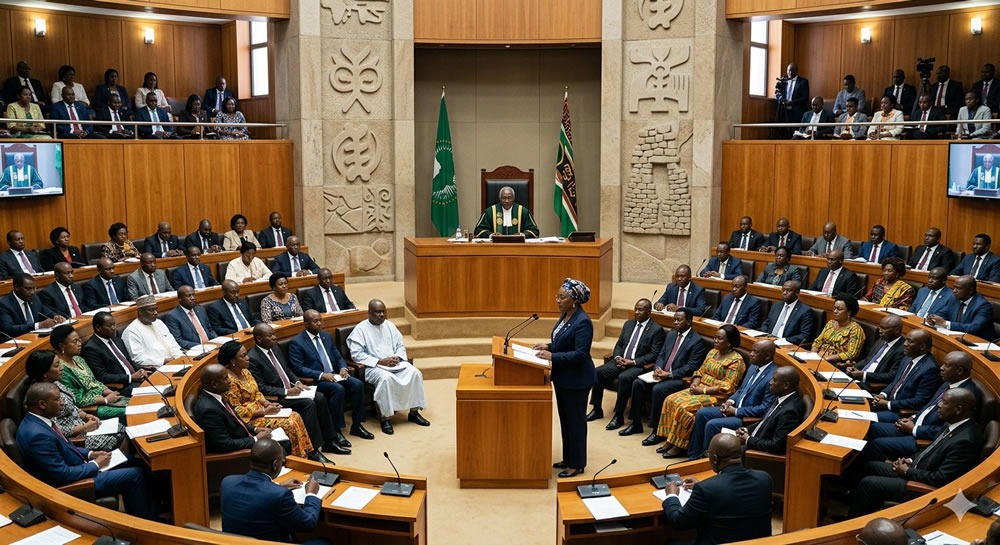
Greater Eastern African constitutional and legal frameworks often lack clear, enforceable procedures for transferring authority when a president’s capacity is compromised. Many national constitutions specify succession in extreme cases like death or resignation, but do not clearly articulate who takes over during prolonged incapacity or how interim authority is validated. In such gaps, political actors and security services may fill the vacuum informally, increasing the risk of power struggles or unilateral decision-making. Media reporting has drawn attention to the secrecy around some leaders’ health and the absence of transparent succession mechanisms (Al Jazeera, 2024). This uncertainty discourages early activation of contingency plans, and ministries can delay significant policy actions while awaiting executive confirmation. When formal succession procedures are vague, institutional credibility suffers, and long-term planning is undermined. The lack of transparent, operationalised succession systems not only places domestic governance at risk but also affects the region’s ability to meet commitments in regional forums and to sustain strategic responses to security and development challenges.
3.0 Conclusion
Greater Eastern Africa faces a persistent structural tension between maintaining leadership continuity and ensuring institutional resilience when presidential operational capacity declines. Uncertainty regarding executive presence complicates decision-making, slows oversight, and fragments regional coordination, particularly within IGAD and EAC mechanisms. Reliance on military or paramilitary structures to sustain incumbency further amplifies opacity, raising the potential for governance gaps, localised instability, and policy bottlenecks. These dynamics highlight the systemic risks of deferred leadership transitions, demonstrating that prolonged ambiguity about executive capability undermines both domestic governance and regional strategic coherence. The phenomenon is not isolated but represents a recurring pattern across the region, where mechanisms for transparent succession remain weak and anticipatory governance is constrained. The commentary assessed these structural challenges, interrogated the consequences of declining presidential functionality, and provides policy recommendations that safeguard governance continuity, institutional integrity, and overall regional security in Greater Eastern Africa.
4.0 Policy Recommendations
4.1 Strengthen Executive Transparency Mechanisms
The EAC, IGAD and national oversight bodies should establish standardised reporting protocols for heads of state, detailing physical capacity, operational engagement, and temporary delegation of responsibilities. Secure digital platforms can provide weekly updates to legislative committees and regional coordination bodies, reducing ambiguity in decision-making. Independent verification by parliamentary offices or auditors-general should confirm executive presence and activity. Institutionalised transparency builds public trust, supports anticipatory governance, and mitigates operational disruptions. Explicit disclosure protocols prevent speculation, stabilise administration, and maintain confidence in regional cooperation frameworks. Clear reporting timelines and accountable oversight mechanisms ensure executive accountability without compromising regional security and national sovereignty.
4.2 Codify Leadership Succession Protocols
National legislatures in the Great Eastern Africa, with technical guidance from IGAD and EAC legal teams, should codify succession procedures specifying temporary or permanent transfer of authority during executive incapacity. Such legal frameworks must define thresholds for incapacity, responsible actors, and formal notifications to regional partners. Ministries of justice and constitutional affairs should conduct simulation exercises to test procedural effectiveness. Clear, enforceable succession rules prevent power vacuums, reduce reliance on informal military structures, and maintain operational continuity. Documented protocols ensure that regional obligations, cross-border negotiations, and domestic governance functions continue uninterrupted, thereby enhancing regional security.
4.3 Enhance Regional Coordination Resilience
The EAC and IGAD secretariats should develop continuity frameworks linking member state executives to regional operational hubs. Regular scenario planning, joint coordination drills, and secure communication channels allow conflict mediation, cross-border programs, and economic coordination to continue despite executive incapacitation. Ministries of foreign affairs and defence should monitor compliance and provide technical support. Decentralised operational authority with preserved executive oversight ensures robust regional engagement, prevents fragmentation, and maintains alignment of diplomatic, development and security initiatives.
4.4 Define Military and Security Agencies Roles
Defence and internal security agencies, in coordination with regional legislative committees and oversight bodies, should codify the roles of military and paramilitary actors in executive continuity. Standard operating procedures should clearly delineate responsibilities for administrative support, executive protection, and emergency protocols without granting policy-making authority. Regular audits and compliance monitoring reinforce adherence. Defined boundaries prevent informal power consolidation, safeguard institutional integrity, and ensure executive incapacitation does not produce governance ambiguity. Clear limits strengthen civilian oversight, maintain domestic stability, and support coordinated regional security operations.
5.0 References
BBC News. (2024, October 29). ‘You can’t show weakness’ - : why African leaders maintain secrecy around their health. https://www.namibian.com.na/you-cant-show-weakness-why-african-leaders-maintain-secrecy-around-their-health/
BBC News. (2026, February 15). IGAD delegation concludes participation in the African Union Summit. https://igad.int/news/2026/02/15/igad-delegation-concludes-successful-participation-in-the-39th-african-union-summit/
East African Community. (n.d.). About the Secretariat. https://www.eac.int/the-secretariat
International Crisis Group. (2025). Governance and executive capacity in East Africa: Risks and recommendations. https://www.crisisgroup.org/africa/east-africa/2025/governance-executive-capacity-east-africa-report-2025
Intergovernmental Authority on Development. (2025). IGAD governance and institutional continuity framework. https://igad.int/resources/igad-governance-continuity-framework-2025-2026
Office for the Coordination of Humanitarian Affairs. (2026). Operational guidance for governance under executive uncertainty. https://www.unocha.org/eastern-africa/governance-under-executive-uncertainty-guidance-2026
United Nations Development Programme. (2025). Institutional resilience in Eastern African governance. https://www.undp.org/eastern-and-southern-africa-publications/institutional-resilience-2025
World Bank. (2026). Eastern and Southern Africa country/region overview. https://www.worldbank.org/en/region/afr/overview#1