

1.0 Introduction
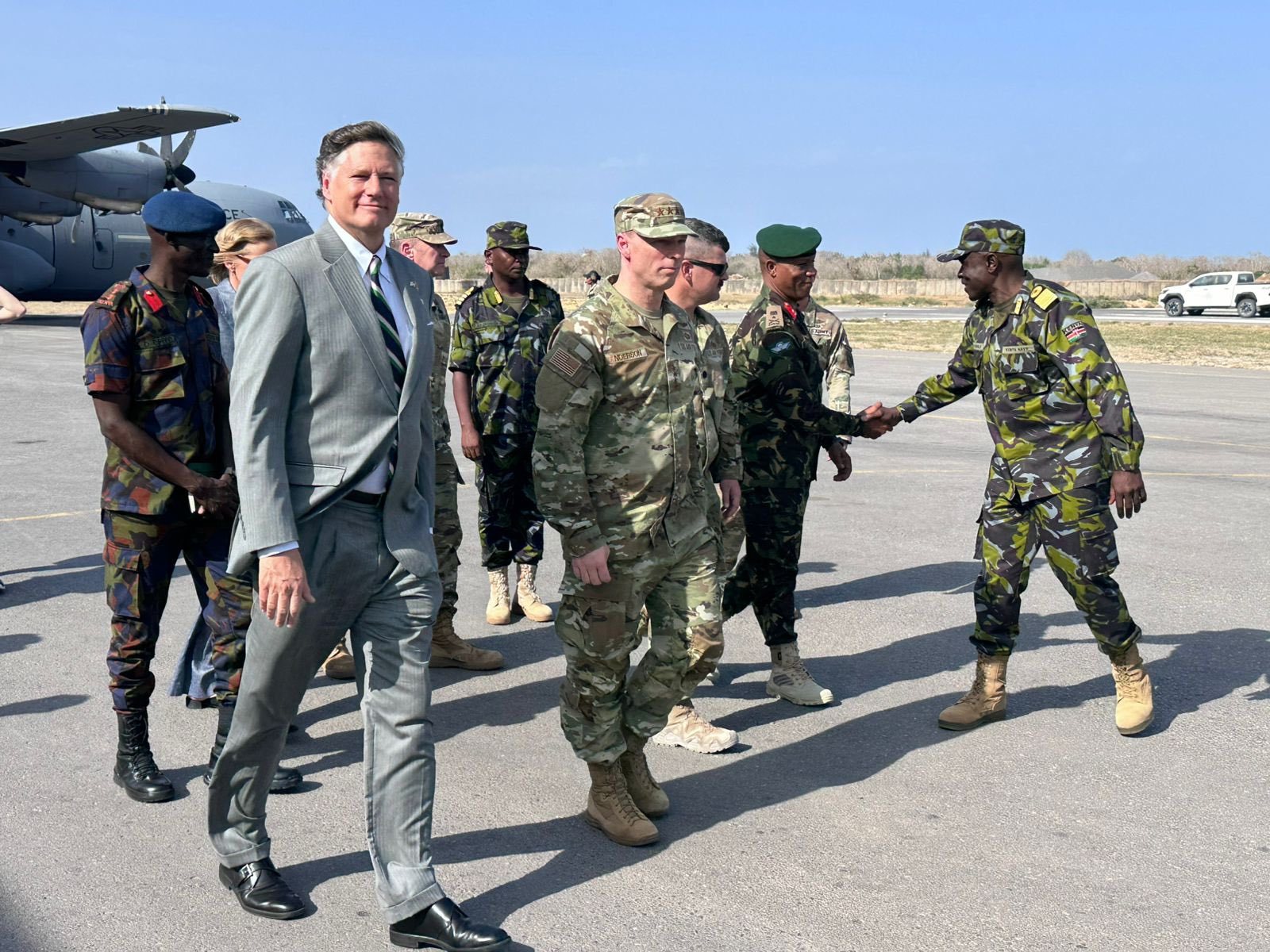
In January 2026, Kenya and the United States inaugurated a major expansion of the airfield at Kenya Navy Base Manda Bay in Lamu County, co-sponsored by the U.S. Department of State and Kenya’s Ministry of Defence. The project extends the airfield and enhances capacity for larger military and humanitarian aircraft, directly strengthening joint operational reach, rapid response, and logistical sustainment across Greater Eastern Africa (Ministry of Defence-Kenya, 2026; Africa Press, 2026; The Star, 2026). The expansion builds on Nairobi’s designation as a Major Non-NATO Ally in 2024, granting Kenya access to advanced defence cooperation frameworks without a binding treaty obligation (Africa Press, 2026). Beyond military utility, the platform is intended to support counterterrorism efforts, maritime security, and regional infrastructure corridors with economic potential. Strategically, Manda Bay signals deepened U.S.–Kenya alignment while highlighting questions of alliance asymmetries, operational integration, and the balance between national leadership and regional multilateral obligations. The initiative interacts with complex security dynamics in the Greater Eastern Africa, including transnational insurgencies, cross-border criminal networks, and governance fragilities.
This commentary examines five interrelated dimensions of the Manda Bay expansion which includes operational integration, alliance consolidation, socio-economic implications, governance, and adaptive forward presence and offers targeted policy recommendations that will strengthen sustainable regional stability, enhance coordinated threat response, and ensure that strategic investments in infrastructure yield enduring operational and socio-economic benefits across the Greater Eastern Africa region.
2.0 Key Issues
2.1 Operational Integration and Joint Threat Response
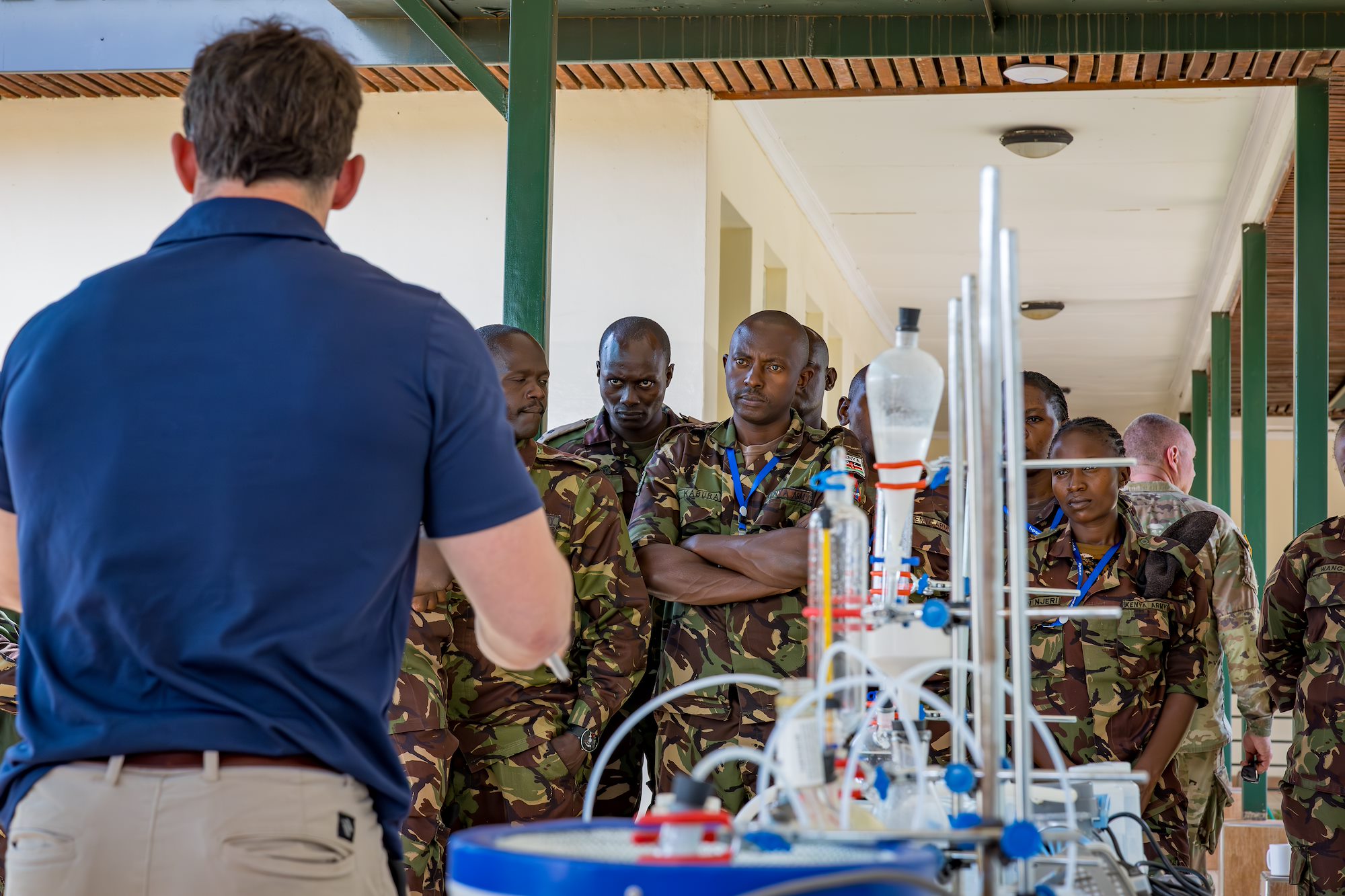
The Manda Bay expansion materially enhances operational integration between U.S. and Kenyan security forces, enabling more agile joint responses to shared threats across Greater Eastern Africa. Expanded airfield capacity accommodates a wider range of aircraft, strengthening intelligence, surveillance, and reconnaissance (ISR), rapid deployment, and logistical sustainment for combined operations (Ministry of Defence-Kenya, 2026; Africa Press, 2026; The Star, 2026). United States Africa Command officials highlight that sustained presence improves coordination for counterterrorism, maritime security, and cross-border operations with neighbouring states.
However operational integration raises structural questions. How are command and control frameworks harmonised across national lines, and what friction arises from differing communication protocols or strategic priorities? The capacity for ISR fusion and shared threat assessment depends on consistent institutional alignment, yet uneven resource allocation or training disparities may constrain responsiveness. Episodic coordination risk decision lags, while persistent presence could provoke local political sensitivities.
The critical issue interrogates whether infrastructure expansion translates into operational effectiveness or merely formalises pre-existing capabilities. Understanding the balance between tactical agility, strategic alignment, and regional interoperability is essential for anticipating gaps in threat response and for guiding coordinated planning across the Greater Eastern Africa security architecture.
2.2 Strategic Signalling and Alliance Consolidation
The Manda Bay expansion projects the U.S. commitment and consolidates Kenya’s strategic position within Greater Eastern Africa, yet structural asymmetries create critical questions. Enhanced infrastructure elevates Kenya’s role in bilateral defence engagement while raising potential perceptions of over-reliance, which may constrain diplomatic autonomy in IGAD and EAC multilateral frameworks (IGAD, 2025; Africa Press, 2026). The designation as a Major Non-NATO Ally provides access to advanced training, interoperability, and intelligence sharing, yet disparities in capability may privilege Kenya-centric security initiatives over broader regional mechanisms (The Star, 2026).
Operational visibility also communicates signals to transnational actors, including extremist networks, who may exploit predictable deployment patterns. How infrastructure affects regional perceptions of alignment with external powers versus collective security obligations remains a central consideration. The tension lies in leveraging forward-operating benefits while maintaining institutional legitimacy, ensuring bilateral capacity reinforces regional security without undermining multilateral leadership roles.
An analytical focus is required on whether alliance consolidation enhances credibility without generating structural dependencies. Understanding these dynamics is essential to anticipate both benefits and constraints, guiding strategic decisions that balance bilateral investment with collective operational and diplomatic integrity across Greater Eastern Africa.
2.3 Socio-Economic and Regional Development Impacts
The Manda Bay expansion intersects with broader socio-economic and regional development dynamics, creating both opportunities and structural questions. Improved airfield capacity and enhanced security conditions facilitate trade, logistics, and cross-border commerce along critical transport and maritime corridors, including the Lamu Port–South Sudan–Ethiopia Transport (LAPSSET) initiative (Africa Press, 2026; Eastleigh Voice, 2026; World Bank, 2025). The infrastructure can attract investment, support economic corridors, and bolster regional connectivity.
However, alignment between security projects and community priorities remains uncertain. How do local populations perceive enhanced military presence, and are development benefits equitably distributed? Without structured consultation, compensation, and inclusive benefit mechanisms, expansion risks social friction and undermines long-term stability. The integration of security infrastructure with employment, service delivery, and resilience-building initiatives remains partial and uneven.
The critical issue interrogates whether military investments generate inclusive socio-economic gains or primarily consolidate state-centric security objectives.
Understanding these linkages is essential to anticipate tensions between infrastructure-driven security and local development expectations. Effective policy planning requires a diagnostic lens on how operational presence interacts with economic, social, and governance structures across Greater Eastern Africa.
2.4 Governance, Legal Frameworks, and Accountability
The deepening U.S.–Kenya partnership at Manda Bay raises complex governance and legal questions essential to operational legitimacy and institutional integrity. Clear frameworks governing the status of foreign forces, command authority, and operational jurisdiction are critical to uphold sovereignty while enabling joint activity (IGAD, 2025; UNHCR, 2025; Africa Press, 2026). Codified mechanisms reduce ambiguity around immunities, incident response, and dispute resolution, shaping both domestic oversight and regional confidence in bilateral operations.
Yet procedural and institutional frictions persist. How do parliamentary review processes, interagency coordination, and bilateral audits ensure transparency and accountability? Inconsistencies or gaps risk eroding public trust and generating perceptions of opaque decision-making.
The tension lies in aligning legal and operational structures with evolving security realities without creating rigidities that constrain agility. Analytical focus interrogates whether governance arrangements sufficiently integrate multi-level oversight, institutional checks, and adherence to international norms. Understanding these dynamics is essential to anticipate potential friction between rapid operational deployment and democratic accountability. Strengthening legal and governance architectures remains central to sustaining credible, resilient, and institutionally coherent security cooperation across Greater Eastern Africa.
3.0 Conclusion
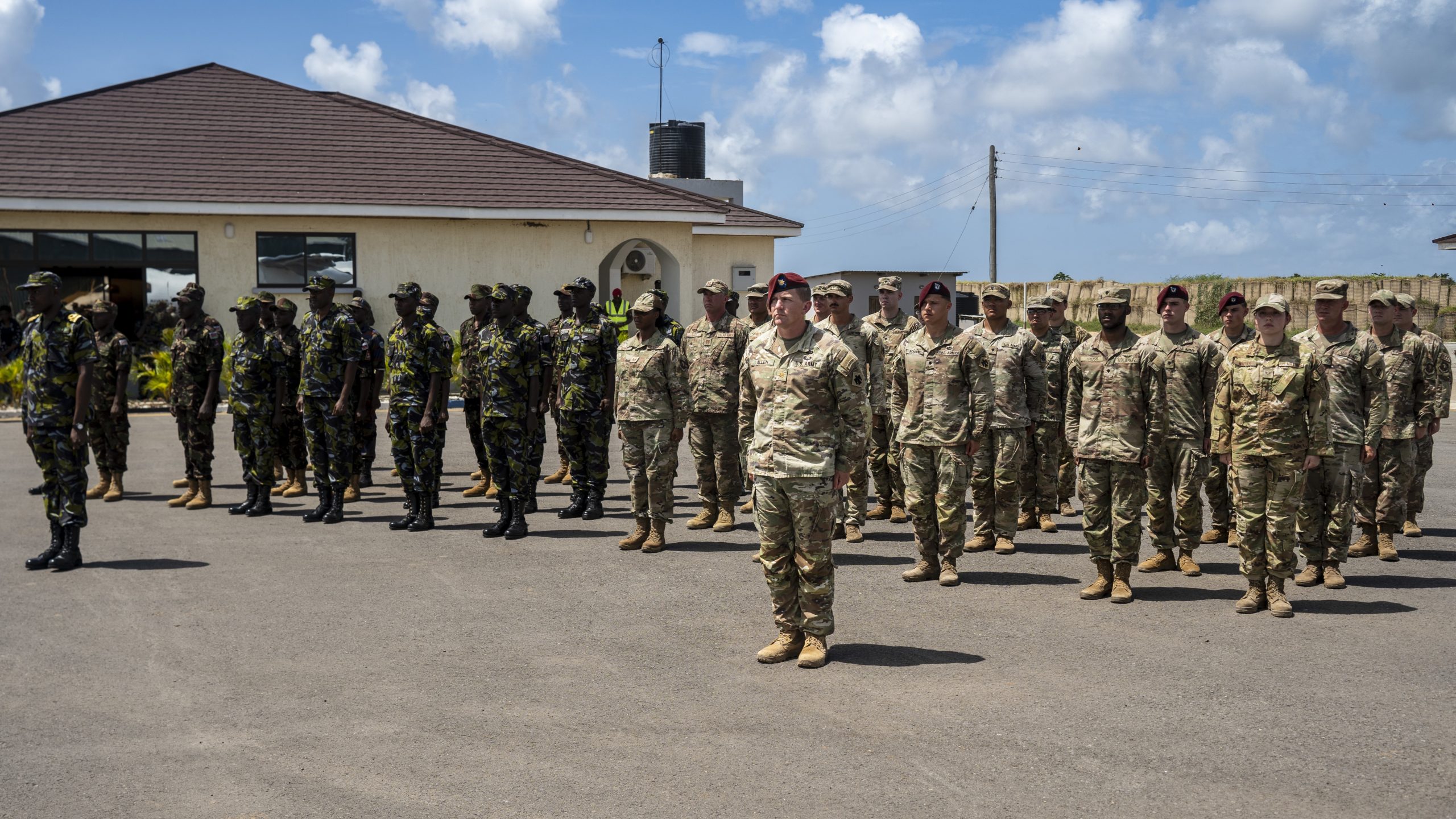
The expansion of the U.S.–Kenya military partnership at Manda Bay reflects a strategic investment with implications extending well beyond infrastructure. It strengthens operational reach, signals alliance consolidation, and intersects with regional security, governance, and development dynamics across Greater Eastern Africa. At the same time, it surfaces critical tensions related to integration, perception, accountability, and inclusivity. The long-term value of Manda Bay will depend on how effectively operational capabilities are aligned with institutional legitimacy, multilateral engagement, and socio-economic resilience. A calibrated approach that balances bilateral cooperation with regional frameworks is essential. When embedded within transparent governance structures and inclusive development pathways, strategic military infrastructure can contribute meaningfully to durable stability and collective security in Greater Eastern Africa.
4.0 Policy Recommendations
4.1 Establish a Standing U.S.–Kenya Joint Operations and Intelligence Coordination Mechanism at Manda
Kenya’s Ministry of Defence and U.S. Africa Command should institutionalise a standing joint operational coordination mechanism at Manda Bay to synchronise planning, intelligence fusion, and mission execution across air, maritime, and land domains. This mechanism should align Kenyan Defence Forces command structures with U.S. operational planning cycles through shared ISR fusion cells, interoperable communications protocols, and jointly agreed rules for mission tasking and escalation. Embedding liaison officers from IGAD and EAC security organs within coordination processes enables cross-border threat assessments and deconfliction with neighbouring forces. Regular joint planning exercises and mission rehearsals should be used to test command interoperability and reduce decision latency. This approach ensures that expanded infrastructure produces measurable operational effectiveness, translating bilateral capacity into coherent regional threat response rather than parallel force activity.
4.2 Embed Manda Bay–Based Military Cooperation within IGAD and EAC Regional Security Frameworks
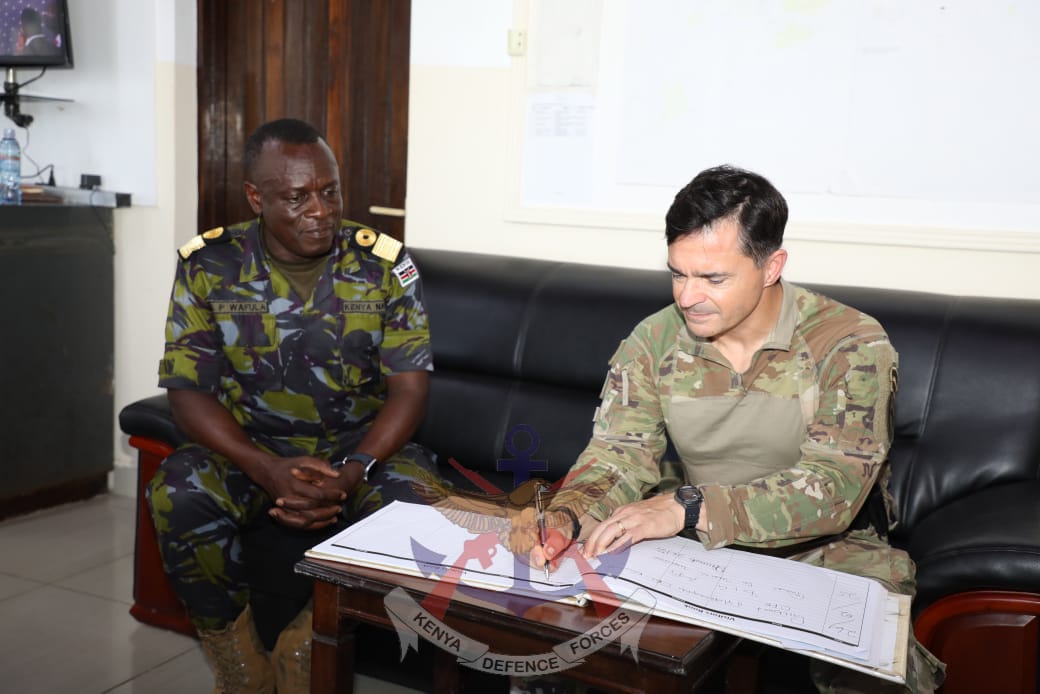
The Government of Kenya, in coordination with the United States, should deliberately anchor Manda Bay–based cooperation within IGAD and EAC security governance frameworks to manage alliance signalling and prevent perceptions of unilateral alignment. Operational planning outputs, maritime security activities, and counterterrorism priorities should be routinely socialised through regional early-warning, maritime coordination, and security committee platforms. This practice positions U.S.–Kenya cooperation as an enabling asset for collective security rather than a Kenya-centric or externally driven posture. By routing operational reach through multilateral consent mechanisms such as shared patrol arrangements, intelligence exchanges, and coordinated response planning, Kenya reinforces its regional leadership role while preserving diplomatic flexibility. This approach mitigates strategic dependence, sustains legitimacy, and ensures that alliance consolidation strengthens, rather than fragments, Greater Eastern Africa’s cooperative security architecture.
4.3 Institutionalise Civil–Military and County-Level Engagement Mechanisms Linked to Manda Bay Operations
Kenya’s national and county governments, in partnership with defence authorities, should formalise civil–military engagement structures around Manda Bay to integrate security operations with local development and governance priorities. These structures should include standing consultation forums with county administrations, community representatives, and development agencies to address land use, livelihoods, compensation, and service access linked to base expansion. Coordination with national development initiatives and corridor projects such as LAPSSET ensures that security investments generate visible economic and employment benefits. Transparent grievance-handling and feedback mechanisms should be institutionalised to prevent social friction and misinformation. Aligning military presence with inclusive socio-economic outcomes strengthens local legitimacy, reduces community-level vulnerability to extremist exploitation, and ensures that strategic infrastructure contributes to long-term stability rather than isolated security objectives.
4.4 Codify Legal Oversight for Joint Operations and Adopt a Distributed Regional Force Posture
Kenya and the United States should consolidate defence cooperation at Manda Bay through clearly codified legal frameworks defining force status, jurisdiction, operational authority, and accountability mechanisms. These frameworks should be embedded within Kenyan parliamentary oversight and interagency review processes to maintain transparency and public trust. Simultaneously, operational planning should prioritise a distributed force posture that combines Manda Bay’s enhanced capacity with rotational deployments, mobile logistics, and regional access arrangements. Integration with IGAD and EAC partners through joint exercises and interoperable deployment protocols reduces reliance on a single fixed site while preserving deterrence and responsiveness. Legal clarity coupled with distributed deployment ensures operational agility, mitigates strategic predictability, and aligns forward presence with democratic accountability and regional resilience across Greater Eastern Africa.
5.0 References
Africa Press. (2026). Kenya, US launch 10,000‑foot runway project at the strategic Manda Bay base. https://www.africa-press.net/kenya/all-news/kenya-us-launch-10000-foot-runway-project-at-strategic-manda-bay-base
Eastleigh Voice. (2026). Kenya, US launch expansion of Manda Bay runway to boost military readiness. https://eastleighvoice.co.ke/news/283029/kenya-us-launch-expansion-of-manda-bay-runway-to-boost-military-readiness
IGAD. (2025). Regional security and counterterrorism strategy. Intergovernmental Authority on Development. https://www.igad.int/
Ministry of Defence — Kenya. (2026). Kenya–United States break ground on strategic Manda Base runway expansion. https://www.mod.go.ke/news/kenya-united-states-break-ground-on-strategic-manda-base-runway-expansion/
Ombati, C. (2026, January 30). US official commissions upgrade of Lamu military base to boost operations. The Star. https://www.the-star.co.ke/news/2026-01-30-us-official-commissions-upgrade-of-lamu-military-base-to-boost-operations
Stars and Stripes. (2026). $71 million upgrade starts at Kenyan airfield that plays key role in AFRICOM’s operations. https://www.stripes.com/theaters/africa/2026-01-30/runway-expansion-manda-bay-20573624.html
UNHCR. (2025). Operational guidance on civil–military coordination in refugee-hosting areas. United Nations High Commissioner for Refugees. https://www.unhcr.org
World Bank. (2025). Security–development nexus in East Africa: Lessons from infrastructure investments. World Bank Group. https://www.worldbank.org