

1.0 Introduction
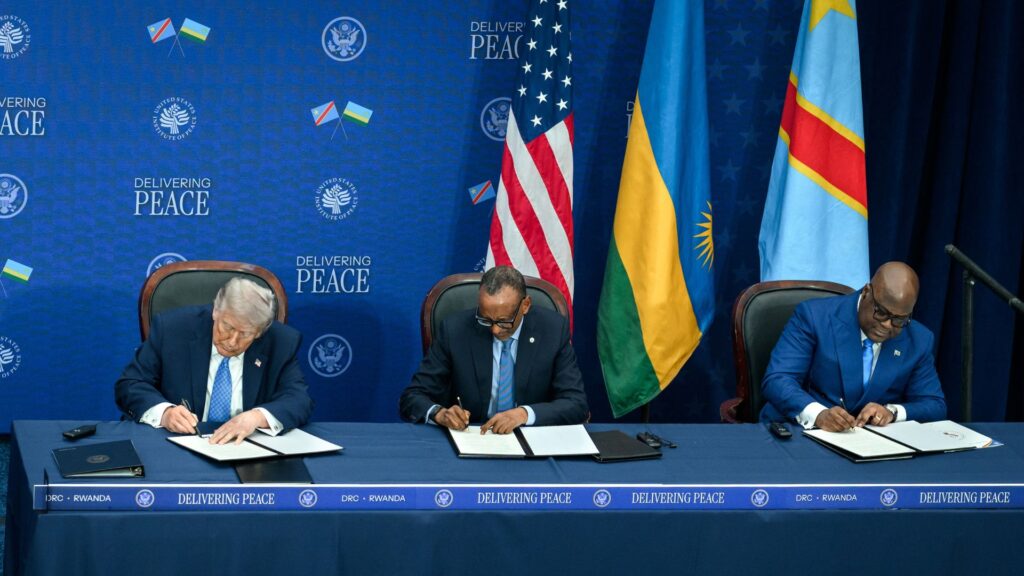
On 4 December 2025, the presidents of the Democratic Republic of the Congo (DRC) and Rwanda ratified the Washington Accords in Washington, under facilitation of U.S. President Donald J. Trump. The agreement publicly promised troop withdrawals, refugee returns, and a ceasefire in eastern DRC (Reuters, 2025). Observers noted that the accord simultaneously opened access for foreign companies, particularly U.S.-linked firms, to DRC’s critical minerals, including cobalt, copper, tin, coltan, and other rare-earth elements (Financial Times, 2025). President Trump emphasised the economic potential, explicitly linking peace to mineral extraction profits (Washington Post, 2025). Eastern DRC remains volatile. Armed groups such as M23 continue to operate in strategic mineral zones, threatening civilians (AP, 2025). Past experiences, including the 2009 Goma Agreement, show that agreements tied to resource extraction often fail to resolve underlying conflicts (CSIS, 2025). Local populations risk being marginalised as extraction and infrastructure projects prioritise profit over human security (The Guardian, 2025). The accord also carries significant regional consequences. Rwanda, Uganda, and neighbouring states may face pressures to comply with externally designed economic frameworks, which could undermine regional autonomy (Al Jazeera, 2025). By linking stability to resource exports, the accord risks creating a conditional truce in which peace depends on commodity demand rather than reconciliation or justice (Mongabay, 2025). This commentary critically examines the future of agreements tied to resource extraction by discussing four key issues revealed by the Washington Accords’ “peace-for-minerals” bargain. It interrogates who benefits, what is at stake for local communities, and whether sustainable sovereignty and stability are achievable. It concludes with four assertive policy recommendations designed to ensure that peace is equitable, durable, and regionally owned.
2.0 Key Issues
2.1 Peace as a Transaction
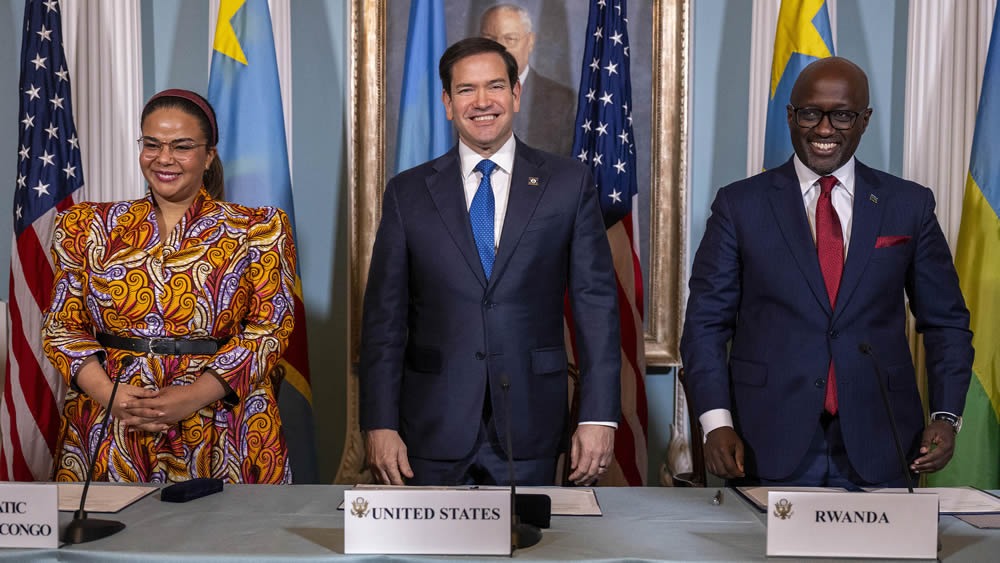
Linking the ceasefire to mineral concessions commodifies peace. This structure allows foreign firms to secure preferential access to Congo’s mineral deposits, subordinating human security to profit (Reuters, 2025). Stability becomes conditional. If extraction loses profitability, incentives to maintain peace diminish (Financial Times, 2025). Local communities risk being treated as collateral in the pursuit of international market interests (AP, 2025). Approximately 200,000 artisanal miners depend on cobalt zones, and exclusion could exacerbate social grievances (Global Witness, 2025). The moral foundation of peace is thus weakened, as ceasefires are tied to commodity demand rather than justice or reconciliation (CSIS, 2025). Eastern DRC and neighbouring regions are at risk of repeated instability. A profit-driven peace may collapse if market fluctuations affect extraction operations, creating a fragile and temporary truce (The Guardian, 2025). Historical precedents in the DRC demonstrate that agreements focused on resource incentives often fail to ensure durable security (Mongabay, 2025).
2.2 Sovereignty at Risk
The Washington Accords risk entrenching external control over the DRC’s mineral wealth. Foreign companies gain preferential access to unrefined cobalt, copper, and coltan, exporting raw minerals with limited requirements for domestic processing or reinvestment, which reinforces dependence on external supply chains (Global Witness, 2025). This dynamic reflects a longstanding neo-colonial pattern in which most mineral revenues benefit foreign firms and political elites rather than local economies (Amnesty International, 2025). The DRC’s negotiating power is further constrained when agreements privilege external strategic interests over national development priorities (CSIS,2025). Weak oversight allows revenue underreporting and reduces funds intended for local communities, diminishing the benefits of extractive activity (Reuters, 2025). Without mandatory value-addition, technology transfer, and fair revenue-sharing, Eastern Africa region risks remaining a raw-material periphery. These conditions collectively threaten long-term sovereignty, industrialisation, and regional autonomy (Al Jazeera, 2025).
2.3 Fragile Security
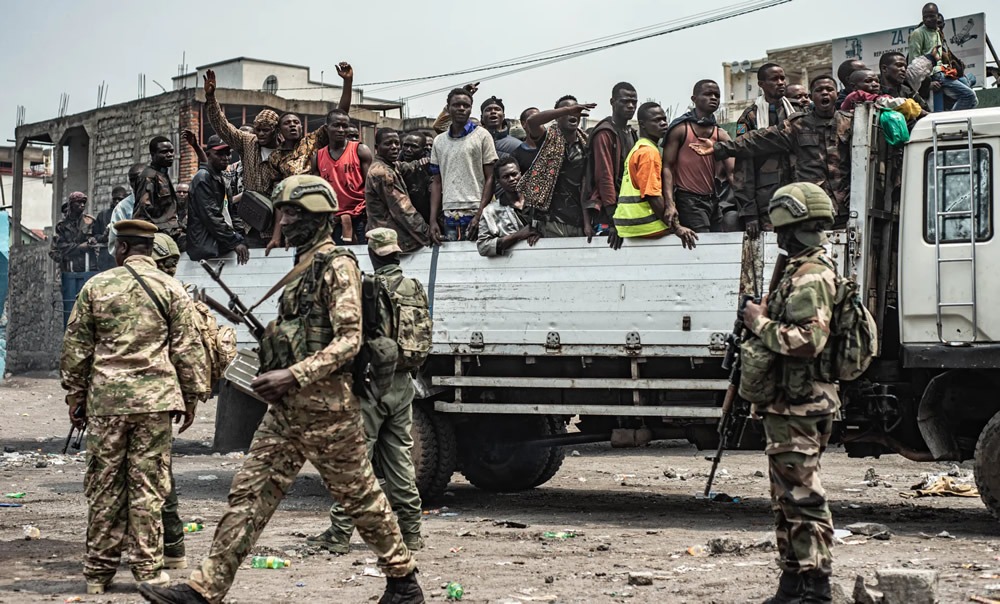
Despite signing the accord, armed conflict persists in eastern DRC, where civilians continue to face shelling, displacement, and attacks in mineral-rich areas (Associated Press, 2025). The agreement lacks enforceable mechanisms for disarmament or credible troop withdrawals, undermining its security commitments (Africanews, 2025). Without robust guarantees, armed groups may retain de facto control over mining territories. Economic incentives linked to mineral extraction can encourage maintaining the status quo rather than genuine demobilisation (Reuters, 2025; CSIS, 2025). Should extraction falter or profit margins decline, the ceasefire risks collapsing, exposing the conditional nature of this peace. Historical precedent highlights these dangers: prior accords, including the 2009 Goma Accord, failed when economic and political incentives diverged (Financial Times, 2025; The Guardian, 2025). Reliance on profit as a peace mechanism produces impermanent stability, threatening long-term regional security. The conditionality of this deal underscores Eastern Africa’s vulnerability to external economic pressures and regional instability.
2.4 Social and Environmental Risks
Rapid mineral extraction and infrastructure expansion threaten both social and ecological systems. Projects such as the Lobito Corridor and mining operations may displace up to 6,500 residents without adequate compensation (The Guardian, 2025). Informal settlers are particularly vulnerable, as displacement disrupts livelihoods and erodes social cohesion (Global Witness, 2025). Environmental degradation is significant; mining activities can contaminate water sources, reduce soil fertility, and threaten biodiversity, undermining agriculture and subsistence livelihoods (Mongabay, 2025). Previous resource projects in eastern DRC have frequently exacerbated poverty rather than promoting local development (CSIS), 2025). Without enforceable environmental and social safeguards, the accord risks perpetuating ecological harm and social fragmentation, which could fuel renewed conflict (Al Jazeera, 2025). These challenges demonstrate that economic incentives alone are insufficient to secure sustainable peace. Integrating human, social, and environmental protections is essential to ensure that mineral wealth contributes to long-term community well-being and regional stability.
3.0 Conclusion
The Washington Accords offer fragile peace that depends heavily on resource extraction. While there may be short-term benefits, the agreement risks deepening foreign reliance, displacing communities, causing environmental damage, and fostering social unrest leading to regional instability. Without strong safeguards—such as local processing, fair revenue sharing, and independent oversight—the accord will only sustain cycles of exploitation. Genuine peace depends on justice, local empowerment, and regional sovereignty. Eastern African leaders must ensure that stability and prosperity are grounded in dignity, fairness, and local control, rather than being reliant on the unpredictable nature of global mineral markets. Regional sustainable peace requires a balance between security, development, and community well-being.
4.0 Policy Recommendations
4.1 Separate Peace from Extraction
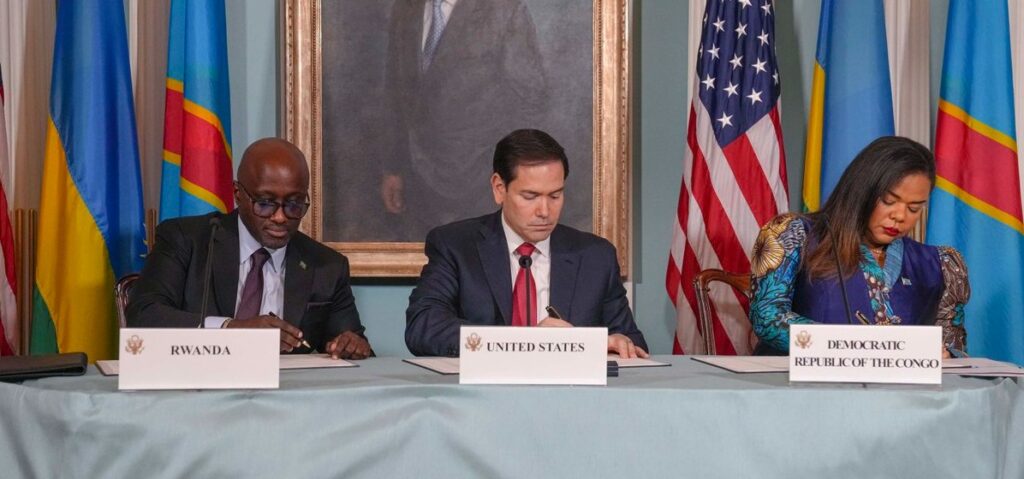
For the Washington Accords to succeed,there is need to separate peace from mioneral extraction for enhanced regional stability. Ceasefire, disarmament, and political reconciliation must precede any mineral-extraction agreements (Reuters, 2025). Peace processes should prioritise human security, justice, and inclusive participation before introducing economic incentives (Associated Press, 2025). Extraction deals must be negotiated separately, with full transparency and meaningful community consultation (Financial Times, 2025). Decoupling peace from resource extraction ensures stability is grounded in justice rather than reliance on global market dynamics (CSIS, 2025). These measures protect local communities from exploitation, reduce the risk of manipulation by foreign economic interests, and reinforce durable peace. By separating security and economic agendas, governments can prevent fragile truces from collapsing and create conditions for long-term reconciliation, equitable development, and genuine local empowerment.
4.2 Mandate Local Value-Addition
For the agreement to achieve its objectives,there is need to mandate local value addition. Foreign firms must establish processing facilities within the countries involved, train local workers, and reinvest a portion of revenues into public services and infrastructure (The Guardian, 2025). Contracts should include technology transfer and industrial capacity building to ensure that mineral resources generate tangible benefits for Eastern Africa (Al Jazeera, 2025). This approach fosters economic autonomy, reduces dependency on foreign supply chains, and increases local revenue retention (Mongabay, 2025). Clear obligations for in-country processing and reinvestment enhance the legitimacy and sustainability of mining operations. By ensuring that resources directly benefit communities, regional governments will strengthen social and economic outcomes, promote durable peace, support equitable development, and reinforce local empowerment, preventing fragile agreements from perpetuating dependency or exploitation.
4.3 Independent Oversight and Security Guarantees
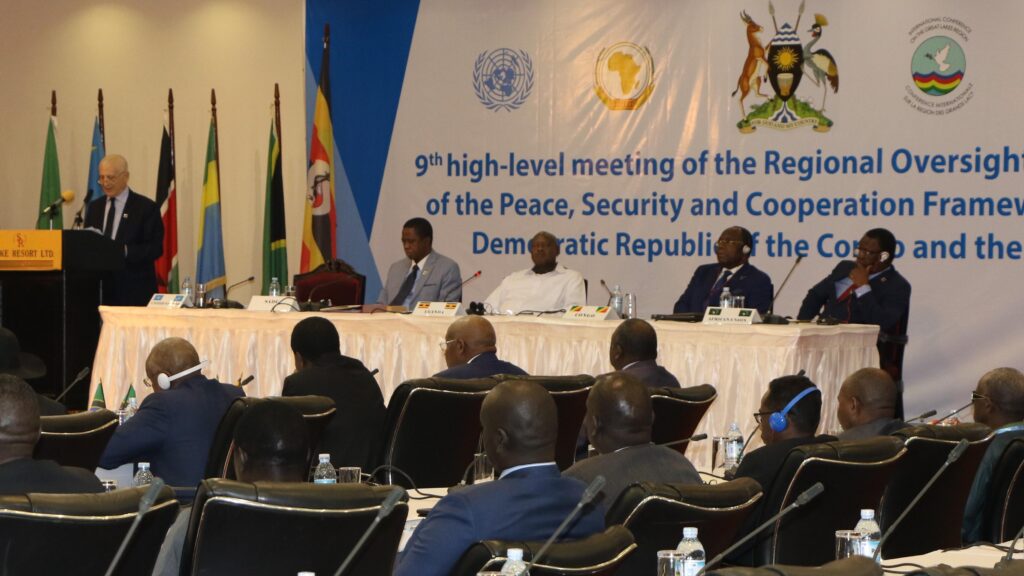
To ensure successful agreement implementation,there is need for independent oversight and security guarantees. A regional security oversight mechanism including the DRC, Rwanda, neighbouring states, and independent observers should monitor disarmament, troop withdrawals, civilian protection, and resource extraction practices (Associated Press, 2025; Africanews, 2025). The independent body should also enforce compliance with human rights, environmental, and land standards, ensuring transparency and accountability in all operations (Reuters, 2025). By deterring armed groups from exploiting mining zones, such oversight strengthens the long-term durability of peace (CSIS, 2025). Robust monitoring prevents conditional, profit-driven agreements from collapsing and safeguards local communities. Embedding independent oversight mechanism as a core component of resource and security management reinforces trust, ensures compliance, and contributes to sustainable stability, equitable development, and durable regional peace.
4.4 Protect Land, Environment, and Communities
For the agreement to succeed,there is need to protect land, the environment, and communities. Comprehensive environmental and social impact assessments must be conducted before any project begins to identify risks and plan mitigation measures (The Guardian, 2025). Project plans should recognise land tenure, ensure meaningful community consultation, and guarantee fair compensation for affected populations (Global Witness, 2025). Environmental safeguards, including protection of water, soil, and biodiversity, must be enforceable to prevent long-term ecological harm (Mongabay, 2025). International funding should be conditional on compliance with human rights and ecological standards, ensuring that resource wealth benefits local communities rather than perpetuating exploitation or displacement (Al Jazeera, 2025; CSIS, 2025). Embedding these protections strengthens social legitimacy, promotes equitable development, and anchors long-term stability in affected regions.
5.0 References
Africanews. (2025, September 4). DR Congo and Rwanda reaffirm commitment to June peace deal. https://www.africanews.com/2025/09/04/dr-congo-and-rwanda-reaffirm-commitment-to-june-peace-deal/
Al Jazeera. (2025, June 27). DR Congo and Rwanda sign peace deal in ‘turning point’ after years of war. https://www.aljazeera.com/news/2025/6/27/dr-congo-and-rwanda-sign-peace-deal-in-turning-point-after-years-of-war
The Guardian. (2025, December 4). US‑US-EU critical minerals project could displace thousands in the DRC. https://www.theguardian.com/world/2025/dec/04/us-eu-critical-minerals-project-drc-report-lobito-corridor
Global Witness. (2025, December 4). Thousands could be displaced in DRC by EU‑EU-backed Lobito Corridor railway. https://www.globalwitness.org/en/press-releases/thousands-could-be-displaced-in-drc-by-eu-backed-lobito-corridor-railway/
Reuters. (2025). Washington Accords and DRC mineral wealth: Risks and opportunities.
Associated Press. (2025). Congo civilians affected by ongoing mining conflicts.
Financial Times. (2025). Economic incentives and the fragility of Congolese peace accords.
Mongabay. (2025). Environmental and social challenges of mining in eastern Congo.
Centre for Strategic and International Studies [CSIS]. (2025). The DRC’s Washington Accords: Peace and economic risks.
Washington Post. (2025). Trump highlights the economic potential of Congolese minerals.
Amnesty International. (2025). Human rights and mineral exploitation in the Democratic Republic of the Congo.